Vietnamese Quick-Pickled Daikon & Carrots (Đồ Chua)
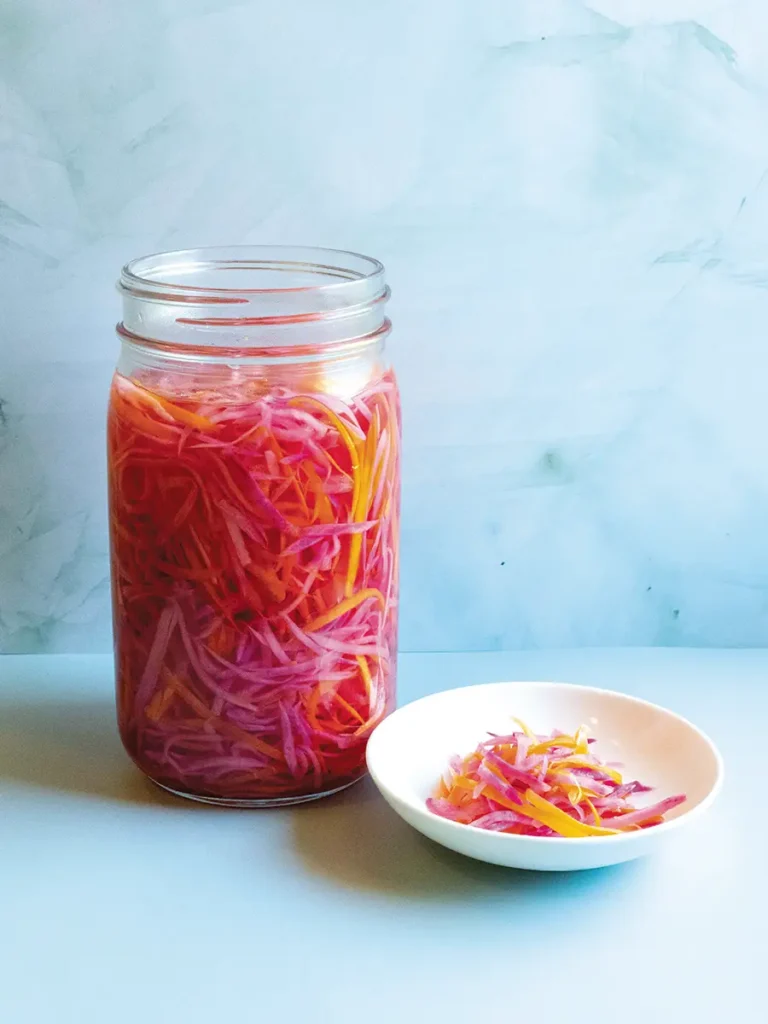
Đồ Chua, a classic Vietnamese daikon and carrot quick pickle, is a staple condiment known for its bright crunch and sweet-tart balance. With carrots and daikon easy to find at Santa Barbara County farmers markets, it’s a natural fit for a seasonal kitchen. If you’ve ever had a bánh mì—a Vietnamese baguette usually filled with meats, herbs and chiles—it was almost certainly finished with this refreshing pickle. It pairs just as beautifully with grilled meats as it does in salads and vermicelli noodle bowls. Simple to make and endlessly versatile, it’s the kind of condiment worth your limited fridge space. Daikon comes in a variety of colors; the purple ones shown here came from Babé Farms in Santa Maria.
Vietnamese Quick-Pickled Daikon & Carrots (Đồ Chua)
Equipment
- Mandoline, julienne peeler or knife
- Colander
- 1-quart wide-mouth Mason jar
Ingredients
- ½ pound carrots, peeled
- ½ pound daikon radish, peeled
- 1 tablespoon kosher salt
- 1 cup water
- ¼ cup white sugar
- ½ cup rice vinegar
Instructions
- Julienne the carrots and daikon using a mandoline, julienne peeler or by cutting them into matchsticks with a knife.
- Place the vegetables in a colander, toss with the salt and let sit for 20 minutes. This step draws out excess moisture and mellows some of the sulfur compounds that give daikon its pungent aroma.
- After 20 minutes, rinse the carrots and daikon, then squeeze out as much liquid as possible. Fluff lightly and transfer to a 1-quart wide-mouth Mason jar.
- Meanwhile, bring the water to a simmer. Add the sugar and whisk until dissolved, then turn off the heat and stir in the rice vinegar.
- Pour the hot brine over the vegetables, pressing them down to submerge. Top off with additional water if needed.
- Let cool to room temperature, then cover and refrigerate. For best flavor, wait at least 24 hours before using.
Notes
Nutrition
Rob Bilson
Rob Bilson is co-publisher of Edible Santa Barbara. He enjoys developing recipes and sharing the stories of the people, places and flavors that define Santa Barbara County’s vibrant food community.