Chasing the Golden Ratio
Finding Depth of History and Variety in a Simple Braised Chicken
Browsing the menu of a Chinese restaurant, I tapped on one item. What is this “three-cup chicken”?
The waiter said, “That means the chicken is braised with one cup of rice wine, one cup of soy sauce and one cup of sesame oil.”
My Taiwanese friend scoffed, “This is not the way I make mine. My formula says the oil is half of—not equal to—the amount of wine. It is the most delicious version of our national dish.”
Another friend said, “My mother insists on barley-soy sauce. She says it is the authentic way.”
This dish tells a story—one with an intriguing name and an ever-changing formula.
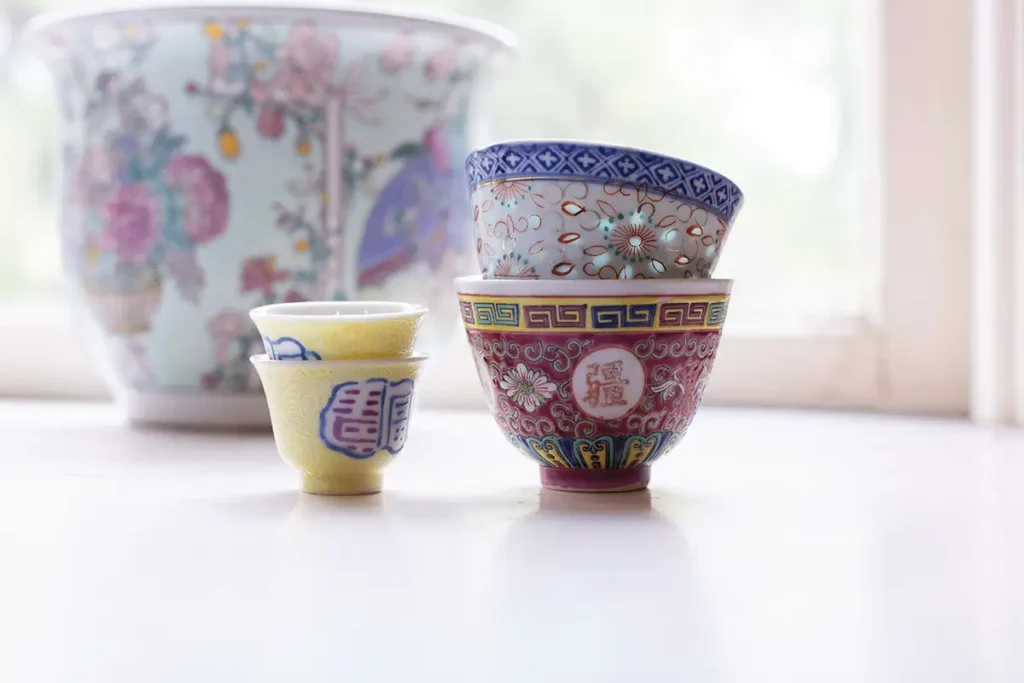
First off: The cup in question is a moving target. Chinese cups come in all sorts of shapes and sizes; it is up to the cook to choose the right cup size to match the amount of chicken at hand. When I make these recipes, I aim to deal with two pounds of chicken, so I measure the liquid with a Chinese teacup, which is about one-third of an American measuring cup. If I want to cook only two wings, I will use a ceremonial wine cup, a tiny one-tablespoon affair.
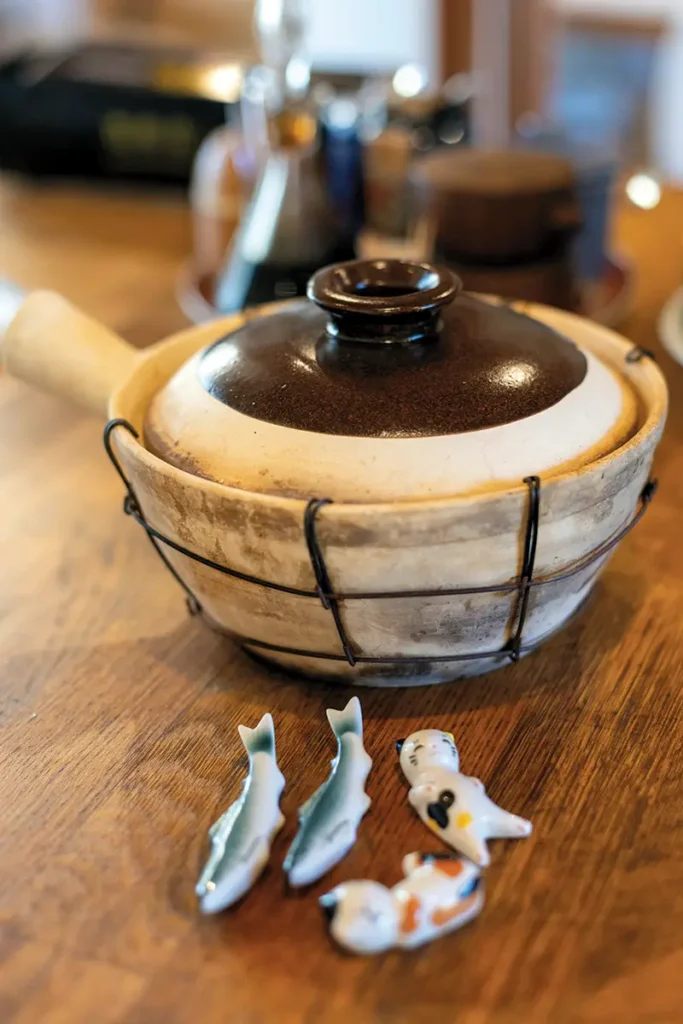
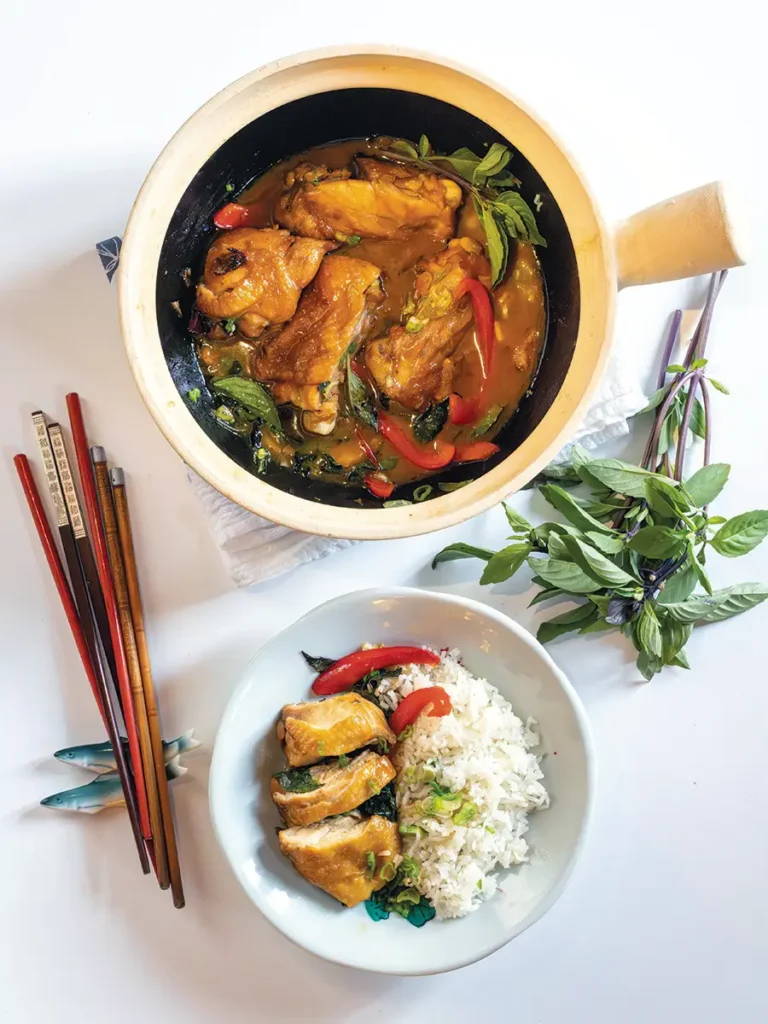
A traditional Chinese clay pot. Photo: Rosminah Brown 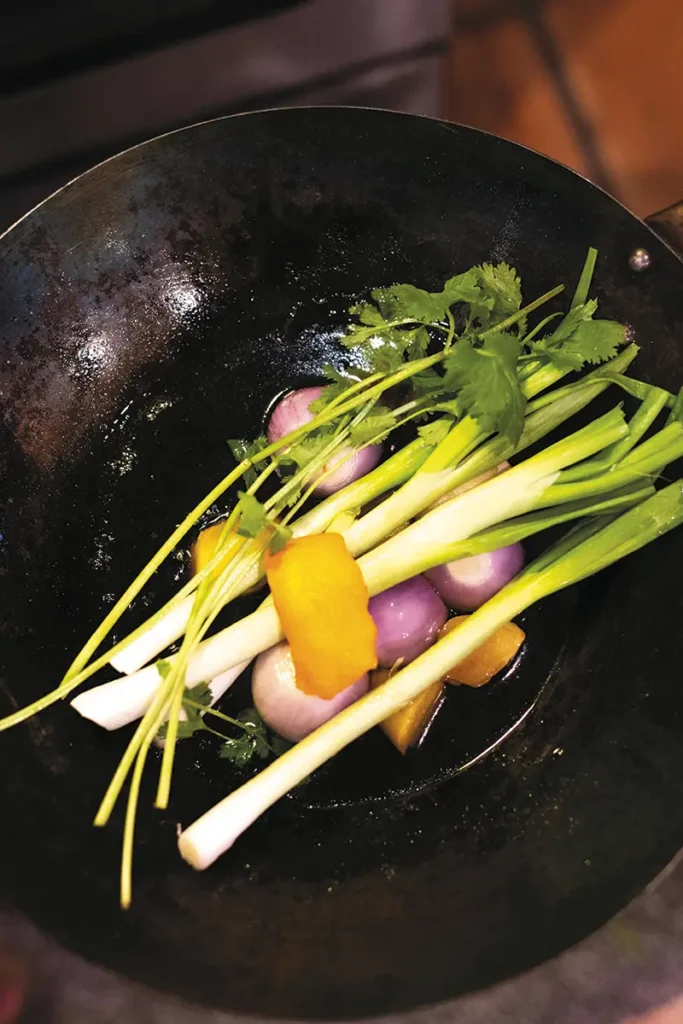
Start Four-Cup Chicken steaming on a layer of aromatics. Photo: Rosminah Brown
The dish is often associated with Taiwanese cuisine, but it is not original or unique to Taiwan. Many places in South China have similar dishes that use significant amounts of rice wine, soy sauce and oil. Historians say that it dates from the 14th century and originated in Jiangxi, an inland province of China. Allegedly, for one small chicken, the cook would use one cup of lard, one cup of soy sauce and one cup of the bottom dregs of the wine barrel to braise it. There are other stories contributing to the lore.
The formula of 1:1:1 is easy to remember and to pass down orally. From Jiangxi, some people took it southward to the Pearl River Delta and the Cantonese have claimed it as their own. Some took it eastward to the coast, then crossed the strait to Taiwan, where variations blossomed and proliferated, moving away from the original ratio.
In whatever form it appears, the dish never fails to please. Magic happens when you combine chicken, distilled rice wine, an umami-rich soy sauce and plenty of oil. It is nourishing, keeps well and travels well. Small wonder that it is rooted in the memory of emigrants.
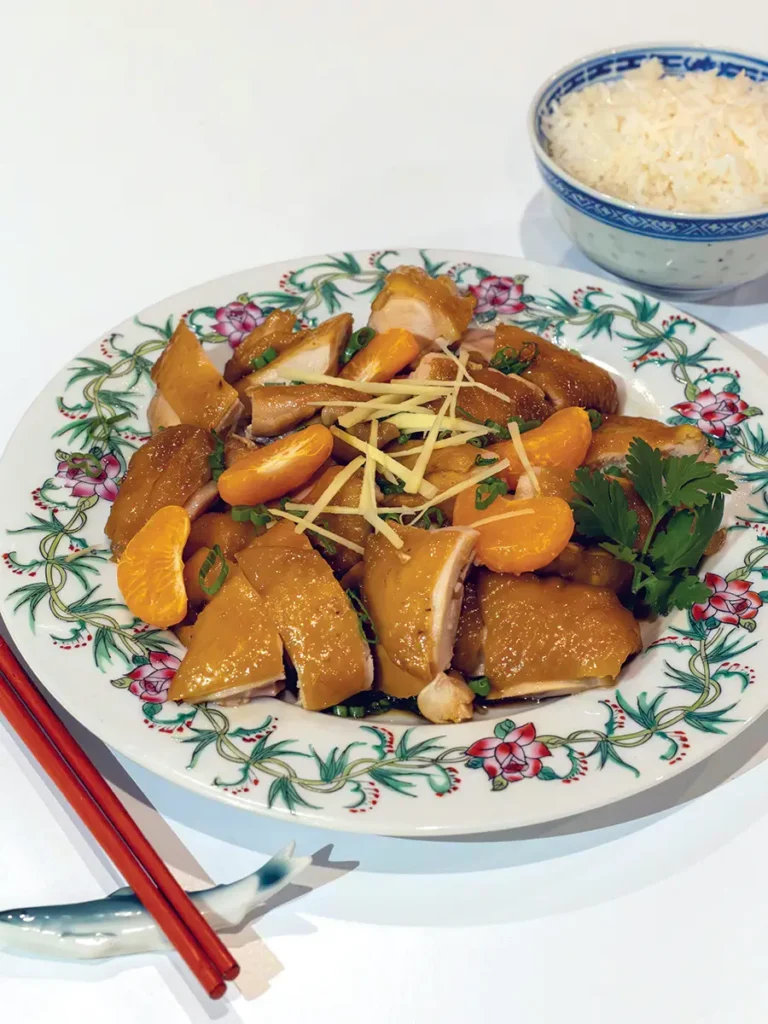
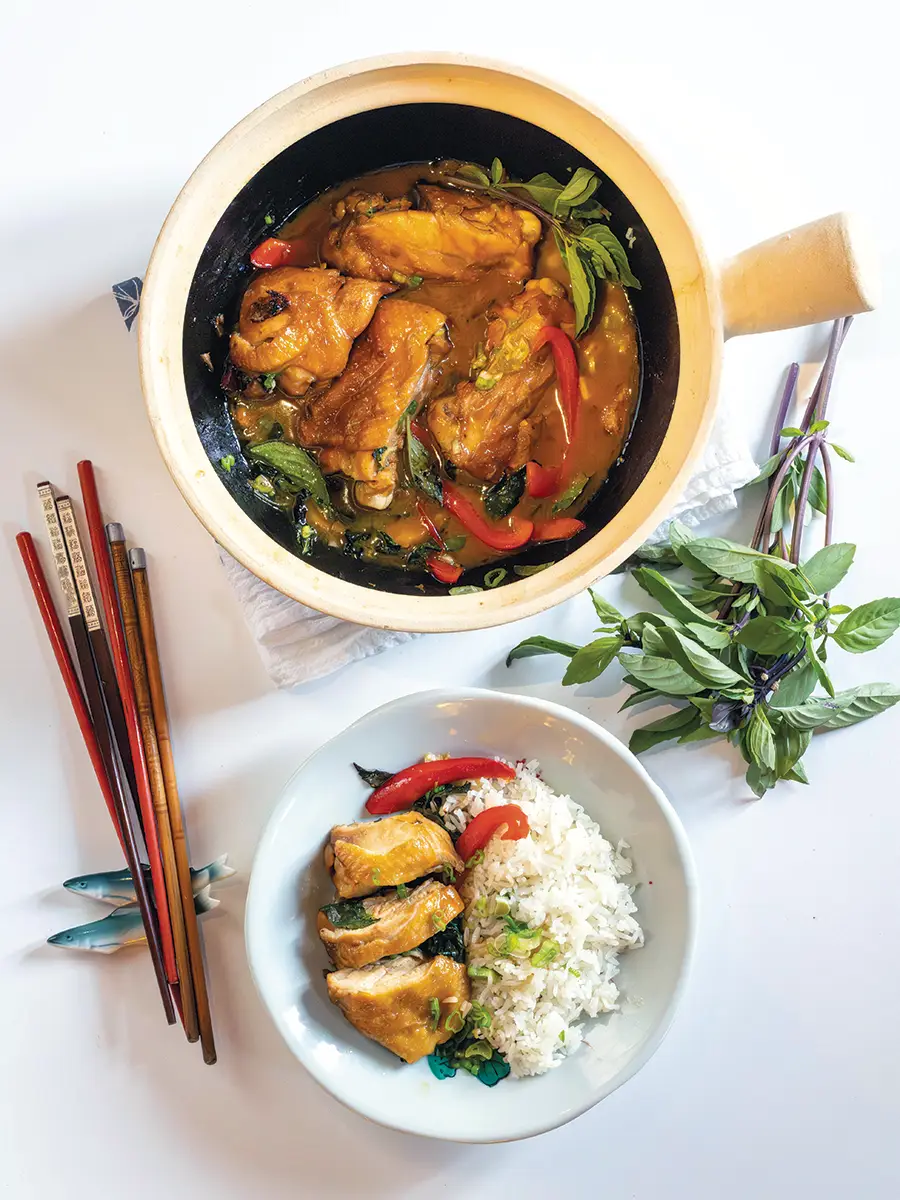
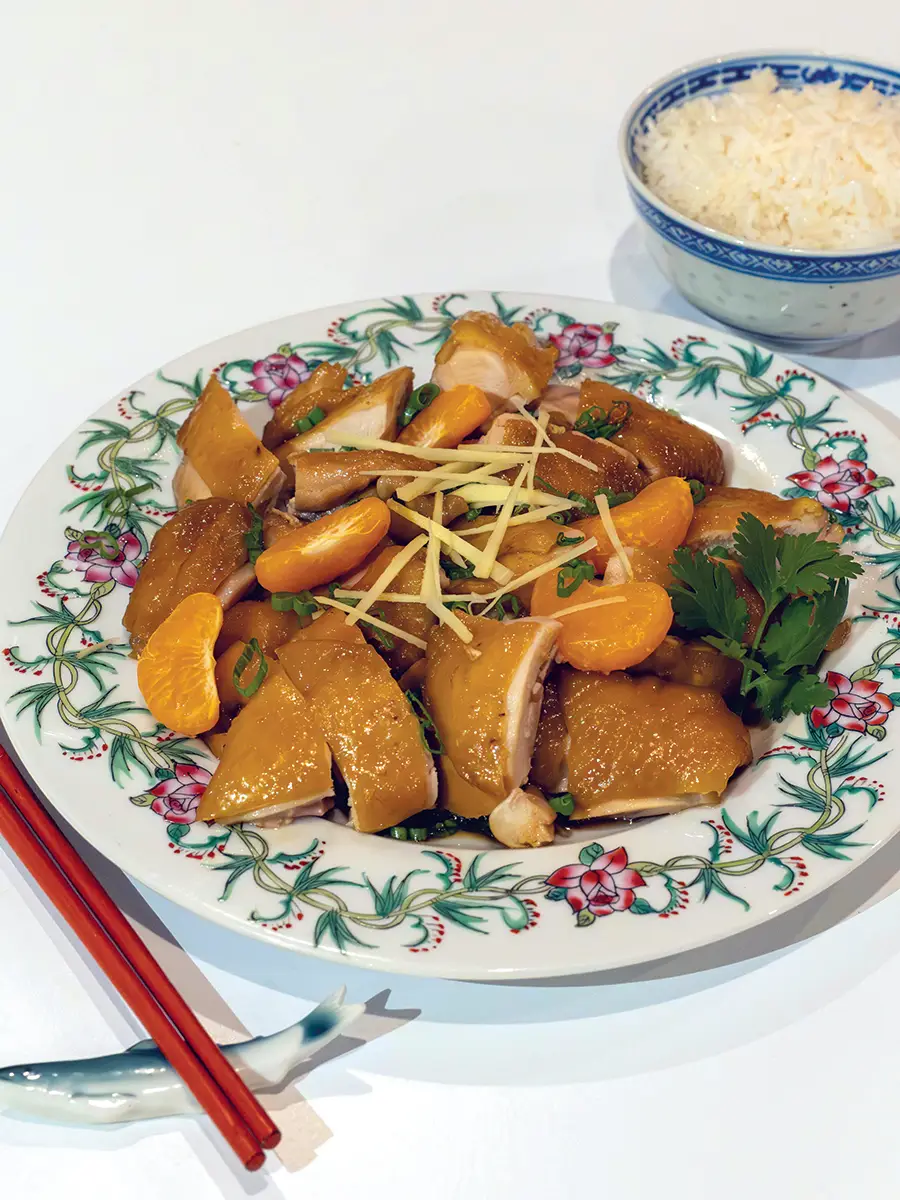
What follows is my favorite Taiwanese version. It is bold and intense and exemplifies the creative spirit of the Taiwanese, so take note: It does not follow the precise golden ratio of 1:1:1. I also present a Cantonese version which does keep the golden ratio of the original tradition and claims to retain its attributes of purity and simplicity. I hope you will try it and make that taste your starting point.
The combination of rice wine, soy sauce and oil is a strong framework that can support endless experimentation. To heck with “authenticity.” Tweak and make the dish your own!

C. B. Chu
Born and raised in Hong Kong, C. B. Chu has put down roots in Santa Barbara since 1970. She strives to straddle time, space and cultures.