When the Ingredient Does the Cooking
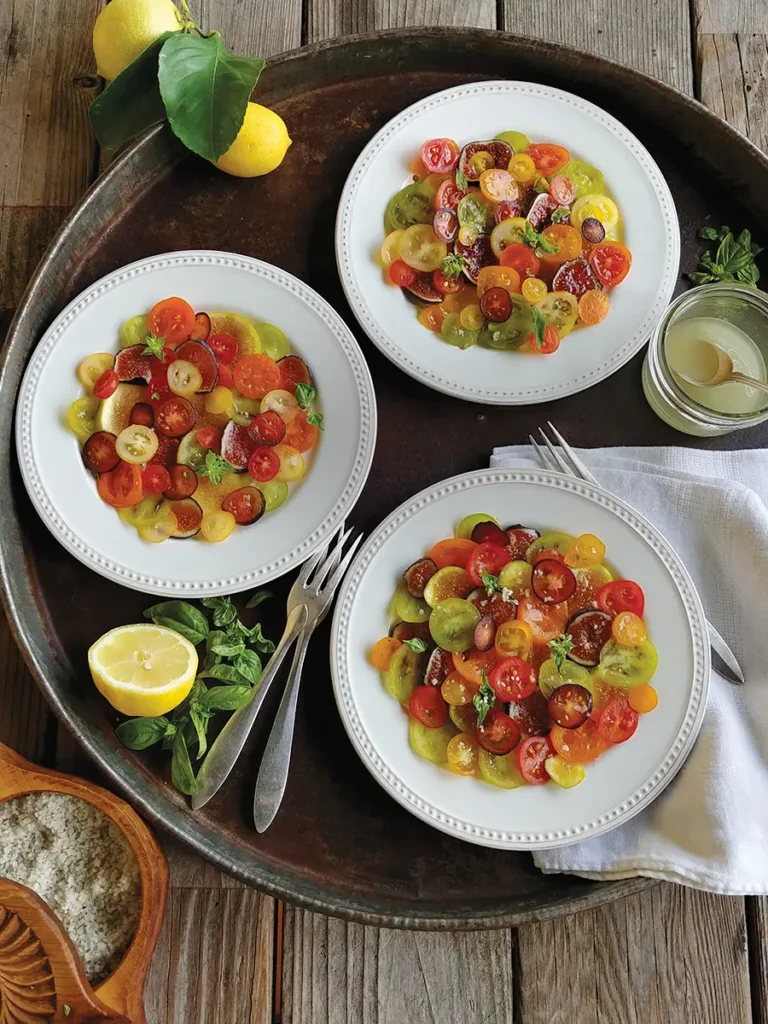
Last summer, I popped a Sungold cherry tomato from Munak Ranch into my mouth one Saturday at the farmers market, and it stopped me dead in my tracks. It was as though a ray of sunshine had just exploded in my mouth. How could something so tiny be just so, so exquisite?
Next, I tried a piece of the Green Zebra tomatoes, which had been sprinkled with a little salt. The glistening, chartreuse-colored fruit was vibrant and simultaneously sweetly acidic: What a piece of fruit! When the ingredients are this good, you don’t need to do much to them; you let the ingredients do the cooking.
Alice Waters said as much when she experienced a culinary epiphany while traveling in France. “The trout had just come from the stream and the raspberries from the garden. It was this immediacy that made those dishes so special.” She echoed the sentiments Julia Child often proclaimed: “You don’t have to cook fancy or complicated masterpieces, just good food from fresh ingredients.”
The essence of their comments was to let the raw material be the focus of each plate, which epitomizes Californian cuisine. It is a Mediterranean cooking style influenced by Mexican and Asian cultures, all while celebrating the extraordinary produce available on the Central Coast. Essentially, why gild the lily when all you need is a little drizzle of olive oil and a little salt to complement the perfect tomato?
So how does one do this? At Chez Panisse, Alice Waters celebrated the integrity of each ingredient, championing the farmers that grew the food, and presented it with little manipulation: a just-picked salad festooned with fresh herbs and warm goat cheese; a play on one ingredient cooked multiple ways—a few cherry tomatoes accompanying the ones that were roasted; a bowl of white beans with a pool of salsa verde and a pinch of flaky salt; a perfect Blenheim apricot, grilled, halved, placed cut-side-up with a drizzle of oil and a small spoon of ice cream. The accompaniments complemented and celebrated the main element of each dish.
Eating and cooking seasonally isn’t passive—it requires a kind of attentiveness, a symbiotic relationship with nature. Some ingredients are fleeting, ripe, juicy, perfect for only weeks at a time—cherries and apricots come to mind. If the winter is cold and wet, cherries will arrive in late May and last perhaps six weeks. If the early part of the year was warm, they will arrive at the market in April, as they have this year. You have to know when to take advantage of what the season gives you. If you come across an apricot in December, you know that it grew south of the equator, was picked early and traveled thousands of miles to get here. Compare that to a ripe Blenheim apricot picked a few miles up the road. The latter will have a heady perfume and leave heavenly, juicy rings on your fingers as you bite into one. There is no comparison.
When you discover something that is superb just as it is, most embellishments are often superfluous. Waters famously took that philosophy to heart when she served unadorned peaches for dessert in her restaurant. Just a peach, on a plate. I couldn’t help but laugh when I read about this, as my grandmother did exactly the same thing.
However tempting it might be to serve the fruit “naked,” so to speak—and sometimes that is exactly the right call, particularly if you have splurged on sweet, rose-scented mara des bois strawberries from Harry’s Berries—there are little touches you can add to dishes that make them transformative, enhancing the underlying flavor.
I often turn to herbs, using them not as garnish but in abundance. Whole tarragon stems paired with roast chicken. Masses of fresh mint with stone fruit or in a salsa alongside grilled lamb. An herb pâté to complement heirloom tomatoes, a tabouleh that is mostly parsley, chives and mint rather than grains; and flowering thyme or rosemary used as skewers to roast zucchini or figs.
Drizzles of fruity, bright, peppery olive oil add a lush richness to steamed vegetables, grilled fruit and, oddly, ice cream; as does a little pomegranate molasses or date syrup zigzagged over caramelized carrots nestled on a creamy bed of labneh, or a few drops of luscious balsamic dripped on charred eggplant. Lemons are also a natural flavor enhancer: a squeeze of their citric acidity brightens and lifts dishes, and their zest will transform any vinaigrette or sauce.
I often like a hot element added to a cold dish. Warm, slightly melting goat cheese on a salad is the perfect example, creating the perfect foil for a mustardy vinaigrette and the freshness of the greens. Or golden curls of aged parmesan shaved over roasted vegetables, melting at the edges, its salty-nuttiness adding an umami quality to the dish. Umami, which is less of a flavor and more of a sensation, in that a dish adds depth, an ethereal savoriness that elevates the food.
Brown butter spooned over asparagus is nutty and fragrant, enhancing the herbaceousness of the stalks; incorporating anchovies into sauces such as salsa verde develops a subtle yet resonant savoriness that doesn’t scream “salty fish” but adds a delicious intangible quality to this dish; deeply rich tomato paste cooked briefly in olive oil until it darkens and catches at the edges of the pan intensifies its flavor. Add chopped Roma tomatoes to the pan and cook for two minutes with a handful of fresh herbs, and your tomato sauce will explode with layers of flavor that are fresh, acidic and sweet.
Contrasts help enhance flavor. Incorporating a sweet or textural element into a savory dish, such as sprinkling a fragrant dukkah over labneh, the rich creaminess of the latter is enhanced by the deeply nutty, warm spice, crunchy mixture; as is fresh pasta when dusted with pangrattato or a Fattoush salad because of the crunchy, toasted pita that has been tossed into it.
Apricots and golden raisins transform chicken tagines, their sweetness adding a depth of flavor that marries perfectly with the tender, spiced poultry. Raw honeycomb served with cheese adds not only a textural element, but also its floral sweetness provides the perfect counterpoint to the subtle nuttiness of hard cheeses or the creaminess of soft cheeses.
I am not personally a fan of overly complicated food and appreciate dishes when they, as Ms. Waters would say, “taste of what they are.” We are extraordinarily fortunate to be surrounded by dedicated farmers who produce delicious raw ingredients, so when cooking seasonally, all one needs to enhance a dish’s central tenet are simple additions.
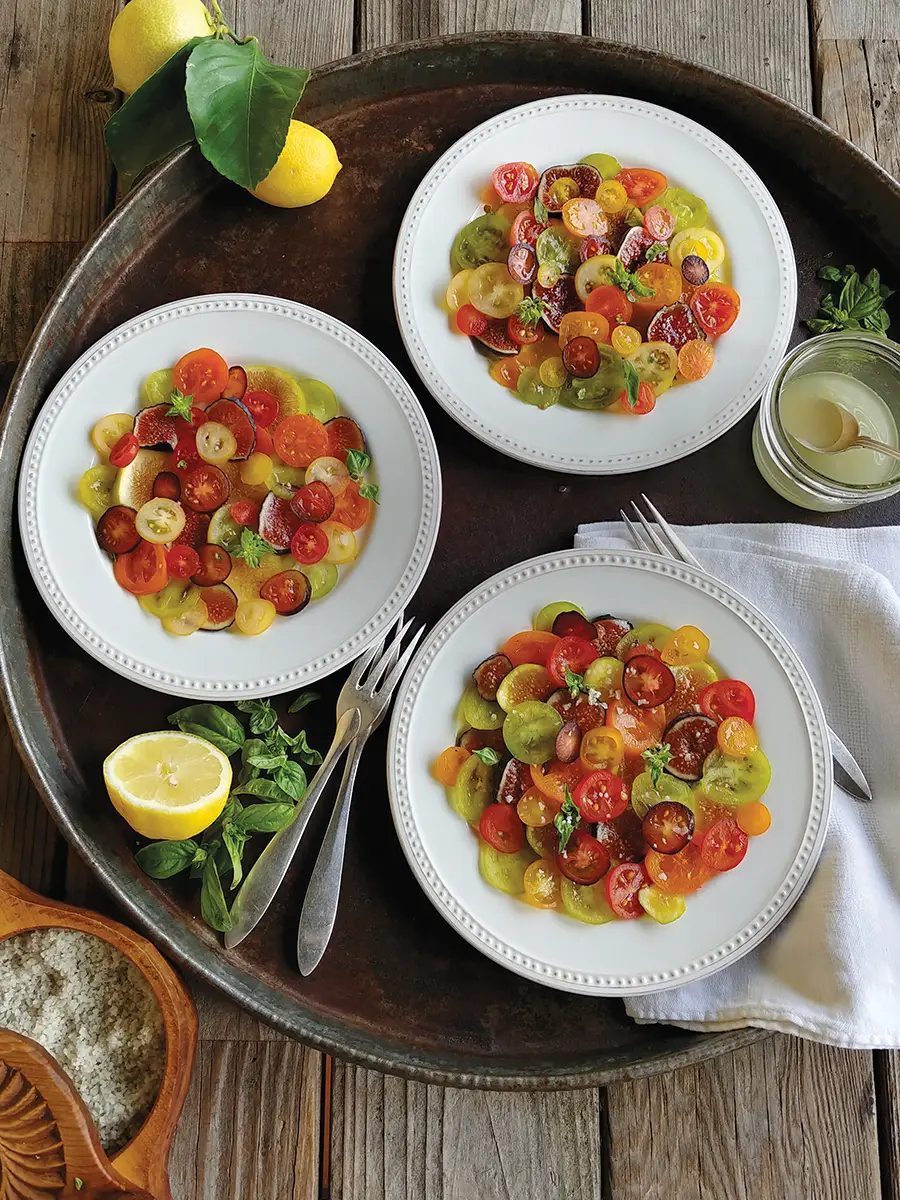
Fig and Cherry Tomato Mosaic with Goat Cheese Herb Crema
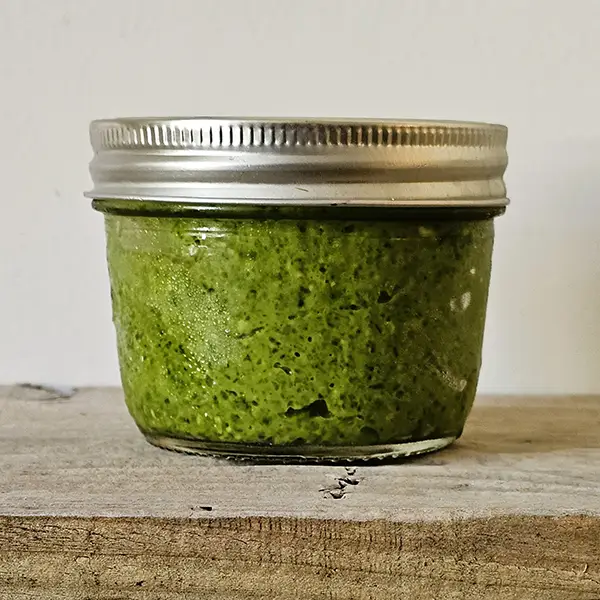
Pepitas Pâté
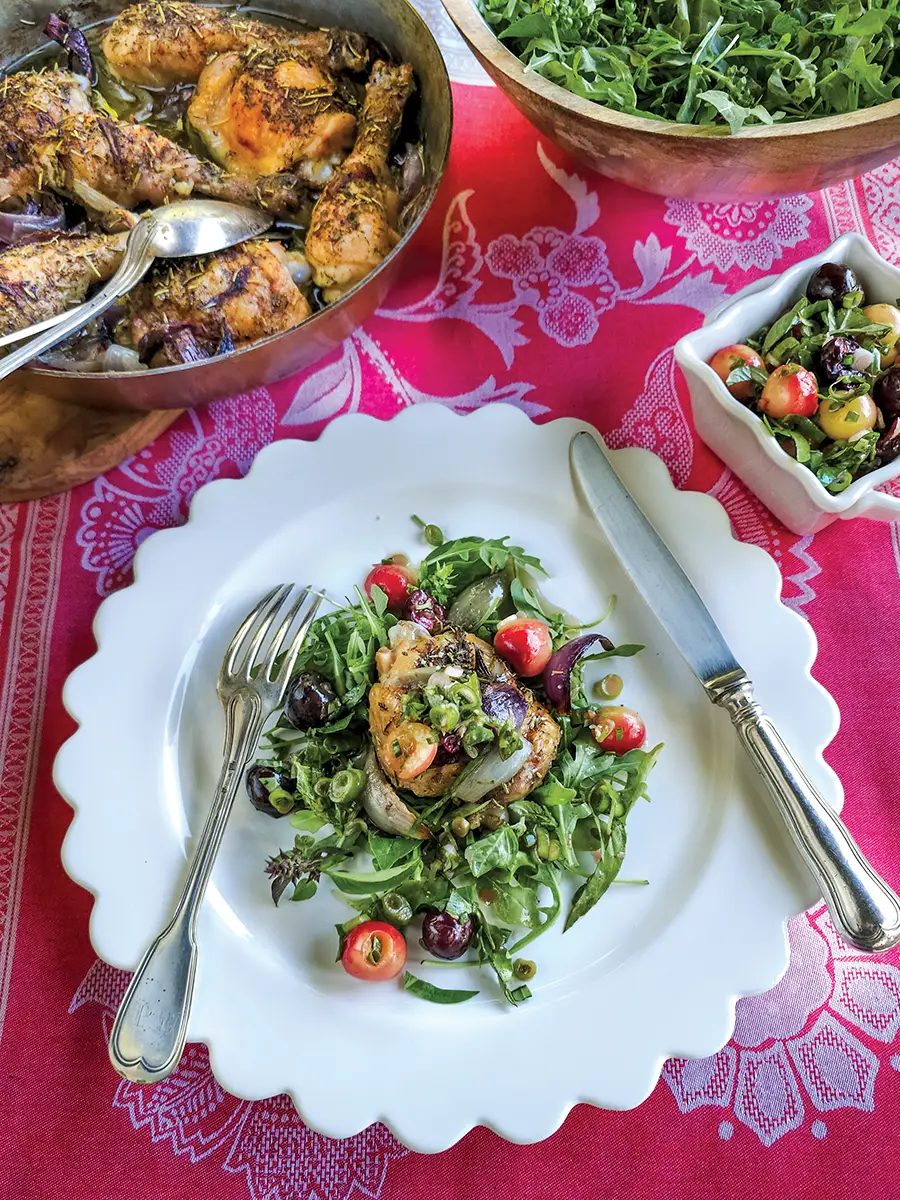
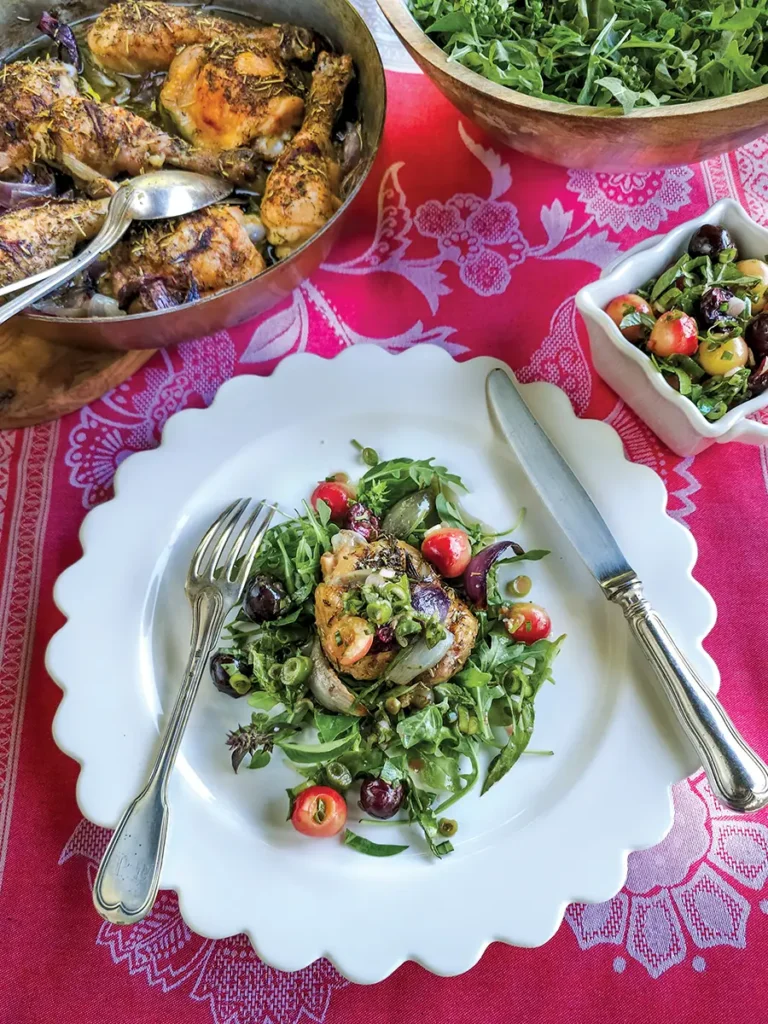
Roasted Chicken and Red Onions with Cherry Relish
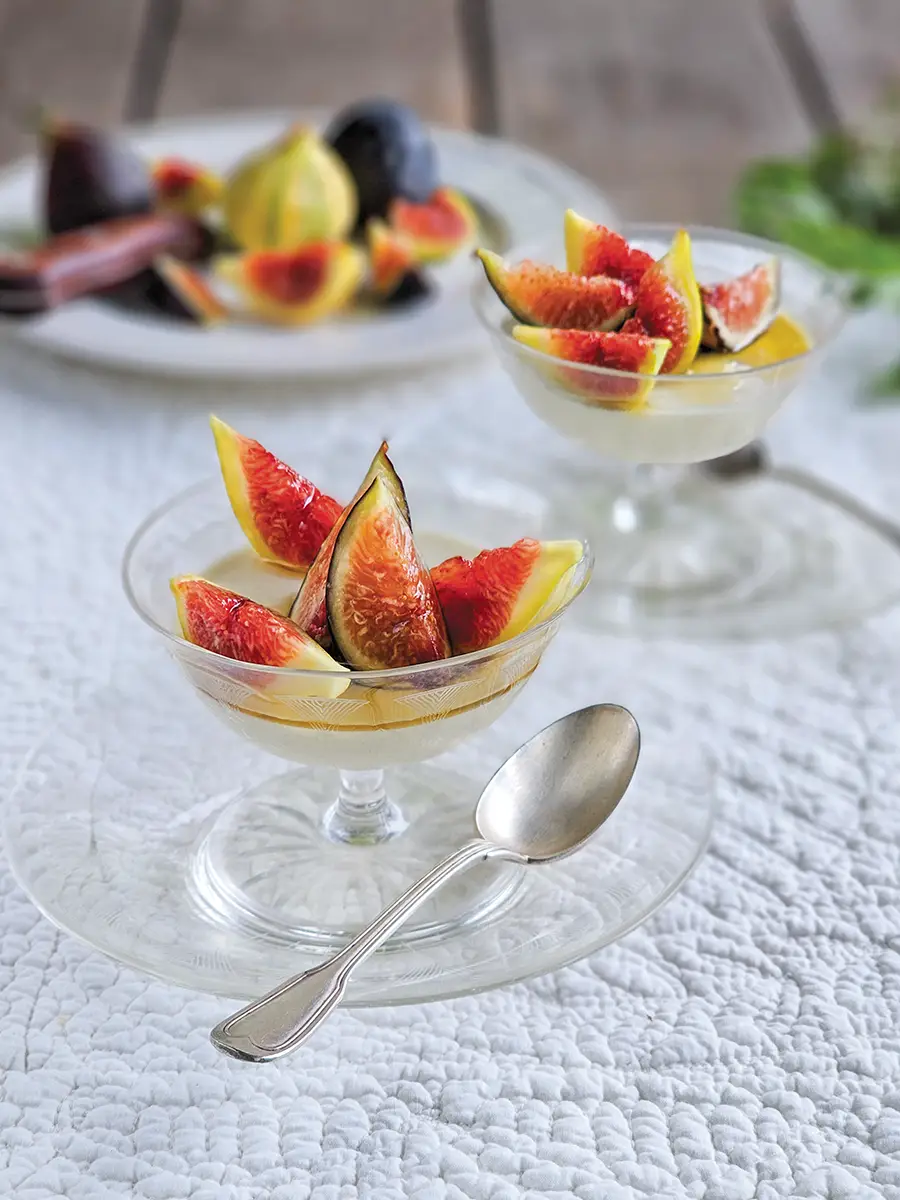
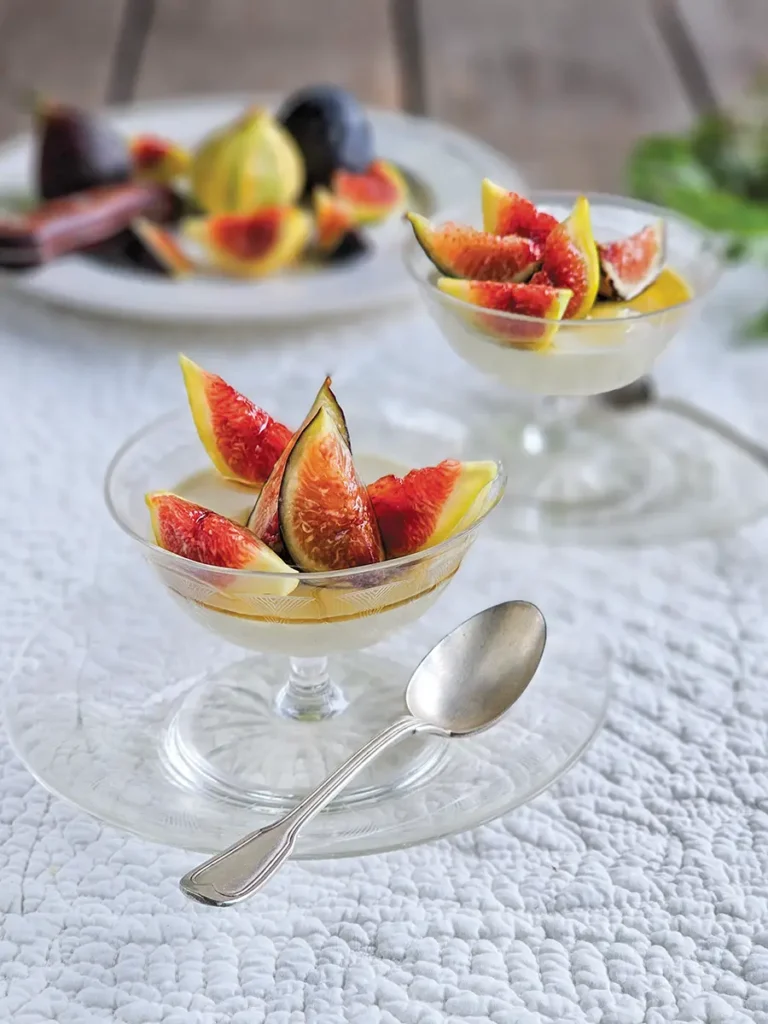
Lemon Verbena Panna Cotta with Honey Glazed Figs

Pascale Beale
Chef, teacher and food writer, Pascale Beale, owner of Pascale’s Kitchen, grew up in an eccentric European family who cherish food, wine and the arts. She is the author of 10 Mediterranean-style cookbooks, including the best sellers Salade and Salade II. Her food memoir, 9’ x 12’: Adventures in a Small Kitchen, a multi-media book, is hosted on Substack. Her latest cookbook is Flavour: Savouring the Seasons.