Lessons From The Tajiguas Landfill
How Santa Barbara County Is Finding Ways Forward
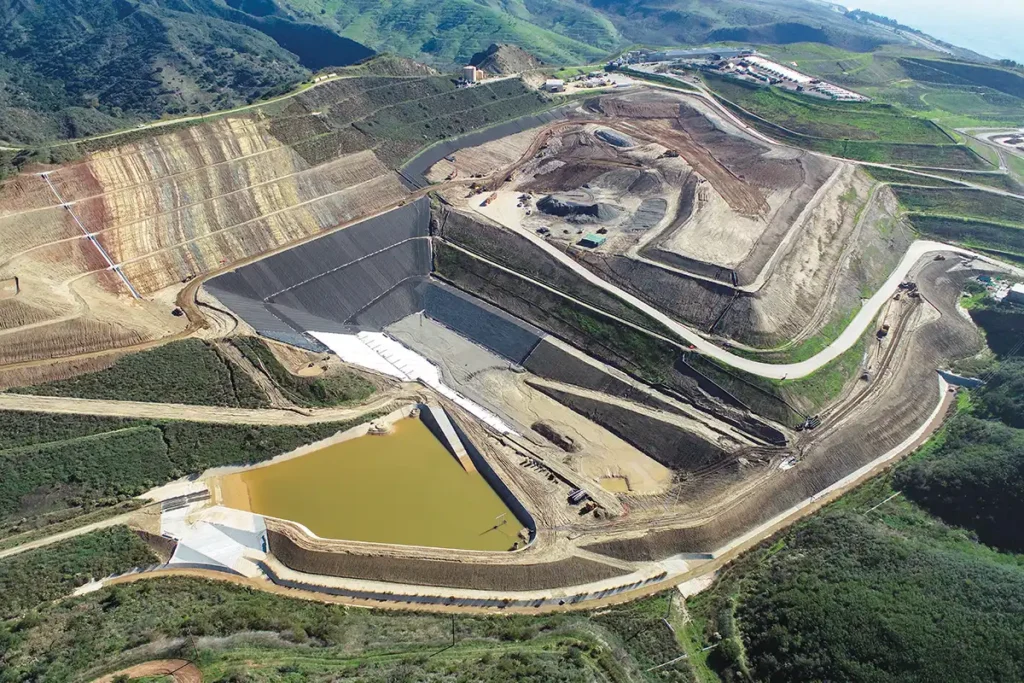
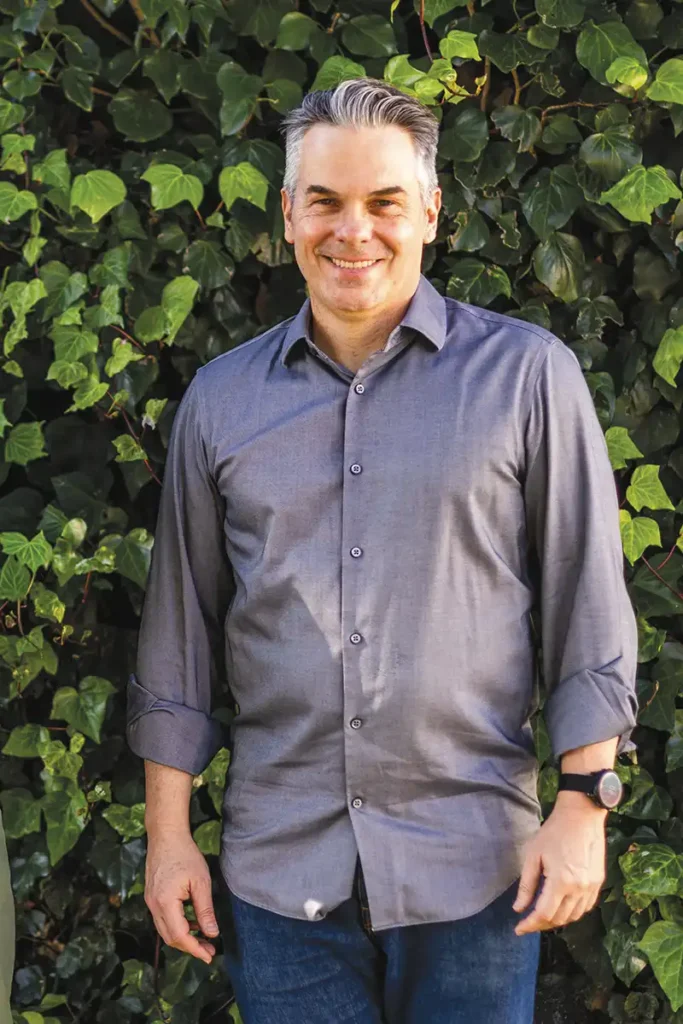
Recently I visited Santa Barbara County’s Tajiguas Landfill. It was my second visit. The first was five years ago, when the County’s ReSource Center was newly completed, and I was curious to take another tour of the state-of-the-art facility, now that it is fully operational.
It’s the landfill with a view. Located near Gaviota, this landfill serves the South Coast as well as the Santa Ynez and Cuyama valleys. I wish everyone who benefits from this landfill would take the tour, since residents of Santa Barbara each generate about 11–12 pounds of landfill trash per day. This is nearly three times the national average of 4.5 pounds, according to Sam Dickinson, senior program specialist for SB county, who led the day’s tour.
Seeing how much trash we produce is humbling. Dickinson showed our small group a picture of a V-shaped canyon when the landfill had just opened in 1967. That canyon became the first of many hills—make that “fills,” in the landscape. The hill, now quite large, was created out of local trash from the late 1960s and into the ’70s. In subsequent decades more hills have been formed, filled in with trash—then dirt—to stabilize the area.
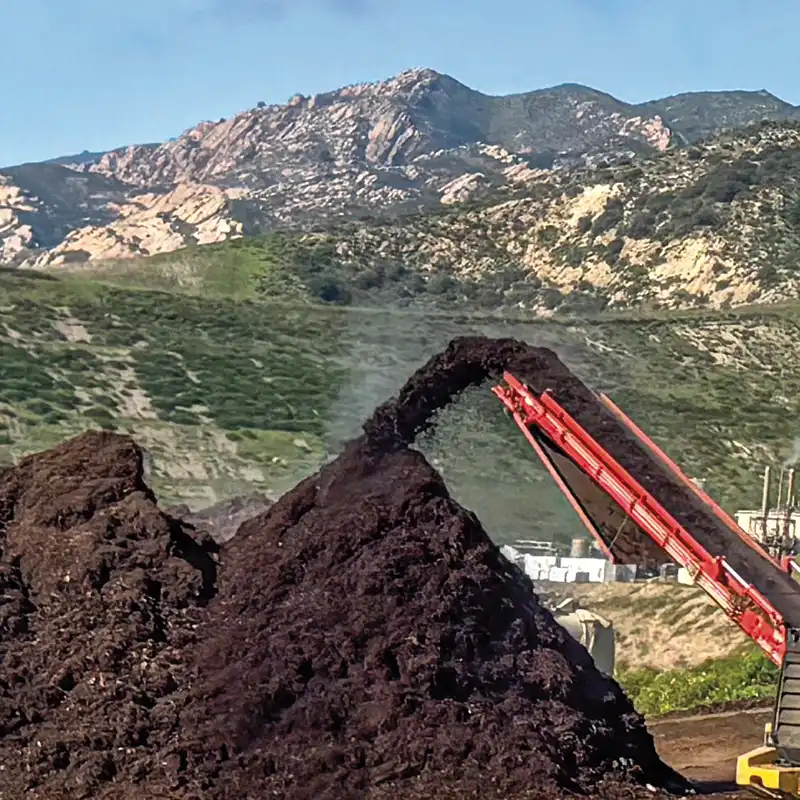
Why is Santa Barbara producing so much? We are an affluent and tourism-driven community, and sadly but predictably, most affluent communities can afford to buy more stuff and can afford to purchase more expensive packaged food. Packaged food creates a lot of waste: lunches to go in plastic containers, fruit already cut up and packaged, snack bags, etc. Many of those containers are a type of rigid plastic that our municipal recycling system can’t process, so into the landfill they go.
To reduce the amount of trash going into landfills, the California Senate passed Bill 1383 in 2022, requiring that 75% of California’s organic waste be diverted away from landfills by 2025.
Just what constitutes organic waste? It’s not all food, though a lot of food is thrown away. It includes other organic materials made from plants: paper towels, Kleenex, soiled pizza cardboard and other food container boxes, which can’t be recycled. Surprisingly, 40% of our trash-can contents is organic waste. It makes a lot of sense to divert this from the landfill, since much of it can be made into compost. Dickinson says that our resource center service area diverts about 90% of possible organics from the trash, so we are exceeding the state requirement.
The county had planned to close this landfill in 2026. But without it, where would the trash go? There are other landfills in Santa Maria and Lompoc, but they are also nearing capacity. Landfills everywhere are running out of space. Santa Barbara County had been planning for some time to develop a facility that could meet that requirement.
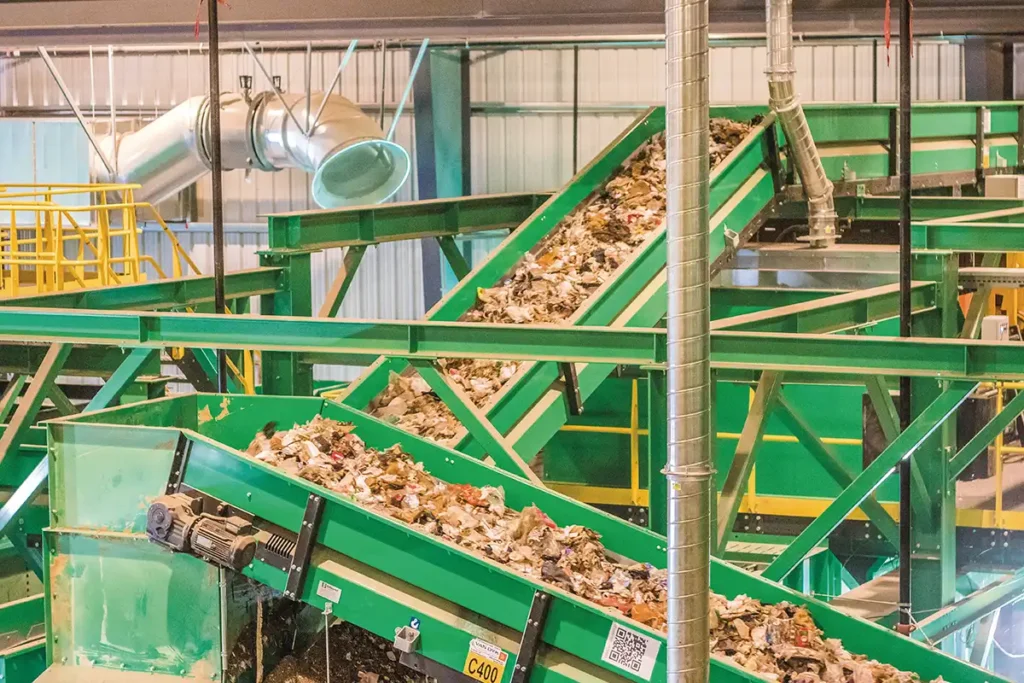
Our “landfill” is much more than just a place to bury trash. It includes a Materials Recovery Facility, nicknamed the MRF, which separates out the trash that’s brought in, using workers and very sophisticated equipment. It pulls out 40–45% of organic materials to be sent to a composting area. Some recyclables (2–3%) are also pulled out of the trash, items that never made it into the blue bins. The remaining 58% of the original mixed-waste material in our trash cans is sent to the landfill and buried. The organic materials that are pulled out are made into finished compost, a three-month process, and is then made available for agricultural use on orchards and some farms.
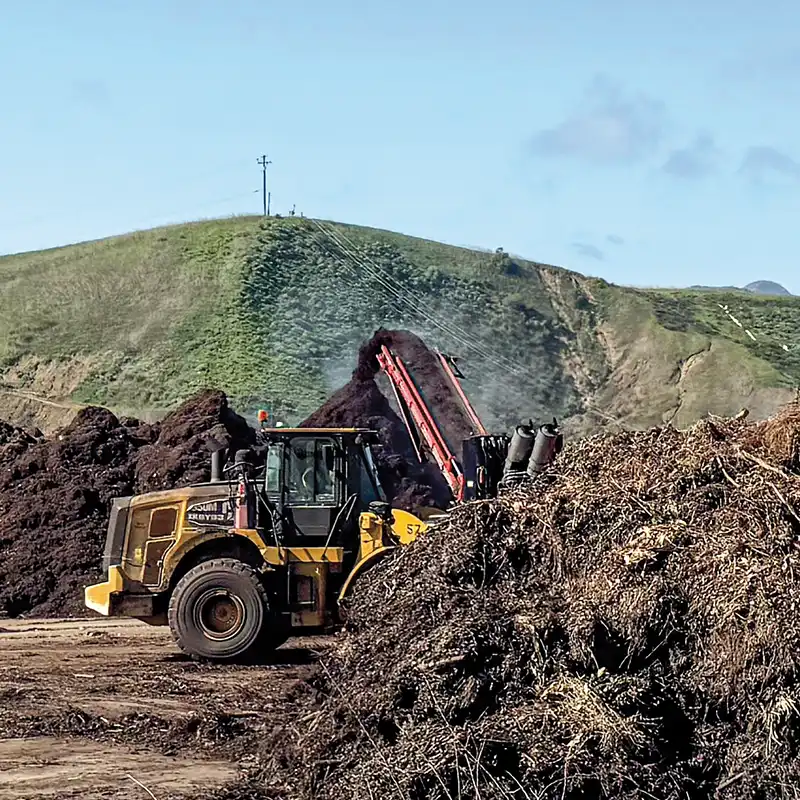
Green waste from our green cans is also processed here. Most of it is chipped and made into mulch, available for free, that customers can use on home gardens. Note: food scraps do not go into green cans.
Our MRF had some initial setbacks. The contractor the county hired to build and run the materials recovery facility was terminated after multiple problems, including a persistent odor, affecting not just the site itself but nearby neighbors. The county is now operating the materials recovery in-house, and the odor problem appears to be resolved.
While it’s great to have this facility that allows us to use a mixed waste bin for trash and organics, our landfill is living on borrowed time. In a way, its convenience removes our need to reduce waste in the first place. Our landfill has been extended for use to 2038. What then? Some countries aspire to produce zero waste by a certain year. It’s interesting that the materials recovery machinery we use at Tajiguas was manufactured in the Netherlands, a country with much more stringent recycling requirements than the U.S., or California.
I am frustrated that stores sell so many convenience foods in plastic. But I realize I am privileged to have a choice: I don’t have to buy convenience foods. I could shop where I can buy meat and fish and have it wrapped in paper, not in plastic. Certain foods would be very hard to buy. Many cheeses are already wrapped in plastic, or come in plastic tubs, like mozzarella or feta. Products that come in glass or cans are great, because glass and cans are easily recyclable. But glass is heavy and breakable, so many manufacturers have switched to plastic containers instead.
Sasha Ablitt of Ablitt’s Cleaners sponsors a very busy recycling program, a nonprofit called Planet Protectors (see sidebar). “In Santa Barbara, we care deeply about our ocean, our farms, and our future,” says Ablitt. “Planet Protectors was founded on the belief that protecting those things starts right at home — even with something as simple as saving a plastic bag.”
Since 2012, Ablitt’s/Planet Protectors collects plastics of certain stretchy types, #2 and #4—the kind used in dry cleaning and plastic grocery bags, among many other things—bales it, then sells it to a company that makes plastic decking. Last year they baled and sold 20,000 pounds of this plastic. When you think about how much a plastic bag weighs, and how few Santa Barbarans are participating in this program (2,200 are signed up as Planet Protectors), that amount is astounding.
Making plastic into decking gives single-use plastic bags another life, though it is not biodegradable. Eventually, many years from now, that decking may end up in a landfill. Let’s hope we’ve figured out a way to keep recycling it by then.
Plastics are so useful, as bags, for one use; and as black plastic sheets laid on the ground between crops, blocking out sunlight to kill weeds; and as to-go boxes to keep cut fresh fruits fresh, saving us from doing the work of preparing a whole pineapple, cutting it, storing it, disposing of the waste. There are many medical uses of plastics, in syringes and all kinds of equipment. Plastic houses our shampoo and makeup containers; all kinds of water and flavored waters, smoothies and drinks are swathed in plastic. It’s lightweight and relatively strong.
Plastic is now being discovered inside our bodies in alarming amounts. We don’t know what it all means, yet. But this is new for human beings, having plastic inside us. It does sound ominous. Plastic is not going away, though. Sasha Ablitt says the industry is planning to double or triple its production in the next few years, despite the concerns.
Plastic-free July is coming around again this summer. It’s a puzzle: How do we live for a month without purchasing food products in plastic? Farmers markets make this relatively easy, though even there certain prepared foods, like hummus, come in plastic. You could buy garbanzo beans at the market and make your own hummus; it’s easy, and homemade is delicious (see recipe in our Spring 2025 issue #60). Many of the meats, because they are frozen, are wrapped in plastic, although some are simply wrapped in paper. Fruits and vegetables are easy—no plastics required.
I’m now exploring the products offered by the two local refill stores, downtown and in Goleta, so plastic packaging can be avoided (see sidebar).
Since we downsized to a new home last year, we’ve produced more waste in our trash cans than we used to. We no longer have chickens to give our food waste to, and we haven’t yet set up composting bins, though we plan to, soon. The bins we like to use are made of recycled plastic —giant rotating drums. You can make compost in other ways, though making compost in open bins tends to attract rodents in our neighborhood. We brought our worms and worm bins with us and are still vermicomposting.
Carlyle Johnston, ReSource Center manager at Tajiguas, says one of the best things we can do at home is to make compost. This works if you have the room, much harder to do if you live in an apartment. If you live near Isla Vista, however, you can take your green waste and even food scraps to the Isla Vista Compost Collective (see Options for Next Steps below). They take the organic waste and make it into compost and potting soil, available for purchase.
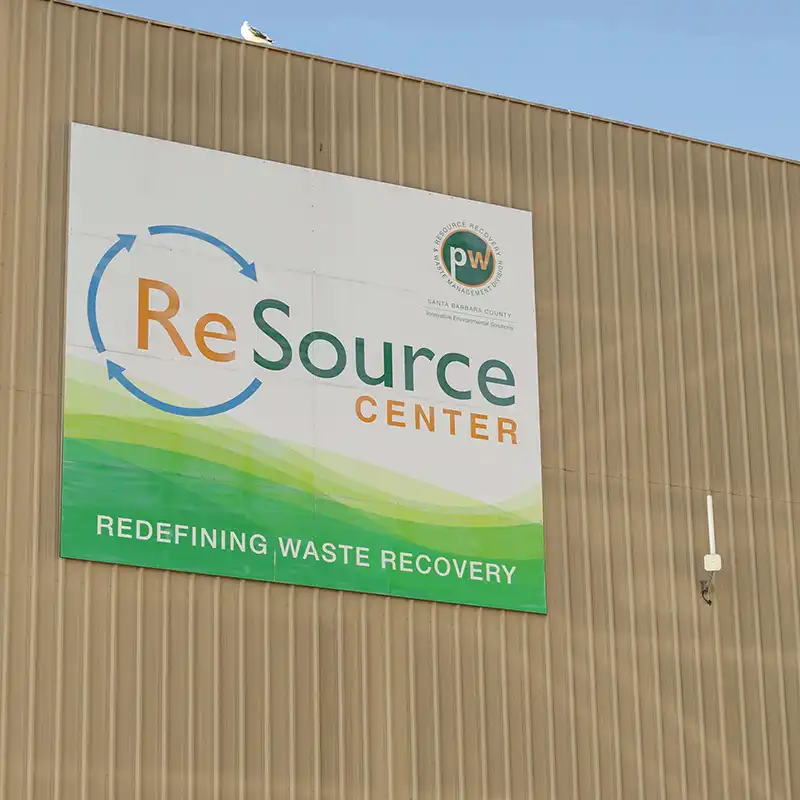
The ReSource Center at Tajiguas. Photo: R. Brown 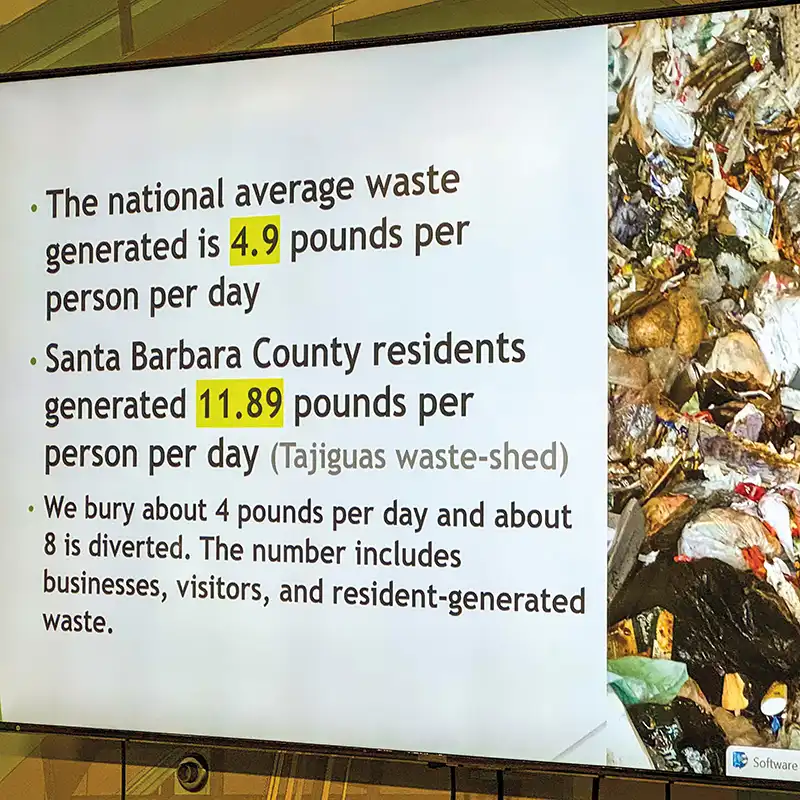
Tour information at the ReSource Center. Photo: R. Brown
I have a friend in my neighborhood who receives donations of green waste to add to her compost, from friends who don’t have their own composting facilities.
Maybe we’ll have an eco-renaissance. We surely need one. Here’s an Earth Day vision: apartment and condominium complexes have compost piles, so you can walk your green waste over to a disposal area. Residents take turns working the compost pile. Finished compost is used to fertilize the building’s landscaping, or in community garden beds. Hey, a girl can dream.
We could purchase fewer items wrapped in plastic. This means shopping at stores with bulk bins, bringing our own containers or bags, or using paper bags to avoid using plastics. It isn’t always convenient, but it’s possible. Nothing is perfect, but in small ways we can make things better.
We could pressure our government to require that manufacturers use biodegradable or truly recyclable containers, like recycled cardboard, paper and glass. Meanwhile, says local author Janet Lucy, “We’re waiting for government or corporations to enact policy when we can make other choices.” Her children’s book, Makana is a Gift, shows the impact of plastic pollution on our oceans, and especially in the life of a little green sea turtle.
In the interim, our ReSource Center is reducing landfill waste. The landfill and composting facility at Tajiguas generates methane gas, 75% of which is being captured and is running turbines to produce electricity. Says Dickinson, “Recycling is better than doing nothing.” First, reduce what we use. Then, reuse whatever can be reused. And lastly, recycle — because recycling takes additional energy, it should be our last, not first, resort.
Options for Next Steps
Landfill Tours
To take a fascinating tour of the Tajiguas Landfill and ReSource Center, sign up at the county’s website. For teachers who’d like to bring students, coordinate a field trip with Explore Ecology. The landfill uses falcons to chase away gulls. If you’re lucky you might get to see the falcon and falconer at work! This tour is highly recommended.
lessismore.org/resourcecenter
exploreecology.org/environmental-education for school tours
Planet Protectors
Planet Protectors is a nonprofit spearheaded by Sasha Ablitt of Ablitt’s Cleaners. You can sign up to attend plastic recycling days, held twice a week, where you can bring your recyclable plastic. The Planet Protectors bale the reusable plastic and send it to manufacturers who are converting the plastic into decking and some furniture products. By early February of 2026, they had already collected 5,000 pounds. So far 2,200 people have signed on as Planet Protectors; some volunteer their time, interfacing with local businesses, which often generate lots of plastic, to help them collect it.
Planet Protectors also collect corks, a natural material made from the bark of cork oak trees and recycled by ReCORK. The corks can be made into footwear and other products. No plastic corks, please.
Isla Vista Compost Collective
In Isla Vista, you can collect and drop off your food scraps for composting at four Isla Vista locations. The scraps are converted into compost or potting mix. Place an order and arrange a pick-up time, or arrange to pick them up at Mission Refill, the refill store at the Calle Real Shopping Center in Goleta.
islavistacsd.ca.gov/isla-vista-compost-collective
Refill Stores
We are fortunate to have two refill stores in the Santa Barbara area. Mission Refill carries household cleaning products and personal care items, such as dish soap, face wash and toothpaste. I personally love their Huppy brand toothpaste tabs—no tube! Products come in biodegradable containers, or no containers—bring your own jars and bags and refill on the spot. Mission Refill also carries a rack of gently used clothing for sale, and many useful items for the kitchen and home, such as cleaning brushes made of natural materials.
Sunkissed Pantry is a refill store in downtown Santa Barbara. In addition to cleaning and personal care items such as Mission Refill sells, they offer many dried herbs and spices, teas in bulk and several types of salt. They even carry houseplants and some jewelry.
missionrefill.com
sunkissedpantry.com
Ridwell
I’ve been using a mail-in recycling service since May of last year to recycle plastics I can’t recycle in our area. Called Ridwell, it is based in Seattle but also operates in other American communities. I send them multi-layer plastics, the kind potato chips and many grains, beans and flours are packaged in. The cost is $12 per bag. It’s a postage-paid plastic bag I mail to Van Nuys (they have a processing center there for their LA County customers). Over the last year, I’ve filled that large bag every 6–8 weeks. I pack it tight. Once received, they send me another bag to fill. They also process film plastics, the same as Ablitt’s/Planet Protectors, so if you don’t have time to go to a recycling session at Ablitt’s you can use this.
Keep in mind the plastic is mailed (more carbon footprint), and in a special plastic bag that must be produced, then recycled later. They also have a mail-in cork service. Other cities in the US have curb pickup service and can recycle more items, but this is not yet available in Santa Barbara. The plastics Ridwell recycles are made into decking, furniture and plastic blocks used in road base. Ridwell is quite transparent about the companies they send to and what happens to the recyclables.