Hummus Tehina

I have a memory of the potlucks of my early-’70s childhood, where my senses were overwhelmed by a gritty, textured, lumpy mass strongly flavored with garlic and lemon juice. It was called hummus and it appeared alongside woody grocery-store carrot sticks and stringy celery. I rejected it fully in the midst of Santa Barbara’s embrace of conscious cooking that included alfalfa sprouts in sandwiches and peanut butter that required constant stirring (although somehow I was OK with carob?).
Thankfully, I grew up. Now I love hummus! Credit goes to my time living in England, always feeling a little cold and a little poor, but luckily living within a few minutes of a corner shop that sold exceptionally decent baguettes and exceptionally decent hummus—cheap carbs that also tasted great. It was my go-to quick meal when I didn’t have time to prepare food, which was often.
On a visit to Motley Crew Marketplace in Buellton, I spied a fabric bag of garbanzo beans stating “Jalama Valley— dry farmed by a small family farm.” It immediately went into my shopping bag with the plan: hummus.
The humble chickpea, Cicer arietinum, also called a garbanzo bean, is in the legume family along with peas and beans. It dances in the world of superfoods, considered to be both a carbohydrate and a protein. It is high in fiber and easy on your blood sugar. It is a staple ingredient in numerous cultures and cuisines, and is thought to have originated in the Fertile Crescent of the Middle East, approximately modern-day Syria, Turkey and Iran. Its uses range from flour—called besan or gram flour—to a whole-food pulse in curries, soups and salads, but here it is for hummus, a purée that can delight me for any meal.
The hummus that sustained my life while I was going to school in England was a whipped creamy dream that needed no addition of toppings (the tub didn’t come with them, and I couldn’t afford them anyway), and was scooped up with pieces of baguette I tore off and snacked on throughout the day. Upon returning to Santa Barbara, I followed recipes here and there, but didn’t achieve hummus heaven until my first trip to Philadelphia with my future husband. There I experienced the hummus from the restaurant Zahav just as it received the 2019 James Beard Award for best restaurant in the country. This was it. A hummus based on Mediterranean recipes, blended to creamy perfection, served alongside hot laffa flatbread baked fresh to order, often by the chef himself. Toppings varied from a simple drizzle of olive oil and a sprinkle of za’atar, to fresh salads, nuts and braised meats. There’s no other way I could make it now.
If you want instant gratification, with no time to cook from scratch, go down to the Santa Barbara farmers market and pick up a tub of Baba’s Hummus. You can also buy the chickpeas from them if you do want to prepare a fresh batch.
A note about hummus. The word hummus means chickpea in Arabic. I really need to make this clear. The addition of tahini to another purée does not make it hummus. Only chickpeas make hummus. If you see a soft, creamy white-bean puree with tahini, I’m sure it’s delicious but it is never to be called hummus.
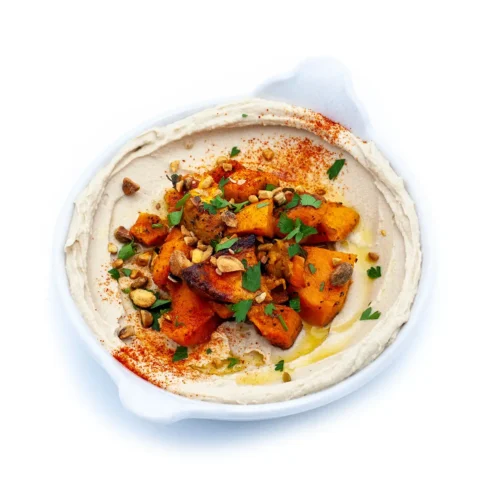
Hummus Tehina
Ingredients
- 1 cup chickpeas, dried, organic (Local sources include Jalama Valley’s garbanzo beans sold at Motley Crew Marketplace in Buellton, or the Baba booth at the Santa Barbara and Goleta farmers markets.)
- 2 teaspoons baking soda
Tahini Sauce
- 4 cloves garlic, peeled and lightly smashed
- ⅓ cup lemon juice, from 1-2 lemons, more to taste
- 1¾ teaspoons kosher salt, separated, more to taste
- 1 cup tahini, organic
- Water, cold
- ½ teaspoon cumin
Optional Toppings
- Olive oil
- Parsley, freshly chopped
- Lemon juice
- Sumac
- Smoked paprika
- Za'atar
- Pine nuts, toasted
- Vegetables, roasted, cut into bite-size pieces, such as butternut squash, carrots, beets
Instructions
- The night before, soak the chickpeas with 1 teaspoon of baking soda in a covered bowl.
- In the morning, drain and rinse the chickpeas, then place in a medium pot along with the second teaspoon of baking soda and cover with water, about 4 inches above the chickpeas.
- Bring to a boil, then turn down the heat to a low boil, cooking for up to an hour until the chickpeas are very soft. It’s OK to get them go mushy; this is the key to creamy hummus. Check the pot periodically to ensure the water doesn’t boil over or to top up with water if it gets too low.
- Meanwhile, prepare the tahini sauce: Place the smashed garlic and lemon juice in a blender or food processor, along with ¼ teaspoon of salt. Blend lightly to break up the garlic.
- Add the cup of tahini and blend. The tahini will quickly become a clumpy paste. Drizzle in the cold water, about ⅓ to ⅔ cup, a little at a time and continue blending until it forms a smooth, creamy and pourable sauce.
- Add the cumin and remaining salt, and blend. This tahini sauce is a base that can be used for a plethora of other recipes, but this batch will all go into the hummus.
- Once the chickpeas are boiled and very soft, lightly drain, retaining the drained liquid.
- Add the boiled chickpeas to the tahini sauce and turn the blender on full and let it go until completely smooth, adding the drained liquid back as needed. Note that while it’s hot, the hummus will appear more liquid and will firm up once it starts cooling.
- Taste the hummus and add more water and salt as needed; keep blending, 2 minutes or more. As long as your machine doesn’t overheat, you cannot overblend this—creaminess is key.
- To serve: Place a generous scoop in a shallow bowl and swirl your serving spoon through the hummus to create a crater. Drizzle in olive oil and lemon juice for a simple dish. Your hummus can also contain a variety of other toppings, like fresh chopped parsley, sprinkles of smoked paprika, sumac or your favorite za’atar. You can pile the center with roasted vegetables, braised meats, olives or any variety of Mediterranean salads for a more substantial meal.
Notes
Nutrition

Rosminah Brown
Rosminah Brown is a Santa Barbara native who types fast and eats slow. She once jumped in the Neptune Pool at Hearst’s Castle. She is still upset that JR’s BBQ closed. She is always seeking a perfect, singular, exquisite bite of food.