Spring Winds in a California Kitchen
Like the mistral that unfurls itself across Provence, blowing down through the Rhône Valley to the Mediterranean bringing with it chilly weather and even colder seas, or the sirocco that billows up from the Sahara Desert, bringing heat and its signature red dust that sometimes dust the snowy mountaintops in the Alps in spring, we too have winds that shape our climate and whose effects can transform our landscapes. We have lived through the aftermath of fires sparked by Santa Anas or floods driven by atmospheric rivers. I thought about all these atmospheric phenomena as I was rereading a collection of essays by Elizabeth David entitled South Wind Through a Kitchen.
David was a British food writer whose transformative work, The Book of Mediterranean Food, literally brought a ray of sunshine to still-rationed Brits when it was released in postwar Britain in 1950. The book spoke of dishes rich in olive oil, scented with garlic and plump olives.
“Provence is a country to which I am always returning, next week, next year, any day now, as soon as I can get onto a train. Here in London, it is an effort of will to believe in the existence of such a place at all. But now and again the vision of golden tiles on a round southern roof, or of some warm stony herb-scented hillside will rise out of my kitchen pots with the smell of a piece of orange peel scenting a beef stew…”
She allowed Britons to imagine a better time, a richer palette and more succulent, albeit simple, meals. What I realized reading her books is that in the face of perilous situations, what we had and still have in common is the collective resilience of the local populace. David could be describing California’s Central Coast, and, faced with whatever hardships nature and the environment have thrown our way, our community comes together. What better way to show our sense of community than through food?
David is not alone in championing the benefits of a hearty meal or the collective power of gathering people around a table. From César Chávez, who once said, “If you really want to make a friend, go to someone’s house and eat with him… The people who give you their food give you their heart,” to José Andrés, whose World Central Kitchen advocates, “A meal is never just a plate of food. It has the power to change the world, to bring people together, to tell the story of who we are and where we’re going.” The food in question doesn’t have to be elaborate or require expensive produce. The key is in the sharing of that food, and it is easiest when it is abundant. This is when seasonal eating comes to the fore.
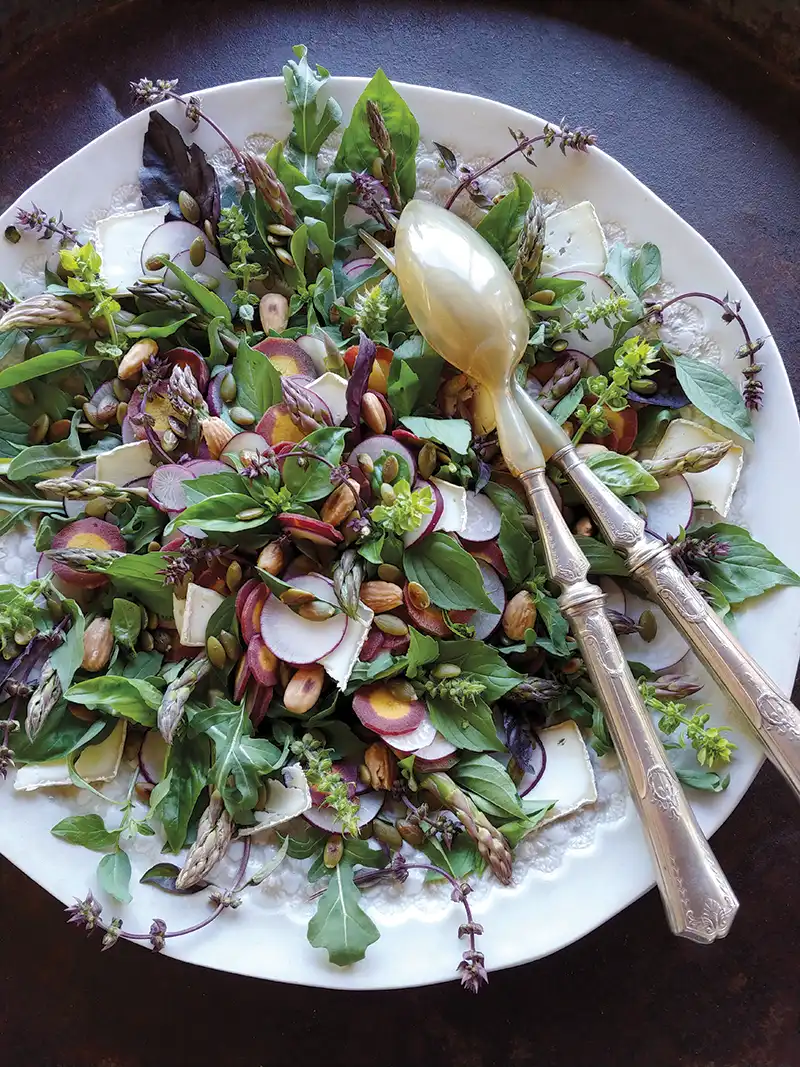
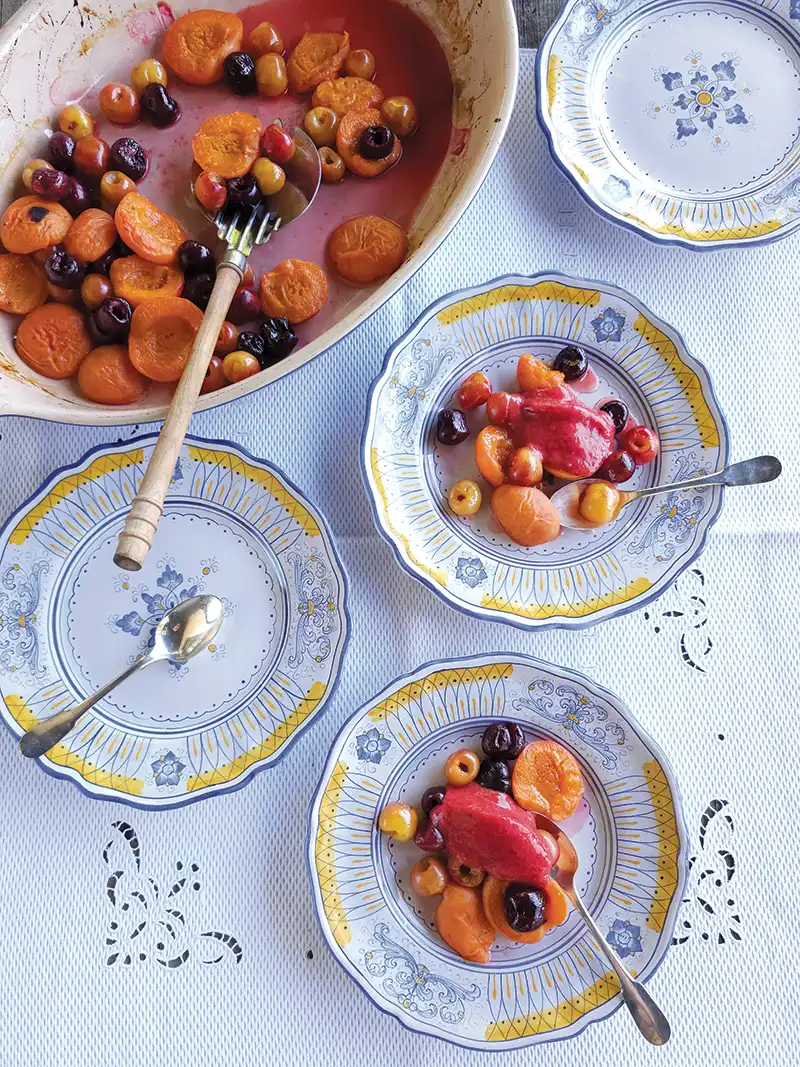
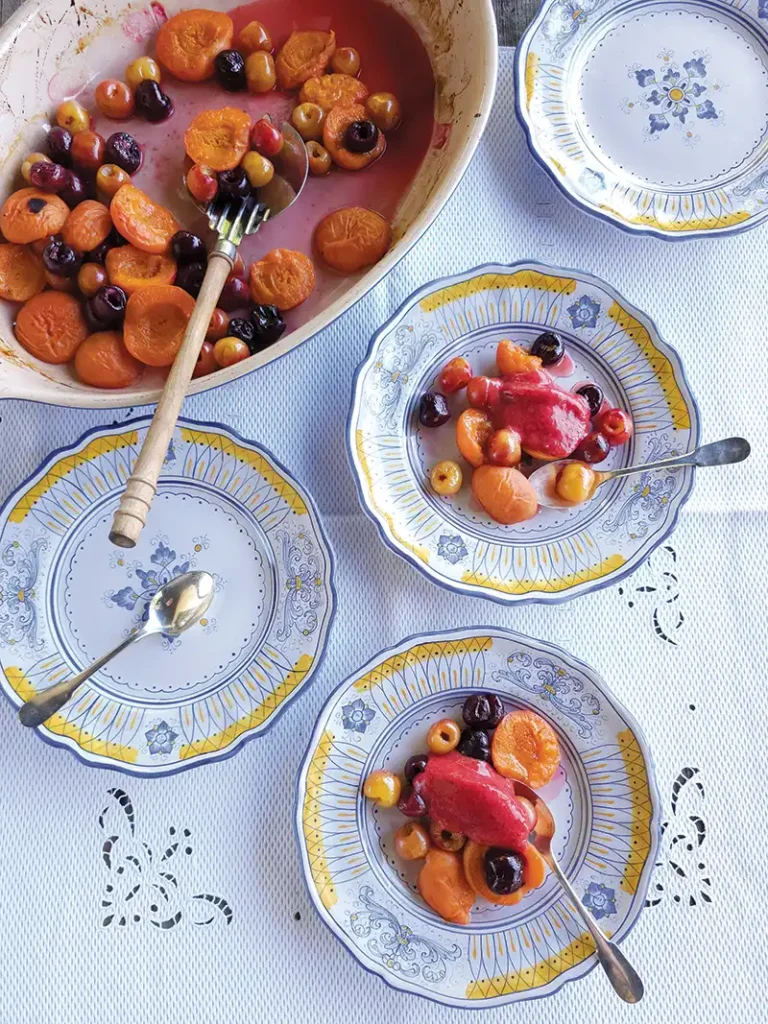
Stroll through any one of over a dozen county-wide farmers markets and you will have your pick of sensational seasonal produce. Tables of beautifully arranged fruit and vegetables beckon passers-by and feed one’s imagination. Who can resist ruby red cherries or golden apricots when they appear for their all-too-short season? This is the time when I rush to make apricot jam, trying to capture its essence with enough jars to last through the year, and to share with friends and family.
But what happens when there is a profusion of those fruits or vegetables? What if not all the produce is sold? Or if less-than-perfect produce is not harvested? In the past, the excess would often end up in a landfill or plowed under, but for the past 20 years a remarkable group of local community-led organizations have gleaned that excess and distributed it to those in need. Backyard Bounty, Veggie Rescue, Food From the Heart, The Bucket Brigade Humanitarian Farm and many local community gardens are among entities across our county that harvest locally grown produce and have collectively distributed millions of pounds of food since their inception. In a country where nearly 40% of the food supply goes to waste and a county where, sadly, close to 20% of the population lives below the poverty line (now the second-highest in California), these community-led endeavors are a nourishing lifeline to those in need. We are fortunate to be surrounded by an extraordinary farming community (there are just under 1,500 small farms in the county), many of whom partner with these organizations and donate their produce.
There is a long history of communal food sharing. From the Victory Gardens that sustained the country during the two World Wars to the profusion of pop-ups that fed us during the COVID pandemic to meal trains that spring up when a family is in crisis, each time, the community rallies.
If one is fortunate enough to have access to fruit trees or has planted tomatoes, thinking of all the delicious things you will make with them, then, months later, when all the fruit ripens at once, you wonder what on earth you are going to do with all that bounty. The answer, unless you are a prolific jam-maker or canner, is to share it if you can. I have a friend who annually puts out a call to her nearest and dearest to come and pick what they want from her overproducing plum and peach trees, as her family cannot eat it all, and another who regularly leaves heavenly boxes of citrus on my doorstep from her prolific trees. These are unexpected and much-appreciated gifts from the land, and I happily exchange fruit for jam.
As acclaimed chef Eric Ripert once wrote: “Cooking is a holistic process of planning, preparing, dining, and sharing food. I place food at the center of our humanity, as it nourishes not only our physical bodies but also our emotional and spiritual lives. Food is truly a cultural phenomenon that informs our traditions and our relationship with the earth. I genuinely believe that food connects us all.”
I couldn’t agree more.