100 Years of the Santa Barbara Botanic Garden
Where Abundance and Conservation Come to Life
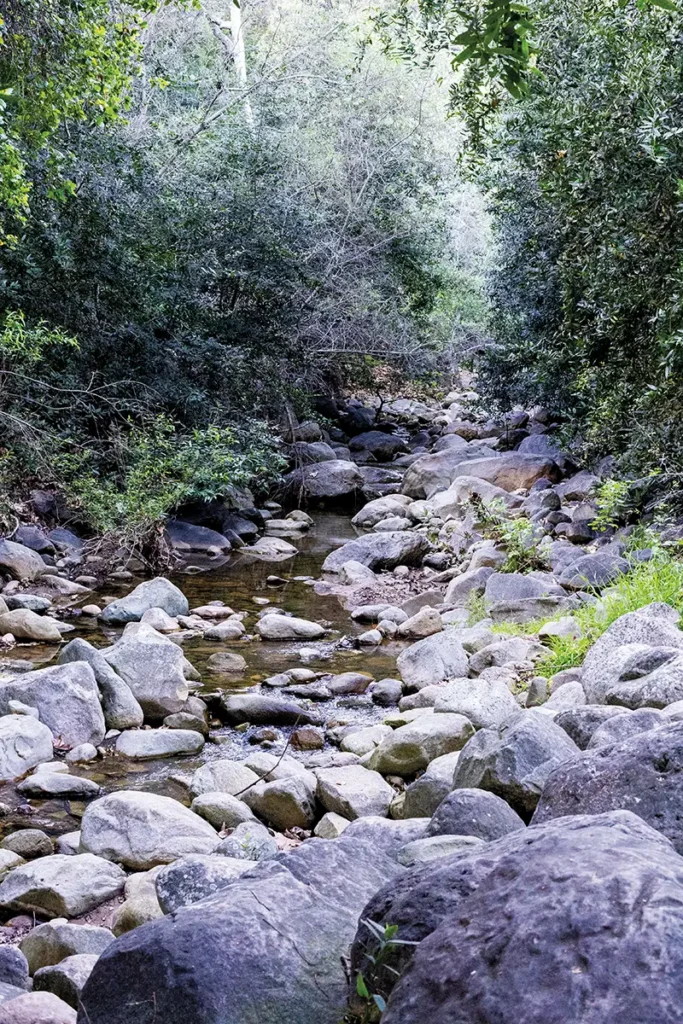
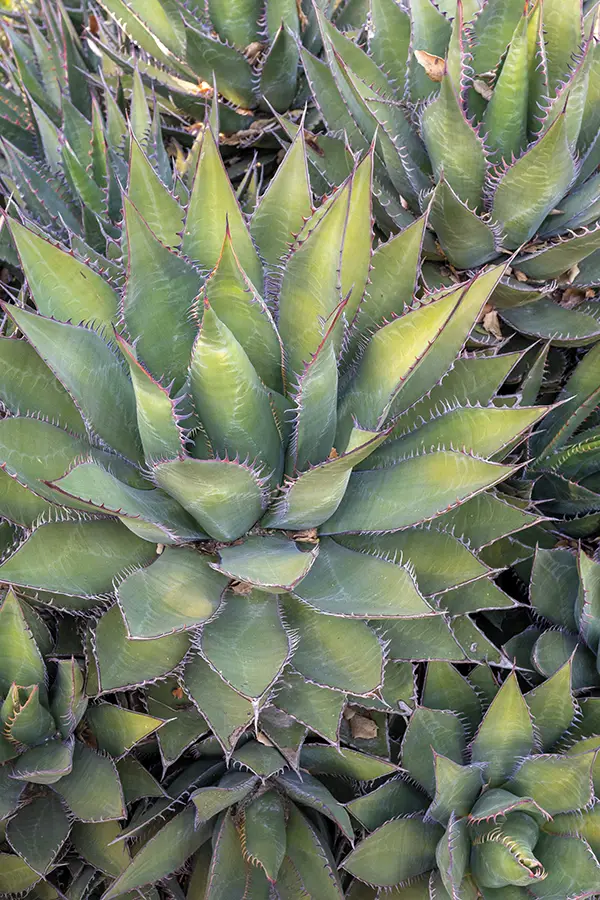
When you step onto the expansive grounds of the Santa Barbara Botanic Garden, it’s easy to feel a sense of abundance. Surrounded by more than 1,000 California native plants, the landscape is lush, vibrant and truly alive—an environment that appears to be effortlessly thriving. Of course, there’s far more than meets the eye. The complex ecosystems and intentional stewardship that sustain the Garden point to a deeper definition of abundance, one shaped by balance, resilience and purpose.
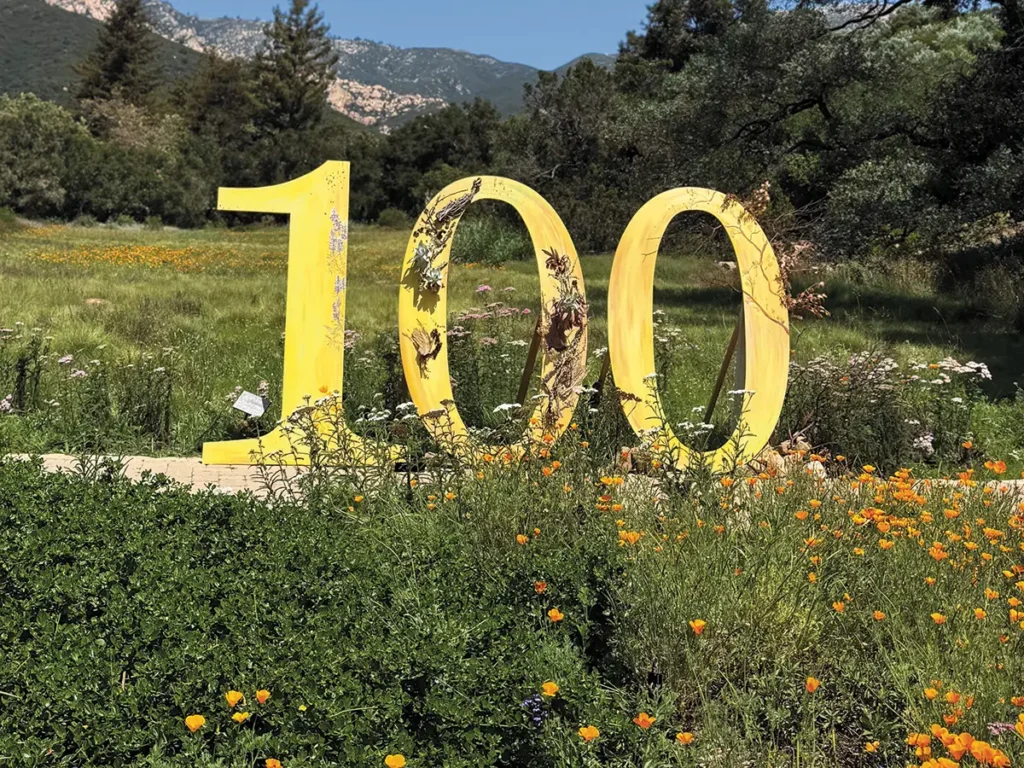
Since its founding in 1926, the Santa Barbara Botanic Garden has remained rooted in the simple yet powerful belief that native plants are essential to the health and well-being of both people and the planet. As it celebrates its 100th anniversary this year, the Garden invites us all to look beyond surface-level beauty and reconsider what an abundant environment really means. It’s not just about what’s visible, but the complex living ecosystems that make it all possible.
The story of the Garden began to take shape in 1925, when the Carnegie Institution joined forces with the Santa Barbara Museum of Natural History to envision creating a botanic garden for the region. Just one year later, that idea took root when local philanthropist Anna Dorinda Blaksley Bliss purchased 13 acres in Mission Canyon with the intent that it be developed into a botanic garden as a memorial for her father. Along with the land, she created an endowment fund to ensure it would be maintained.
What started as the Blaksley Botanic Garden quickly grew in both size and purpose. By the early 1930s, the Garden had expanded to 24 acres and narrowed its focus to native plants of the California Floristic Province (an area spanning from Baja to the southern border of Oregon), making it the first botanic garden in the country devoted exclusively to native plants.
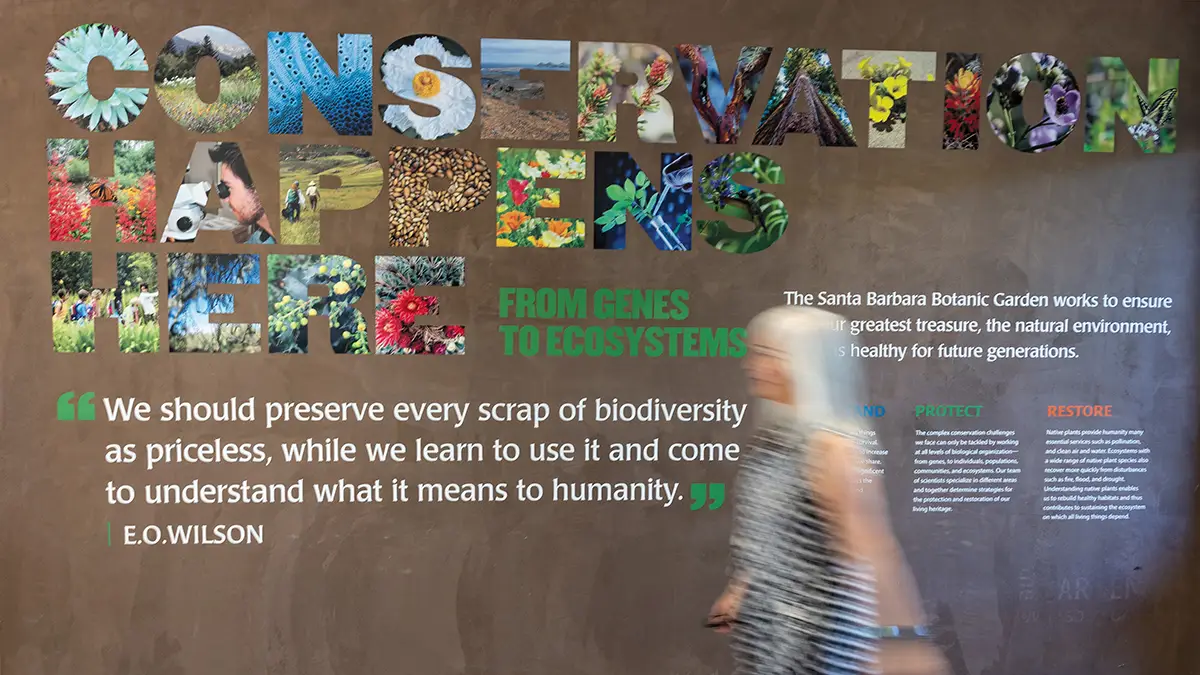
“Our goal is to connect people more deeply with the Garden’s mission to conserve native plants and habitats.”
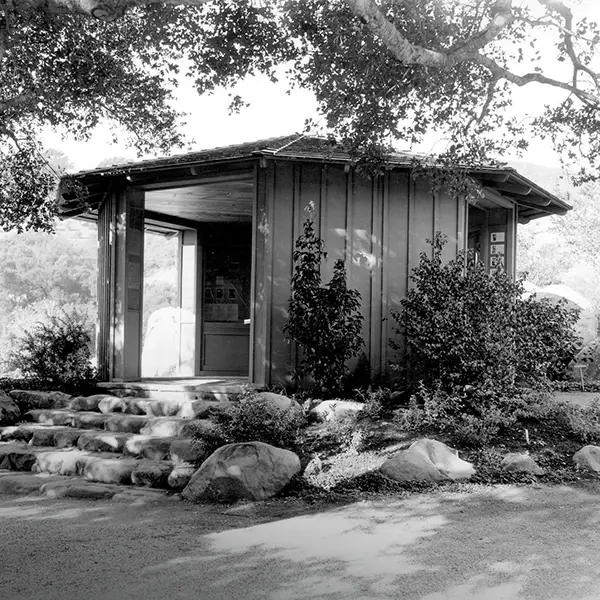
Renamed in 1939, the Santa Barbara Botanic Garden has since grown into a defining force in botanical conservation. Now encompassing 78 acres of native plants, along with a library, nursery, education building and conservation center, the Garden continues its unwavering commitment to plant conservation and ecological restoration.
“Over the past 100 years, the Garden has grown from a local destination to a global leader in native plant conservation,” says Scot Pipkin, director of education. “Our hope is that with each visit, this beautiful, ornamental garden serves as both an inspiration and invitation for people to become native plant stewards in their own yards and communities.”
Adds Steve Windhager, executive director, “When we recognize that native plants sustain nearly all life on this planet, it becomes clear that even the smallest actions can make a meaningful difference. When someone incorporates native plants into their own community, that person becomes part of the conservation movement we’re working to champion.”
Indeed, part of the Garden’s mission is to help people understand why native plants matter, now maybe more than ever.
“More than 80% of the world’s biomass is made up of plants and insects,” explains Windhager, “and many of those insects rely on one specific host plant. Without that plant, the species disappears—which, ultimately, cascades up the food chain and affects everything else, including us.”
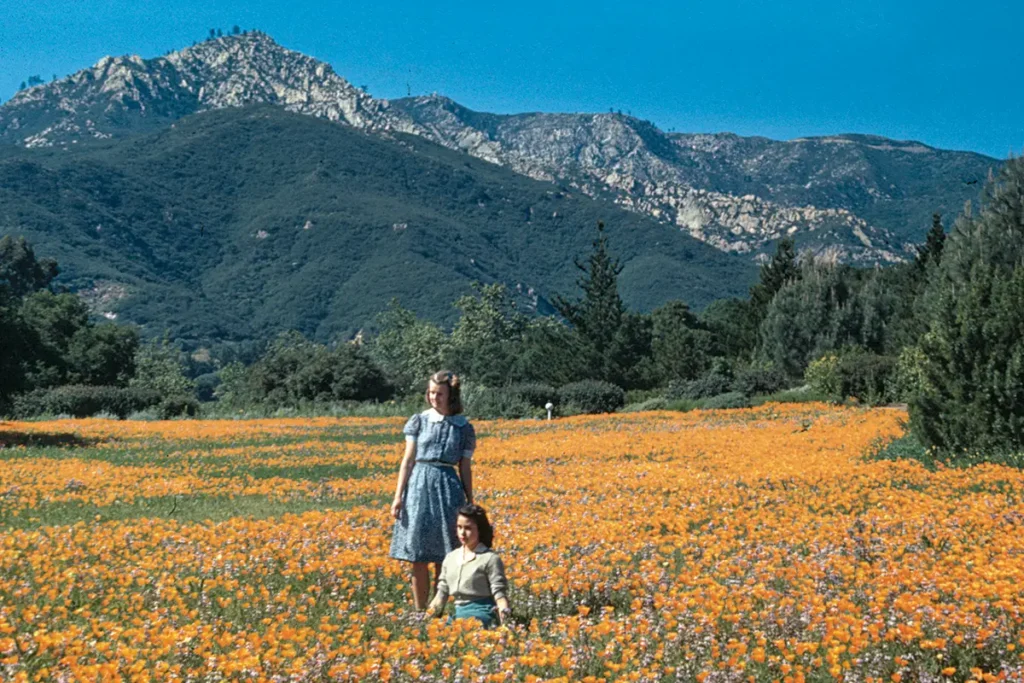
That impact extends beyond our environment and into our kitchens. Many of the pollinators that rely on native plants play a vital role in growing much of what we eat, including fruits, vegetables and seeds. When ecosystems falter, it’s not just species diversity at risk, but the resilience and future of our food supply.
As climate change, habitat loss and declining biodiversity due to human activities reshape our environments—and the way we grow and experience food—native plants can offer a powerful solution. Adds Windhager, “Plants can offer hope and tangible results, cleaning our air and water, providing essential habitats for countless species and ensuring biodiversity will not just survive but thrive.”
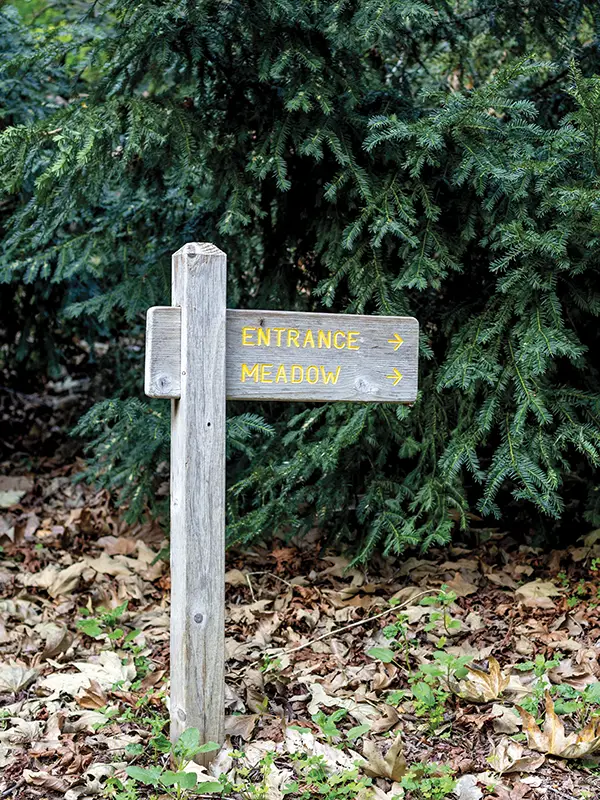
While wandering the Garden’s grounds offers a glimpse into its beauty and purpose, that’s only part of the story. Behind the scenes, a dedicated team of employees and volunteers spends countless hours researching, preserving and protecting the surrounding landscapes—ensuring every native plant has staying power.
Much of the Garden’s scientific conservation efforts take place in the Pritzlaff Conservation Center, built in 2016 following the 2009 Jesusita Fire that burned 80% of its grounds. Inside the LEED-Certified building are research and genetics labs, along with the Clifton Smith Herbarium, which houses over 230,000 pressed and dried plant, lichen and fungus specimens—an impressive archive of plant life that dates back to the 1800s.
The Pritzlaff Conservation Center is also home to a climate-controlled (and fire-resistant) Seed Bank holding nearly 5 million rare seeds.
“Our seed program is incredibly involved and meticulous,” says Windhager. “Our Rare Plant Conservation team goes out into the field to find and harvest seeds by hand, then each seed is brought back here to be dried, cleaned and cataloged. Half the collection remains in our seed bank, while the other portion is sent to the National Laboratory for Genetic Resources Preservation in Colorado. Today, we’re preserving 424 different plant species from across California and Baja—each seed a living safeguard for a species that might otherwise disappear.”
While many of the Garden’s restoration and preservation programs take place beyond public view, visitors can still engage with the conservation center. Outside, guests can enjoy sweeping ocean and island views, while inside, the Gallery offers rotating exhibits and educational displays that bring the garden’s conservation efforts to life.
“Since 2010, the Garden has gone from working on two conservation projects to now 50 across California,” says Windhager. “The Gallery is a place to showcase some of our preservation work, both here and offsite, making everything more visible to the public.”
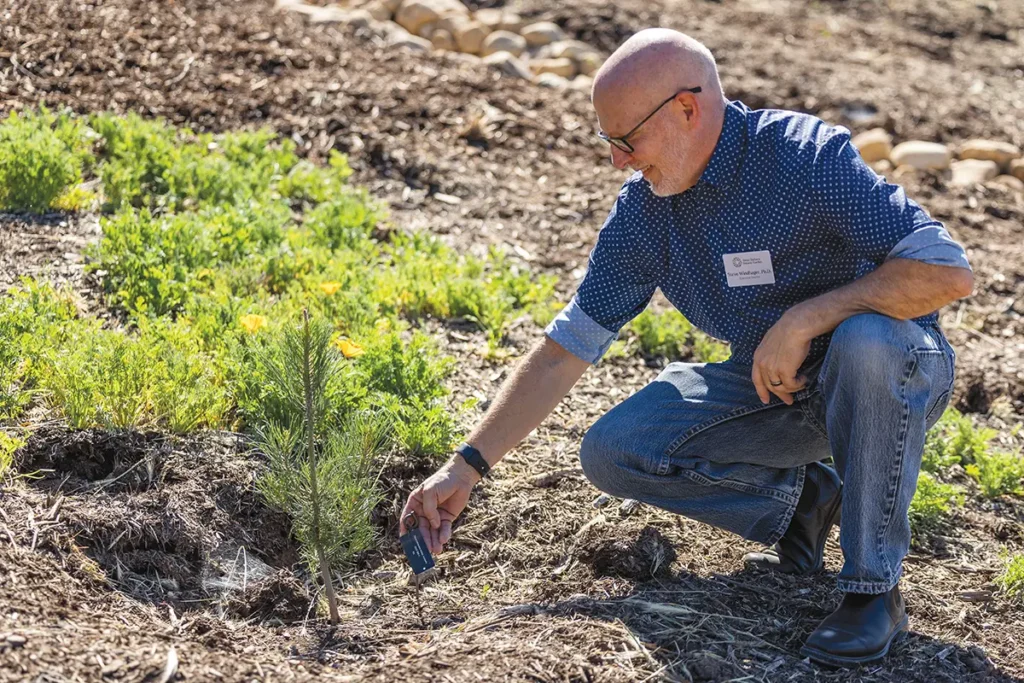
Across Santa Barbara and beyond, the team is actively restoring habitats in places like Elings Park and the Cuyama Valley, reintroducing plant species that support pollinators, stabilize soils and help rebalance ecosystems. These efforts extend the Garden’s vision of abundance well beyond its borders, where native plants function as an essential building block for healthy and resilient environments—the very foundation which agriculture depends on.
That impact continues on a community level. Through its California Native Plant Landscaper Certification Program, more than 100 graduates are now equipped to design and maintain sustainable landscapes, while the Garden has also provided firesafe planting strategies to hundreds of local residents for their homes.
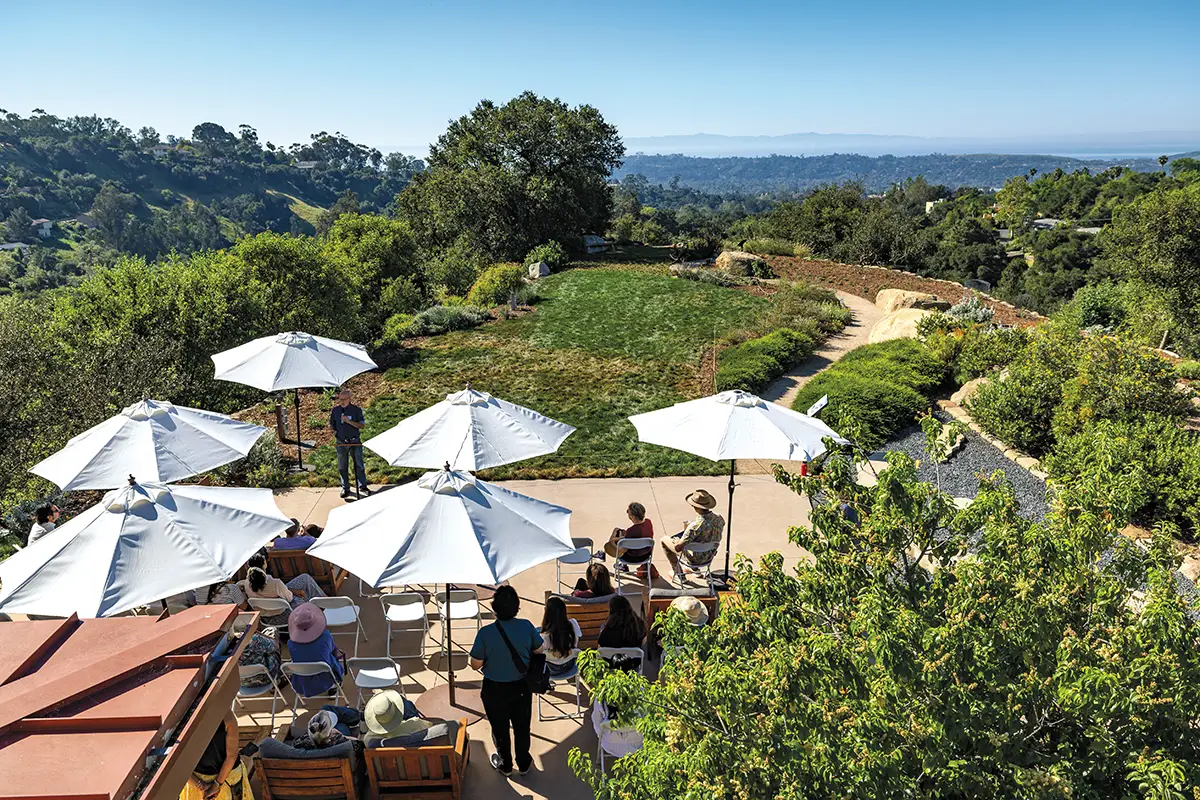
In celebration of its 100th anniversary, the Garden is inviting visitors to engage in new and purposeful ways. A lineup of special events includes forest therapy walks, native plant meetups and its “Celebrations at the Garden” summer and fall series, featuring live musical performances and a silent disco amidst the redwoods. New initiatives like the Native Plant Pledge, encouraging individuals to pledge to take action, offer further opportunities to get involved.
This year, the Garden also introduced a Centennial Route Guide, offering a curated path through the Garden’s most historic sites, such as the Mission Dam and Blaksley Boulder. In addition to points of interest, the guide includes a map of trails and facilities, conservation takeaways and key information on decoding plant signage.
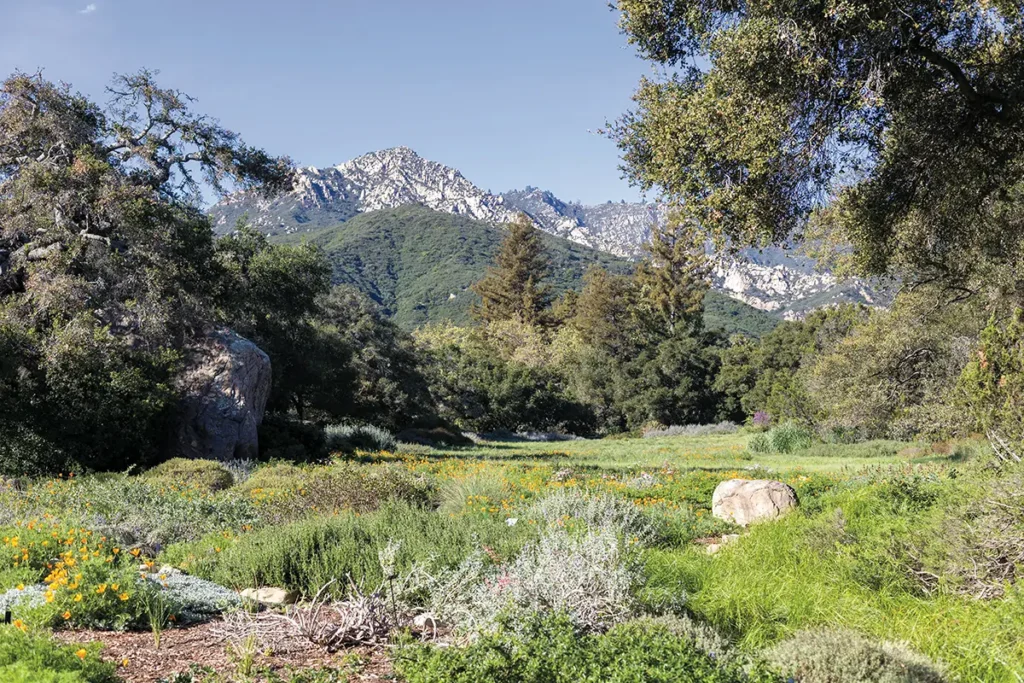
“Our goal is to connect people more deeply with the Garden’s mission to conserve native plants and habitats,” adds Pipkin. “Beyond the Centennial Route Guide and on-site events, we are growing hundreds of California native plants to give away in our Nano Nursery at the Garden’s Backcountry. Digitally, we are inviting people to join our native plant movement with an email sign-up to receive actionable takeaways and tool kits for supporting native plant habitat in your own community. It’s all about empowering people to see themselves as stewards for the next 100 years.”
Visiting the Garden, which spans meadows, canyons, hillsides and redwood groves, is a chance to immerse yourself in nature. While undeniably picturesque—there’s a reason it remains one of the most photographed places in Santa Barbara—it offers something more meaningful: a direct connection to the rhythms of the natural world and a clearer understanding of why it all matters. Whether it’s noticing a bee landing on a flower, watching birds drift on the breeze or standing in awe beneath towering trees, these small moments reveal the interconnected systems that allow life to flourish—and serve as a reminder that abundance isn’t something to take for granted, but something we all play a role in sustaining, from the landscapes around us to the food we share.