California’s Exploration into Agave
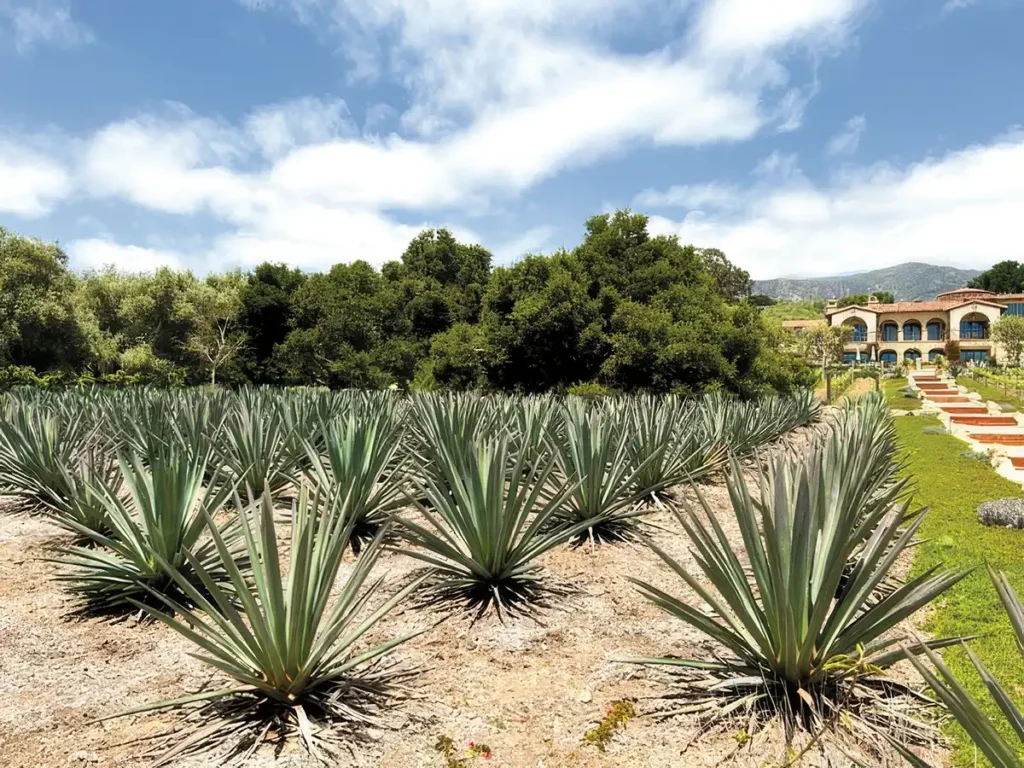
If you’ve taken a road trip around California lately, whether on the coast with your windows down or along landlocked Interstate 5 with the AC blasting, you might have noticed one particular change among the acres of farmland: There is a lot more agave. Replacing everything from grapevines to almond orchards, California has been bitten by the agave bug and there’s no going back.
The agave plant has been celebrated for centuries. The hearty, versatile plant—source of tequila and mezcal, among other gifts—has enjoyed slow and steady growth in the last few decades in California, most often as an aesthetically pleasing landscape addition. But this drought-tolerant, fire-resistant plant has piqued farmers’ interest not only in comparison to other water-heavy crops like almonds, but for its contribution to so much more than just spirits.
Our goal is to create something amazing and magical that will be vastly different.
Ryan Carr
“Well-done mezcal is a snapshot of time,” says agave advocate Jorge Báez. Everything from the texture of the soil to the music played during harvest can be linked to the complex flavors of each agave spirit.
The explosion of California agave growth—agave acreage has jumped 1,000% in just a few years—could mean that profits will win over perfection. The UC Davis Agave Center is exploring the impacts this nonnative species will have on California’s biodiversity and how processing the plant—whether for spirits, fuel or food—will trigger a harmful impact on soil, plant life and wildlife.
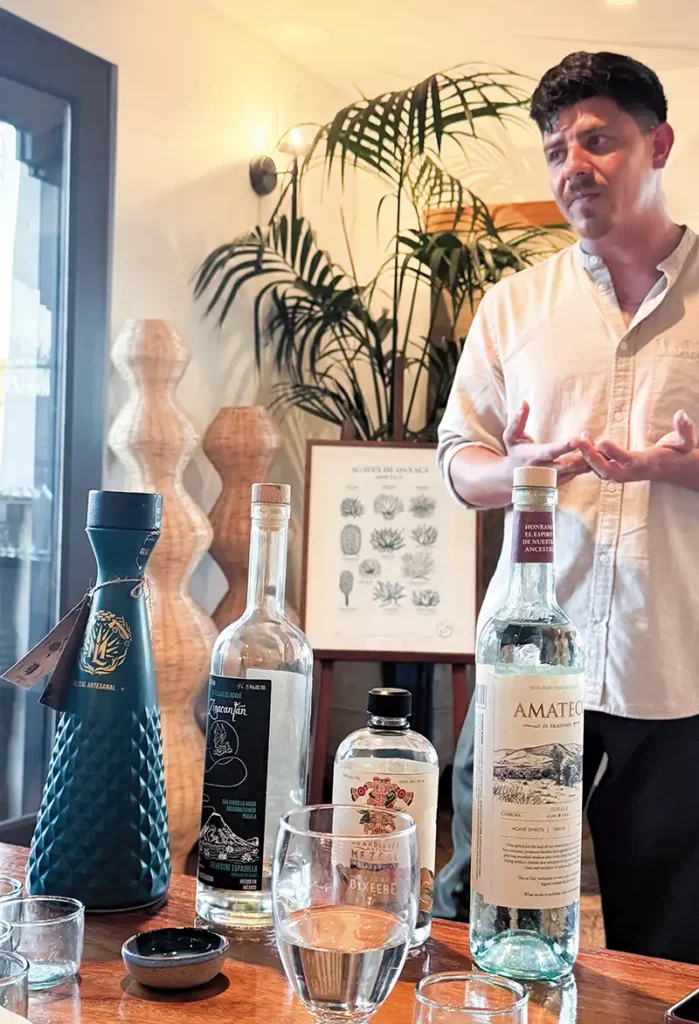
“For Mexican people, we’ve been told that our ways are not enough and we need to adapt to foreign ways of being,” says Báez, a Baja California Sur native and student of life. He is interested in learning not just the origins of the spirit, but its connection to the land, processes and people.
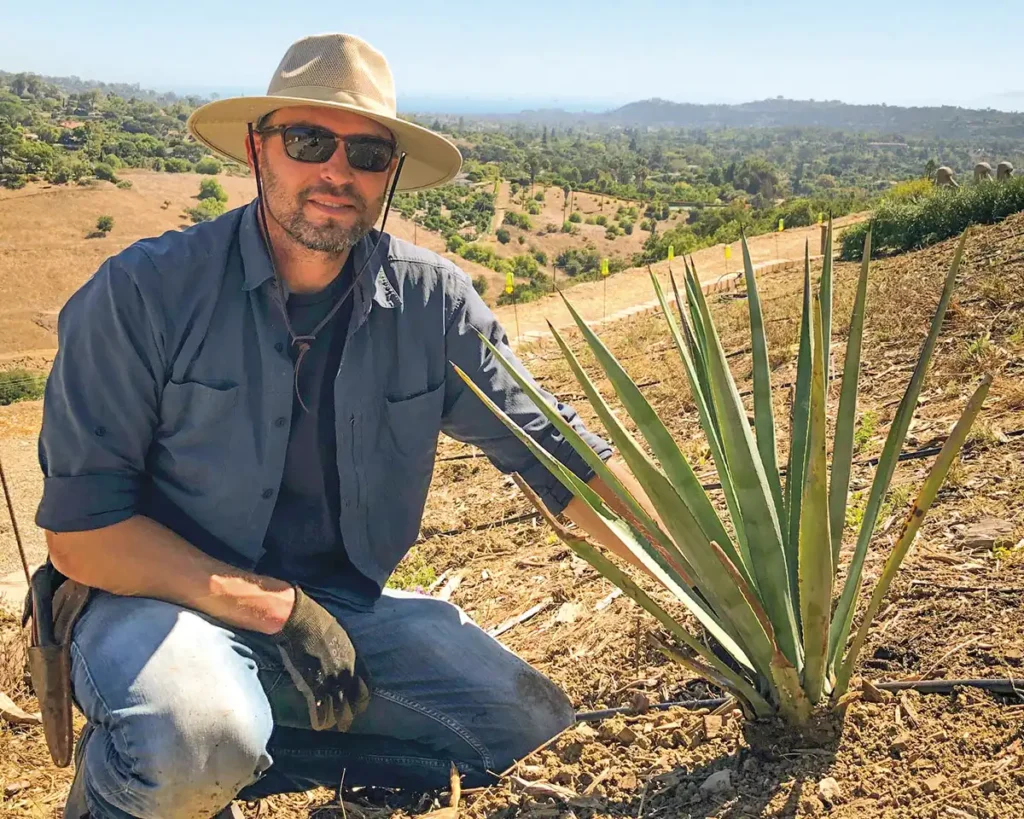
Ryan Carr, founder of Calioso Spirits, is working on the first legally produced agave spirit grown, distilled and bottled in Santa Barbara County. “Mexico has thousands of years of experience with [agave], but in California we don’t have that,” says Carr. “Their techniques are very different from the techniques being used here—we have different plants, so they are going to react differently.”
Carr, who has spent three decades as the winemaker and grower behind his eponymous label while also growing and maintaining vineyards throughout Santa Ynez Valley, Sta. Rita Hills and Happy Canyon of Santa Barbara, knows all too well that his products will vary drastically from those sourced in Mexico. “I don’t think there’s any chance we’ll replace what has been created in Jalisco and Oaxaca,” says Carr. “The things that are being done out there are truly amazing and magical; our goal is to create something amazing and magical that will be vastly different.”
The commodification of the agave plant needs to be considered when planting, processing and bottling outside of Mexico. That’ll inevitably take research, time and money—something Báez is looking to explore with his new business Licores Perros, a distribution and importation company introducing ethically sourced agave spirits to the Santa Barbara community. The small businesses that Báez has promoted over the years—including Amateco Mezcal and Tres Tiempos—aren’t often found on the shelves of high-end Mexican restaurants locally.
“If this is going to have widespread commercial success, there does have to be an education element that goes with it,” says Patricia Swenson, chairman and CEO of Shelter Distilling, which partners with Montecito’s Rancho del Sol to produce craft California agave spirits. “You can’t just put it on the shelves. People have to know what it is and why they should drink it.”
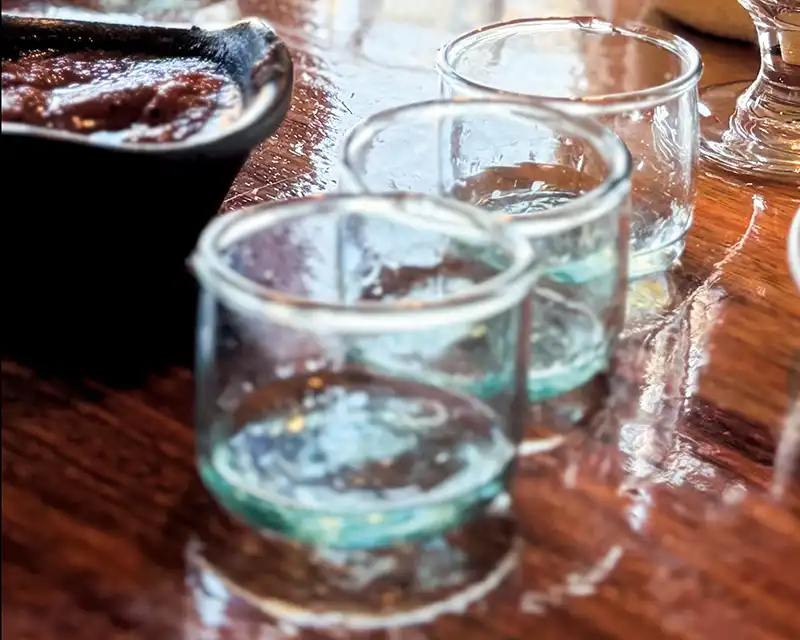
This October, Báez will lead guests at the Santa Barbara Museum of Natural History through a series of tastings, which will include producer-owned brands, for the event Natural History of Mezcal & Agave Spirits.
As with wine, he encourages guests to look first at the cup to understand its color, texture and legs. Next, he asks guests to smell the cup—but don’t stick it right under your nose to avoid burning the nostrils with alcohol. An alternative olfactory technique is to put a drop on your skin and smell the cooked agave. Finally, to taste, he recommends first taking a single, small sip to coat your mouth and remove the sting of alcohol before breathing out heavily.
The museum, which hosts fundraisers centered around food and beverage throughout the year, is an ideal host. “The anthropology of food and beverage is a unique subsection of cultural anthropology,” says Jonah Haas, director of marketing and communications at the Santa Barbara Museum of Natural History. “This event will be an exploration of the anthropology of spirits.”
RESOURCES
“Natural History of Mezcal and Agave Spirits with Jorge Báez” takes place October 1, 2026, from 6–8pm in Fleischmann Auditorium. Tickets can be purchased at sbnature.org/visit/calendar/9271/natural-history-of-mezcal-and-agave-spirits. To learn more about the Santa Barbara Museum of Natural History, visit sbnature.org.

Meaghan Clark Tiernan
A native of Santa Barbara, Meaghan Clark Tiernan returned to her hometown after nearly 20 years to raise a family. She’s a journalist, creative director and PTA mom. She’s also the host of CreativeMornings Santa Barbara.