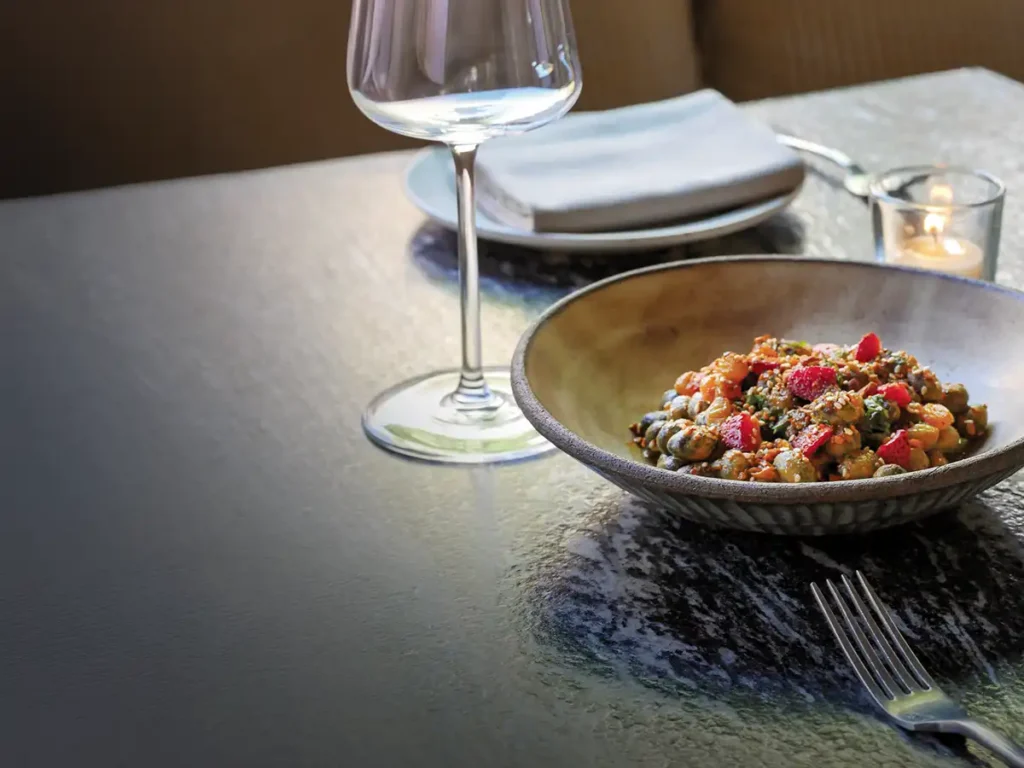
Shelling Beans with Salsa Seca, Strawberries and Toasted Almonds at Little Mountain
Fall’s Don’t-Miss-Dish
Little Mountain in Montecito’s Upper Village is one of those places where you settle in after dinner, chat with fellow diners and staff and simply never want to leave. Just move in and make it your new home.
Chef Diego Noya and team have created a warm, inviting space with airy dining rooms and a stunning patio, hearth cooking in an open kitchen, and a dark, cozy bar. The menu brims with dishes built from real ingredients, approachable and a little whimsical, offering an intimate immersion into Santa Barbara cuisine.
Since he arrived, Noya has been deep in determining what that cuisine is. After years in New York, where he knew exactly what each season would bring and which farmers would supply it, arriving on the Central Coast was disorienting in the opposite direction.
“There was so much,” he says. “It was too good, too much, and it made me lose sight of what I wanted to do. I was all over the place.” Learning the seasons and farmers here and researching other regions of the world with similar ecosystems took time. And beans became an anchor for Noya’s vision of coastal food, spanning mountains and ocean.
These Coco beans are an heirloom variety originally from Spain, a cousin of the black bean but with more structure, a rounder shape, and more pop in the bite. They’re typically found dried, but Noya gets them from Roots Organic, so they arrive fresh, which makes them taste creamier.
Noya calls himself a bean head, and he means it. His obsession traces back to a plate of Alubias blancas he ate in Spain, an experience that’s stayed with him ever since. What draws him in isn’t just flavor; it’s how beans nourish, quietly fixing nitrogen in the soil and providing nutrition when eaten. And so many heirloom varieties have been lost over time and are only now resurfacing.
That curiosity shaped how the dish came together. Noya and his team didn’t want to reach for international flavor just because it’s familiar. Instead, they asked what our region’s own cuisine might have looked like generations ago, and found themselves pulled toward Mexico and northern Spain for inspiration. This is what Noya called a “non-mole,” reimagined here without chocolate as a chile-and-nut sauce. And the salsa seca coating the beans is dark, textured and built for depth rather than heat. It feels hearty and light: a room-temperature salad or a side dish meant to sit alongside almost anything on the menu.
At home, start with dried heirloom beans. Soak them overnight in water—roughly double the volume of the beans—with plenty of salt. Then, add a halved onion and smashed garlic to the pot and bring the pot to a boil. Reduce to a simmer until the beans are toothsome. (If using fresh beans, simmer them with less salt and for less time—about 20–30 minutes.) Let the beans cool in this same cooking liquid.
Make salsa seca with cumin, cinnamon, cardamom, dried ground guajillo chile, toasted sesame seeds and chopped almonds.
Toast guajillo and ancho chiles in some oil, then pulse in a food processor with agave nectar. Toss the cooled beans in the mixture, along with golden raisins plumped in warm chile water, sliced Gaviota strawberries and epazote (or cilantro). Top the beans with salsa seca.

Liz Dodder
Liz Dodder is a drinker, eater and traveler who has eaten five kinds of foie gras in one day. She’s also a blogger, writer, photographer, recipe developer, web designer, social media maven and Certified Specialist of Wine (CSW).