Safety Third
The Benefits of Early Hands-On Cooking
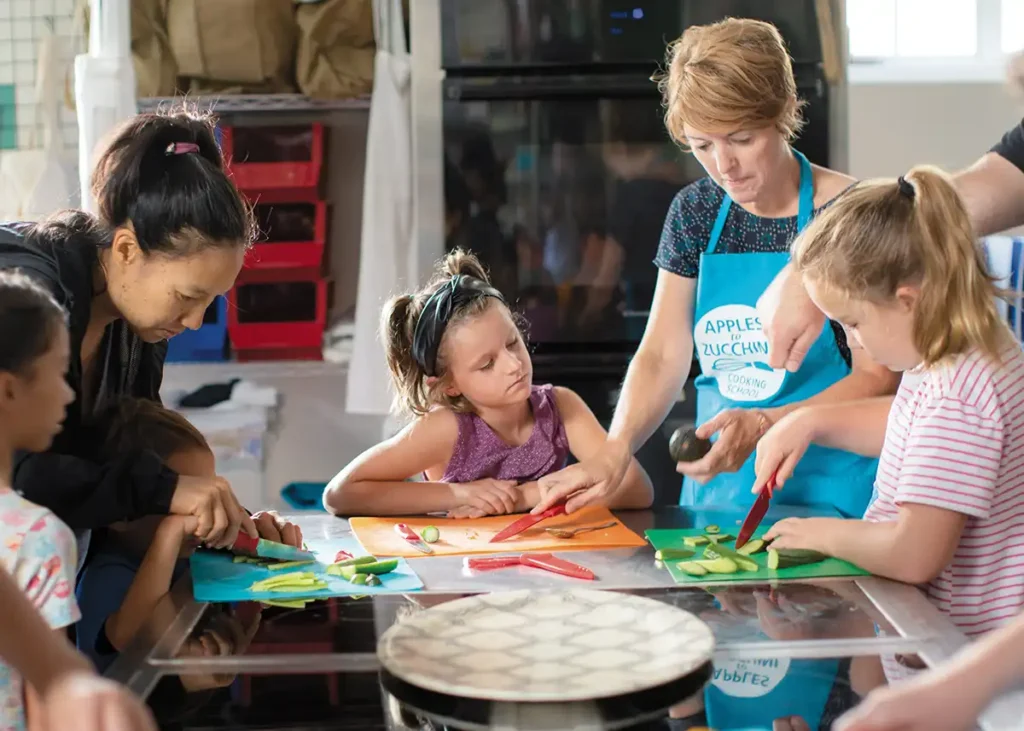
At Apples to Zucchini Cooking School, we teach hands-on cooking classes to all ages—emphasis on the all. Our after-school classes start as early as preschool, and I’m not talking about plastic fruit and Easy-Bake Ovens. Real knives, real stoves. You may be shocked to hear our unofficial motto: “Safety third.”
Before you alert the authorities, let me explain. Cooking is a fundamental life skill, much like swimming or learning to drive, that involves some inherent risk. Burns, cuts, the occasional smoke detector, flour explosions. If we truly took a “safety first” approach with our kids, we’d put a baby gate on the kitchen door and remove it on their 18th birthday.
Much like we recognize the importance of teaching kids how to swim, or getting their driver’s license so we can stop playing chauffeur, our approach to cooking should be the same. Early participation in the kitchen—starting cautiously, and building up to riskier skills like knifework as kids demonstrate ability—can pay dividends down the line. (Not the least of which, you can eventually hand off dinner duty!)
Perhaps the biggest upside, at least for parents who struggle with selective eaters (ahem, all of us?), is that having kids help with meal prep can spark curiosity to try new foods. I’m not suggesting that hands-on cooking is a cure-all for food aversions, but it certainly creates an opening to test the waters. When kids touch the curly kale before it’s blanched for pesto, smell fragrant ginger masquerading as a knobby root, and taste a single drop of ponzu sauce while whisking (See? A mysterious brown blob can actually pack a punch!), a little of the unfamiliarity starts to fade. Trying a bite while cooking feels less intimidating than facing a full serving on the dinner plate. And when kids know what went into a dish from firsthand experience, they start to trust that unfamiliar ingredients can surprise them in a good way.
When kids are involved in meal prep, they learn that dinner isn’t something that just appears. They can help make it happen! And they can help clean up. (In AtoZ classes, dishwashing is just as important as the prep itself, if not quite as fun.) And when kids handle real adult instruments—with supervision, of course—and proudly produce food for the table, they build the confidence to learn how to do hard things.
There comes a point where kids are ready for more than imaginary play with velcro carrots. When that time comes, we give them just as much responsibility as they can handle, graduating from mixing and measuring to chopping and boiling. Safety doesn’t actually come third at AtoZ—but participation does come first.
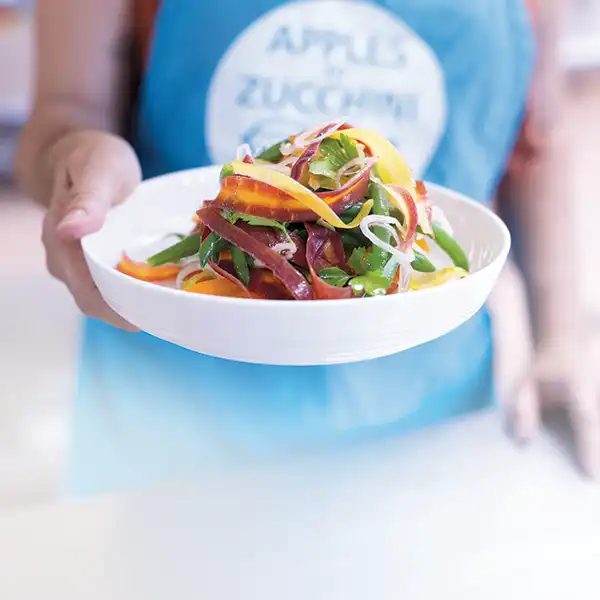
Here’s a recipe that’s a hit during our kids’ summer cooking camp, and the whole family can enjoy together. Depending on their age, kids can help in all phases: snapping the ends off green beans; chopping the parsley; turning carrots into ribbons with a vegetable peeler; measuring dressing ingredients and tasting along the way to recommend changes. A little more salt? A dash more of maple syrup?
Apples to Zucchini is Santa Barbara County’s only nonprofit cooking school, with a mission to bring people together over shared meals. Check out their full lineup of hands-on kids and adult cooking classes at atozcookingschool.org.