The Vision and Its Visionaries
White Buffalo Land Trust – Center for Regenerative Agriculture at Jalama Canyon Ranch
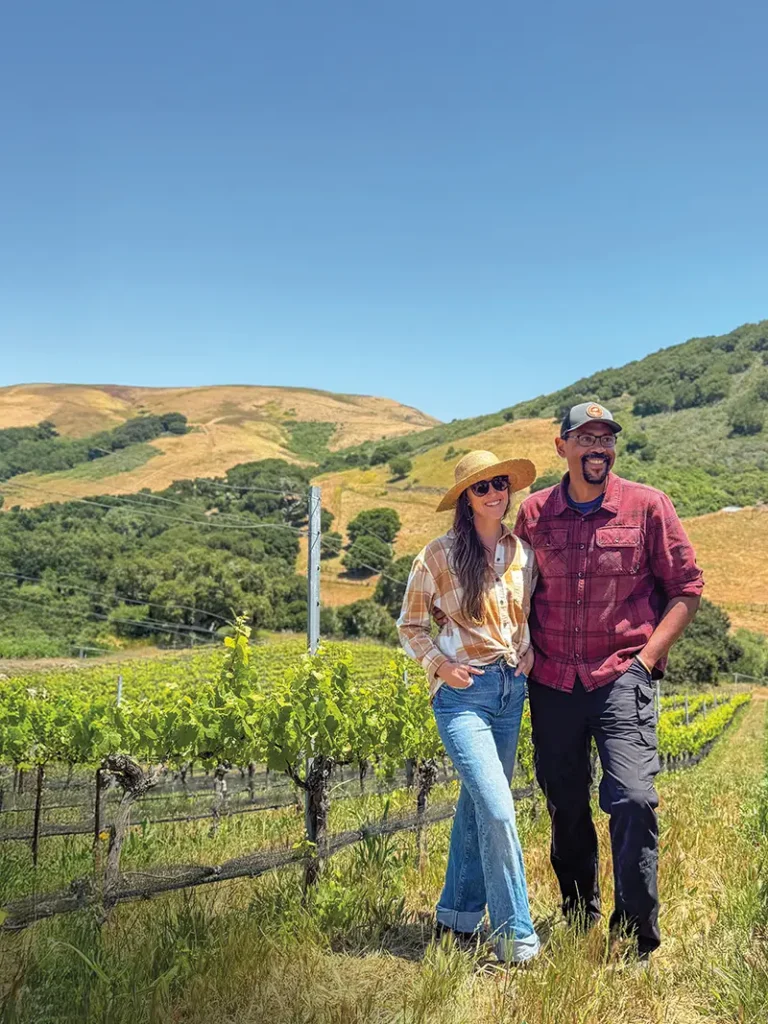
I met Jesse and Ana Smith in early summer at Camp Lyndsey, the basecamp of Jalama Canyon Ranch’s Center for Regenerative Agriculture just south of Lompoc, what White Buffalo Land Trust considers their living laboratory since purchasing the property in April 2021. White Buffalo is a well-respected leader in regenerative agriculture, as well as in education and training, ecological research and monitoring, and product and enterprise development.
Jesse oversees the grounds as director of land stewardship. He’s surprisingly tall as he exits his off-road vehicle. He has a deep, rich voice and a somewhat mischievous smile, as if he holds a secret, a Vision. Ana is director of programs and engagement for White Buffalo. She’s warm and welcoming. Jesse and Ana live on the ranch with their two young children. They’re hands-on in body and in spirit.
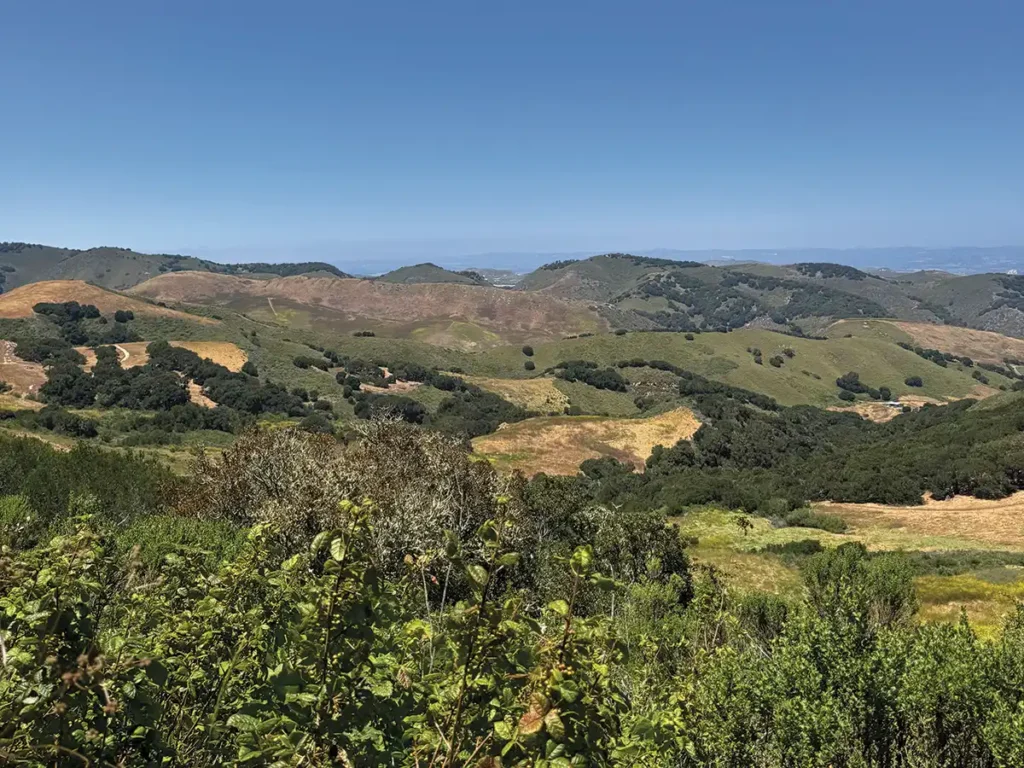
I held on tightly as we rode the rugged terrain of this glorious 1,000-acre ranch with its bucolic landscape, oak studded hillsides and lush meadows. One would never imagine that the property had been suffering from land degradation—not unlike grasslands and woodlands throughout California. Far from a deterrent, the ranch’s degraded condition presented an ideal opportunity to prove the revitalizing effects of regenerative agriculture.
After all, that is what White Buffalo’s Theory of Change is all about: a Vision that started with identifying a long-term goal and then worked backward to define those conditions necessary to meet that goal, the goal being to show what positive changes regenerative farming can make in our lives.
“We knew we needed a place that we could manage regeneratively,” Jesse explains. “We needed a demonstration site. We needed a place for experiential learning. We needed to do what we could do for our children and the challenges they would undoubtedly be facing. We knew we had to invest in research to collect the data that would provide our kids with the tools to address those challenges.
“And we needed to share those tools in order to raise the ecological literacy of our community, involving policy advisers, healthcare providers, teachers. And we needed to share what we’re learning with fellow landowners as they made the transition from conventional to regenerative farming.”
The Vision is to see a community form around ecological restoration in which producers, processors, businesses, scientists, storytellers … come together to address how we’re treating the land and what we’re taking from it to feed ourselves.
As Jesse puts it, “When one gets involved in the land, it prompts a relationship to foods.”
A connection to the land has always been at the heart of the story for both Ana and Jesse. They both were raised by parents who were educators and had a very certain respect for the land and for their Santa Barbara communities.
Ana’s father, Warren Brush, is a specialist in sustainable farming and permaculture, the creation of a self-sufficient system that works with nature rather than trying to tame it. Her father and stepmother founded Wilderness Youth Project, an organization that creates opportunities for children of all backgrounds to be involved in nature. Her mother, Susan Bush, is the contemporary curator at Sullivan Goss Art Gallery in Santa Barbara. Ana’s parents firmly believed that nature makes kids happier, healthier and smarter. Ana was one of those kids.
Jesse was a student of creative thinking thanks to his mother, a Montessori- and Reggio Emilia–trained educator. Both methods of education focus on hands-on learning and real-world skills, encouraging independence and confidence in children. Jesse was one of those children.
People need to think experientially. They need to be here on the ranch and get their hands dirty.
Though Ana’s and Jesse’s paths occasionally crossed as they were growing up, it wasn’t until they were young adults that they really got to know each other through mutual friends.
Ana was a student at the University of California, Santa Barbara (UCSB) at the time, majoring in global studies. Jesse was running his own graphic design company.
While at UCSB, Ana interned with Santa Barbara–based Everyday Gandhis, a nonprofit organization focused on supporting former child soldiers from war-torn communities in Liberia and other war-torn communities. The internship turned into a full-time management position following graduation, at which time Ana hired Jesse to handle graphic design for the organization.
Working together, Ana and Jesse fell in love. With Ana’s studies behind her, she and Jesse relocated to San Francisco so Jesse could attend San Francisco State while Ana continued her work remotely.
Life was good in San Francisco, where a community of friends regularly gathered over home-cooked meals with recipes that––of course––often came from Edible San Francisco or Edible Santa Barbara. Ana and Jesse religiously collected the magazines and displayed them around their dining room—part décor, part conversation material.
The two then moved to London when Jesse was offered the chance to study product design at Brunel University of London. “We were two young, broke college kids, and suddenly we were in Europe with its diversity of cultures,” Jesse recalls. “London was a great hub for our travels to Ireland, Scotland, Germany, Italy, France, Spain. Round-trip tickets from London to various destinations in Europe were easily affordable. We pretty much stayed in bed-and-breakfasts, a great way to get to know a place. And we put too many extraordinary meals on credit cards with no regrets.”
“We drove through parts of Europe and were fascinated with the different cultures, foods, wines, markets … from town to town,” Ana adds. “I was continuously impressed with the pride that each little village takes in producing their distinct brand of foods, the way they wrap leaves around their cheeses, the way they score their breads. We recognized a unique expression of what was being produced in these various villages even as they were only miles apart from each other. I don’t think we’d find that driving from San Diego to San Francisco.”
At the time Ana and Jesse were living in London, it so happened that Ana’s father, Warren, was teaching a permaculture course outside of Frankfurt, Germany, an easy destination to reach from London. It was the course in permaculture––along with Ana’s and Jesse’s European adventures––that carved a path for their growing interests in farming and food.
Jesse and Ana, together with Warren, drove through France from Paris to the Loire Valley and down to Bordeaux. During a stop in La Rochelle, a small town in western France, the three started spinning the idea of creating a family farming operation similar to the family-run farms they brushed by as they traveled the rural countryside of Europe.
Following their year based in London, Jesse and Ana returned to San Francisco so Jesse could complete his college degree. It was then that they really got serious about forming a multigenerational family farm. It took a good year to develop the investment strategy before they were able to take over management of Casitas Valley Farm, a 50-acre property located between Carpinteria and Ojai with six acres of avocados, four acres of persimmons and an acre-plus of apples. It also had an old creamery on it.
“Along with three generations of Ana’s family, we created a multi-enterprise community,” Jesse says. “We brought the creamery back to code and founded Casitas Valley Creamery, where we handcrafted fresh and aged cheeses. We then started Casitas Valley Piggery, raising heritage-breed pigs that were fed whey from the cheeses along with the produce that we grew on the farm. As we experienced in Europe, we were creating our own local brand of foods. We also evolved into a permaculture training facility where we taught courses led by Warren. That was our ‘Farmly’ that thrived from 2013 to 2017. And that’s where we were married and where our daughter was born.”
Then came the devastating Thomas Fire in December 2017. The Smith-Brush-Harvan family had to evacuate, and the owners of the property eventually sold the land.
And so began their next chapter, when the headmaster at Santa Barbara Middle School introduced Jesse to former wildlife documentary filmmaker and investment adviser Steve Finkel, knowing that the two shared common interests, including family histories at SBMS. (Ana and Jesse had attended the school, as their daughter does now; so did Steve’s kids with his wife, Lyndsey McMorrow).
Jesse and Ana, with their experience in permaculture farming, and Steve and Lyndsey, with their passion for preserving and protecting the land, saw a critical need for understanding how our food systems impact our ecological systems. Even with the best of intentions agriculture can degrade soil health and lead to erosion. It can deplete fresh water resources. It can negatively affect climate change. It can disrupt biodiversity.
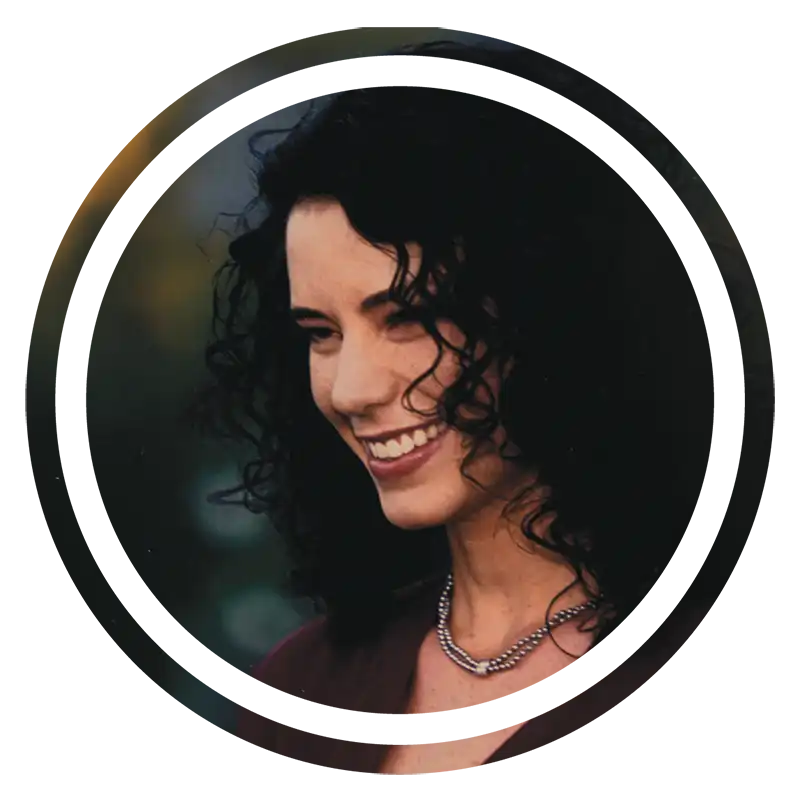
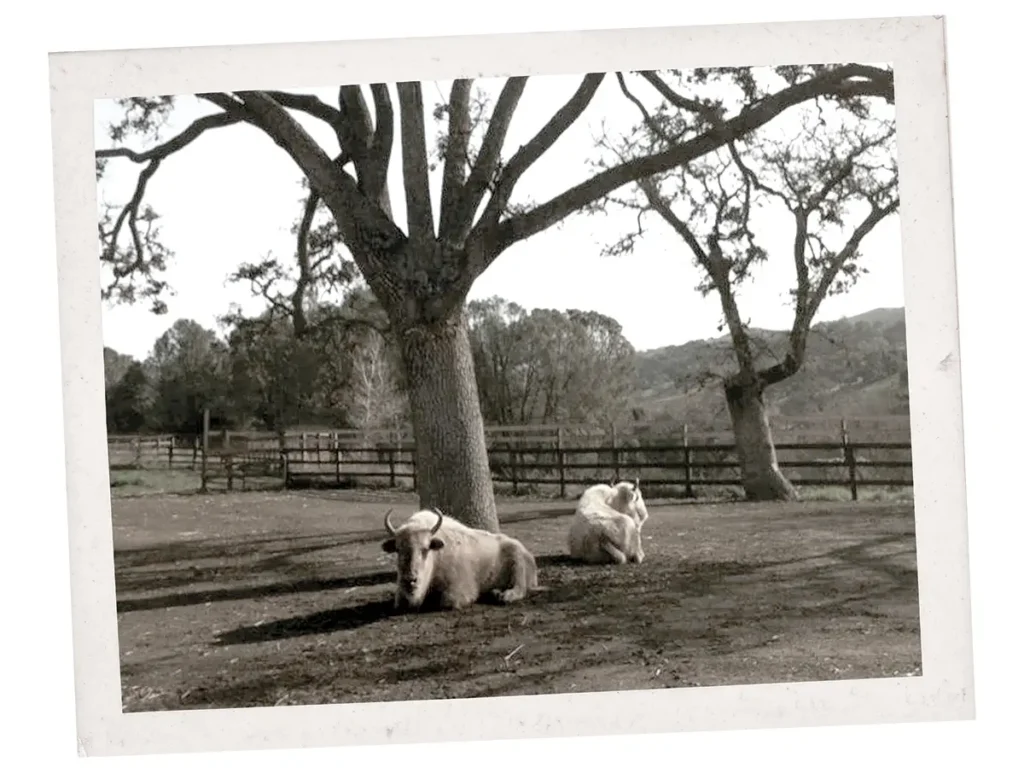
Sadly, Lyndsey passed away in the spring of 2018. The founding of White Buffalo Land Trust was announced at Lyndsey’s celebration of life ceremony and initial donations from close family and friends launched the organization. Steve then reached out to Jesse to join him in a venture that would honor and continue the regenerative work that meant so much to Lyndsey. White Buffalo Land Trust was born, named after the two rare white buffalo that Lyndsey once cared for and that inspired her devotion to serving the land. Jesse was White Buffalo’s first employee as they took over stewardship of their flagship farm in Summerland.
With a keen focus on their Theory of Change, they began a campaign to raise the $6 million needed to purchase the property that would allow Steve and Jesse to realize their Vision.
Working with private foundations, government organizations and individual donors throughout the Santa Barbara community, their team was able to raise the funds to buy Jalama Canyon Ranch. The ranch is now held in title by White Buffalo Land Trust, a 501(c)(3) nonprofit, in perpetuity.
White Buffalo wasn’t intended to be simply a physical location, but a concept that can live on for many generations here in Santa Barbara, across America and throughout the world. To spread that concept—that Vision—requires education and training.
“We offer various educational programs so people can develop a relationship to the unique ecology that exists here in the Central Coast and to feel more connected to the food system that sustains them,” Ana explains. “We offer K–12 programs, because we believe that our next generation needs to develop a love of place and an appreciation for where their food comes from. We bring middle- and high-school students here because they’re at a turning point in their lives, and we have the chance to reach them. We offer field days where folks can explore the property. We offer art workshops where people can deepen their connection with the land.”
“People need to think experientially,” Jesse adds. “They need to be here on the ranch and get their hands dirty. When I take a shovel and dig up a perennial grass and show you the root system, you see it and feel it. It means something. It turns to muscle memory. It turns to understanding.”
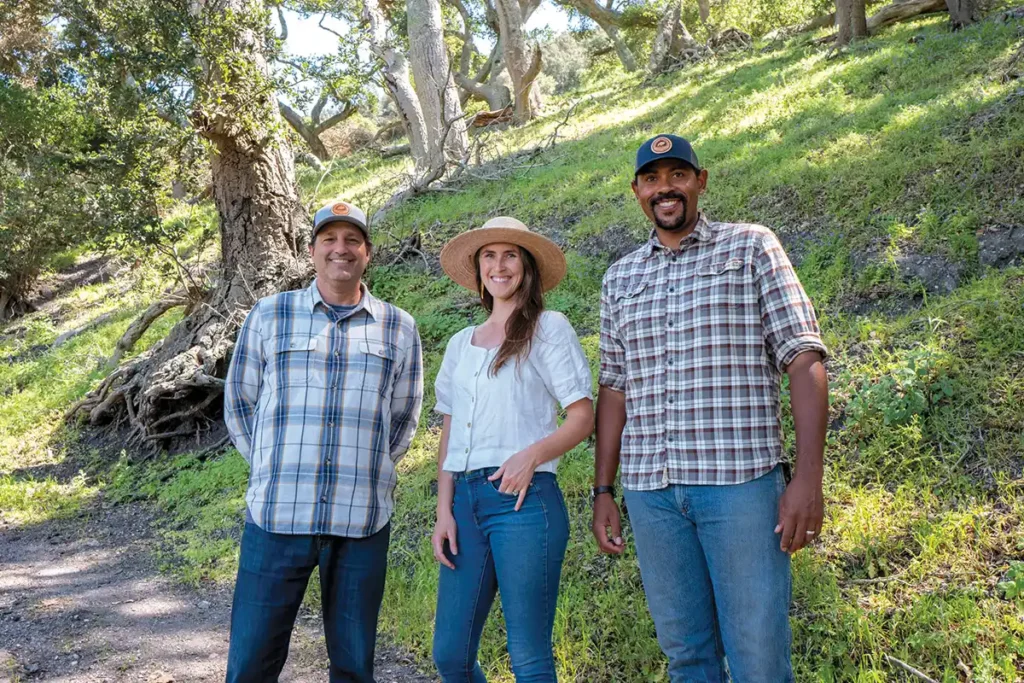
What Jesse and Ana are saying is that we need a place in our community where people can visit and see the integration of animals grazing the land, regeneratively farmed vineyards and orchards and diverse perennial ecosystems. People need to touch it, see it and breathe it to understand it.
“This region is so diverse,” continues Jesse as he stops to gather wild strawberries growing on the hillside. “We have so many microclimates. We can grow row crops. We can grow stone fruit. We can grow avocados, as well as agaves. We can even grow coffee. We can produce foods that are delicious to consume, that are healthy due to nutrient density and that have a positive ecological impact. And we’re doing just that.”
Over lunch back at Camp Lyndsey, Jesse is eager to continue the conversation about the different foods that are stemming from White Buffalo. On the other hand, I want to hear about what he and Ana most enjoy cooking.
Jesse laughs and then so eloquently adds, “We tend to shine a light on our work and our Vision because that’s the thing that’s going to be lasting. We don’t typically talk much about ourselves. But the arc of storytelling is often captured in the vignettes of individuals and their relationship to their Vision.”
I remind Jesse that I’m a storyteller. And as I see it, there is no Vision without the Visionaries. This is their story.