Rising Tide: The Growth of Chardonnay in the Sta. Rita Hills
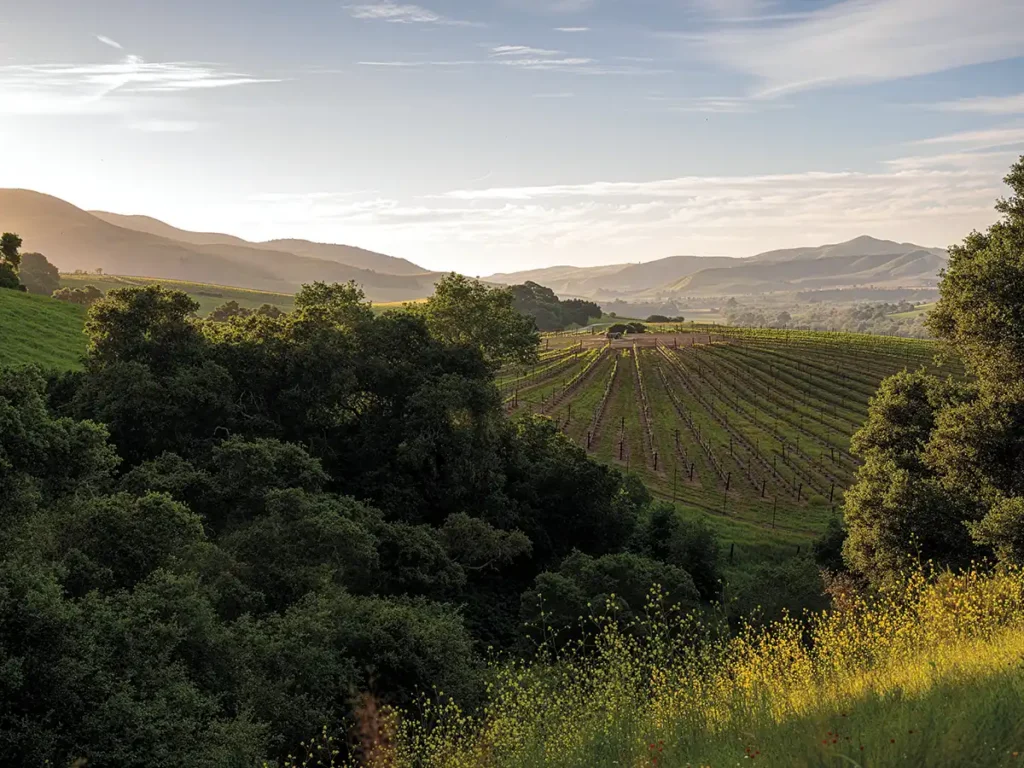
The Sta. Rita Hills is arguably one of the most distinctive wine regions in California. Established as an American Viticultural Area in 2001, it is one of the coolest and most extreme grape-growing regions along the California coast, widely recognized for producing balanced, site-driven wines. While Pinot Noir has long been the AVA’s defining grape—first planted here in 1971 by pioneers Richard Sanford and Michael Benedict and still accounting for the majority of the AVA’s 2,700 acres under vine—another variety has moved from the sidelines into the spotlight: Chardonnay.
A Quick Lay of the Land
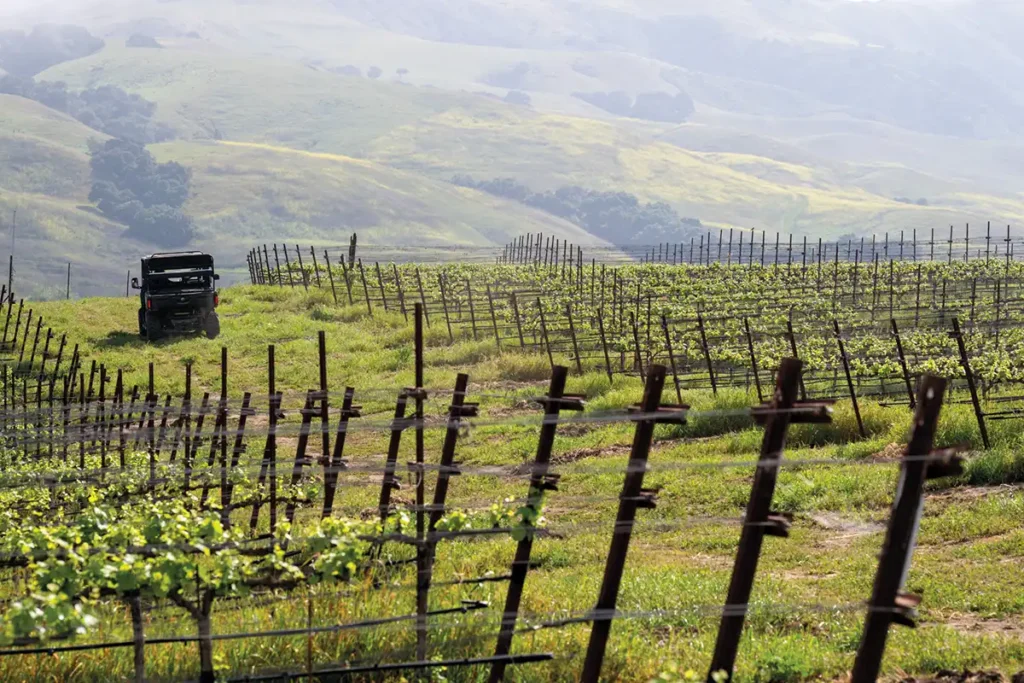
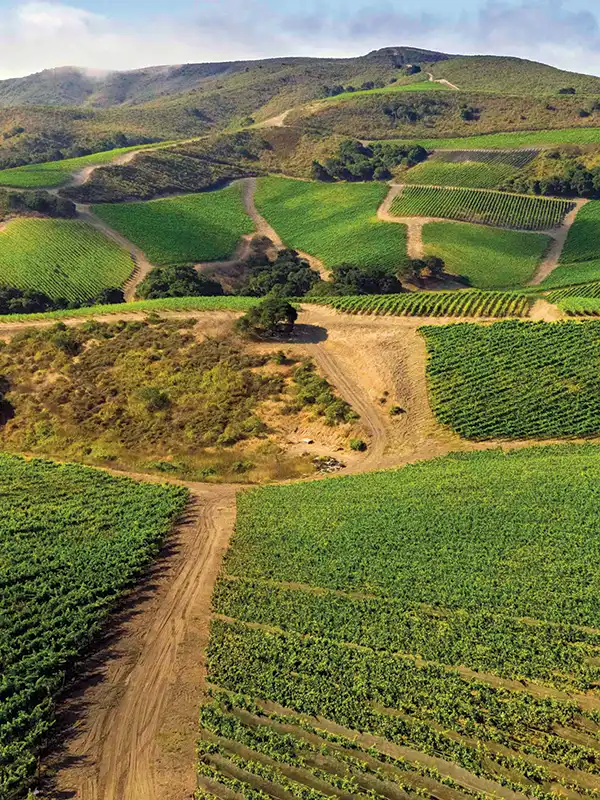
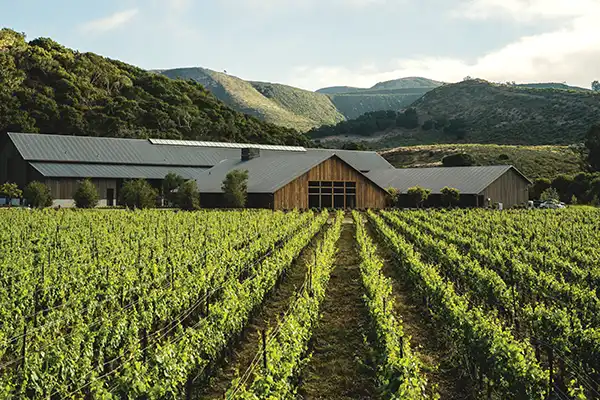
Much of what makes the Sta. Rita Hills distinctive has to do with geography. Its rare east-to-west orientation between transverse mountain ranges allows for cooling marine influences to funnel inland from the nearby Pacific, bringing fog, strong winds and dramatic diurnal temperature shifts from day to night. These coastal influences, combined with a patchwork of marine-based soils—including sand, clay and diatomaceous earth—provide excellent conditions for growing cool-climate grapes, and the resulting wines are known for their tension, minerality and sense of place.
Channeling Site
Few varieties are as responsive to place as Chardonnay. This adaptable grape thrives in both warm and cool climates—a key reason why it is the world’s most widely planted white grape (and the most planted variety in Santa Barbara County). In warmer regions, it tends to show riper tropical fruit flavors and medium levels of acidity. In the cool Sta. Rita Hills, however, Chardonnay shines with bright citrus and stone fruit flavors along with fresh, almost electric, acidity.
“In the Sta. Rita Hills, the cool Pacific influence allows the fruit to develop concentrated flavors while maintaining freshness,” says Samra Morris, winemaker at Alma Rosa Winery. Adds winemaker Matt Dees of JONATA and The Hilt, “The salinity, the minerality, the overall vibrancy—so much of this is a direct result of our unique geographic position with an open passage to the cold Pacific current.”
Cold Sunshine, Long Growing Season
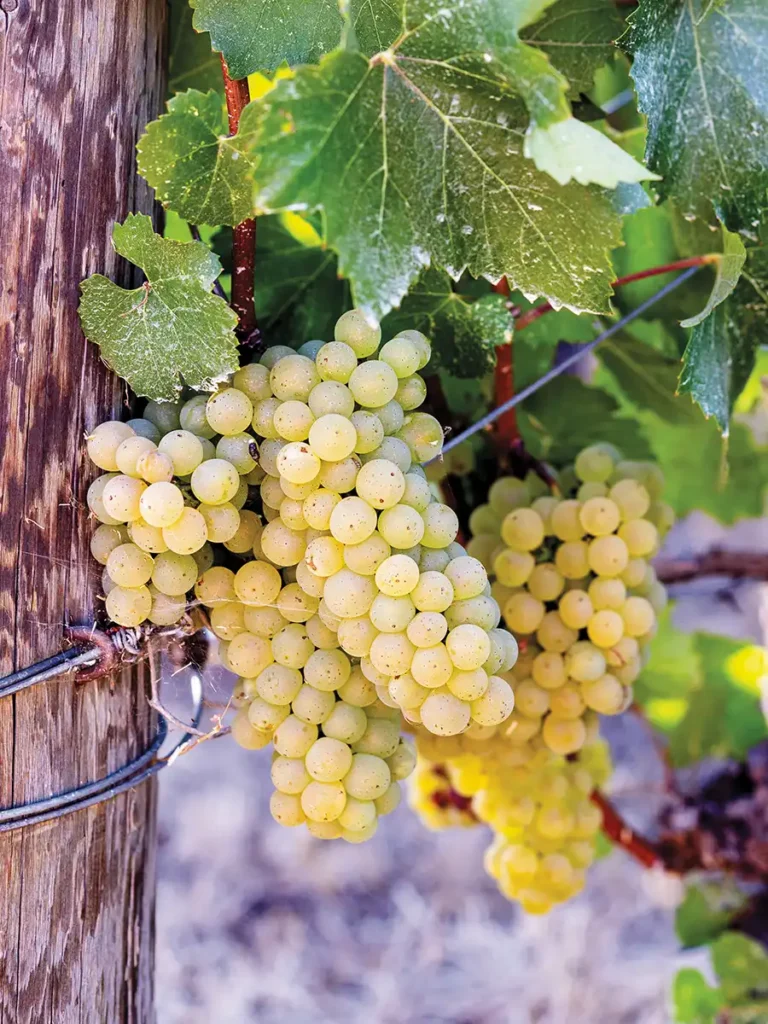
That cooling marine influence creates an unusually long growing season, with bud break sometimes as early as the end of February or early March. Many producers don’t pick Chardonnay until mid-October. “If you can remember one defining thing about the Sta. Rita Hills, it’s cold sunshine,” says Chad Melville, co-founder/owner/winemaker of Melville. “In the middle of summer, places like the Willamette Valley or even Burgundy can see 95° days, but in the Sta. Rita Hills it’s maybe 72°, with pure high-quality sunshine during the day and fog rolling in the late evening, which burns off by midmorning.” That interplay between sunshine and cooling ocean air—a term Sanford famously coined “refrigerated sunlight”—is an important factor for the growing season, slowing down the ripening process and allowing the grapes to retain high levels of acidity while developing concentrated flavors.
That harmony is actually quite rare. “In this region, we don’t have a problem with grapes maintaining natural acid,” says Christopher Hussey, assistant winemaker at Our Lady of Guadalupe. “Here, it’s all about acid and richness—in other areas, typically you’ll see grapes lose too much acid as fruit ripens, but in the Sta. Rita Hills you get a really great balance of high acidity levels and rich fruit flavor.”
I honestly believe the Sta. Rita Hills is producing some of the most exhilarating examples of Chardonnay on the planet.
Winemaker Bryan Babcock of Babcock Winery & Vineyards, who was instrumental in helping establish the Sta. Rita Hills as an AVA, was the third to plant Chardonnay in the Sta. Rita Hills. But even after decades of farming, his belief in the variety continues to strengthen. “I grew Chardonnay 30 years ago, but it wasn’t until six or seven years ago that I really switched gears from thinking that Chardonnay was second fiddle to Pinot Noir. Nowadays, the level of quality in Sta. Rita Hills Chardonnays is just stupendous, both still and sparkling wines. Our region is truly comparable to all the world’s great Chardonnay appellations, including Burgundy.”
Diversity of Terrain
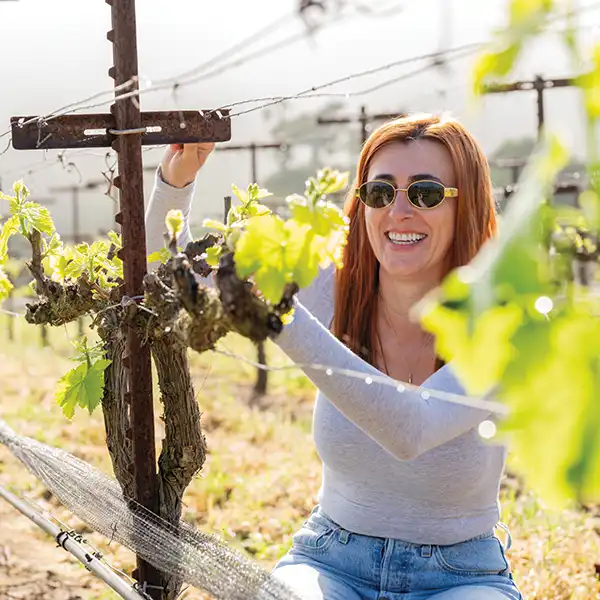
Across the AVA’s 30,720 total acres, elevation, aspect, soil type and proximity to the ocean shift dramatically from one site to the next, often reflecting unique expressions in the wine. “The AVA should almost be four AVAs given the disparity in soils, wind and fog,” says Drake Whitcraft, owner/winemaker of Whitcraft Winery and consulting winemaker for Pence Vineyards & Winery, the latter of which is located on the easternmost edge of the AVA. “You can drive five miles and be in a completely different growing environment.”
Two of The Hilt Estate’s vineyards make that point clearly. At Radian Vineyard, a site in the southwest corridor of the AVA, vines climb up to 700 feet in elevation with a west-facing exposure. The soils here are dominated by diatomaceous earth, a moon-rock-like sedimentary soil formed from ancient fossilized sea creatures. Dees describes the wines made from here as having a “neon glow,” showing “incredible intensity and concentration from the low yields, which result from low-vigor soils and high winds.” By contrast, Bentrock Vineyard, just 100 meters away, offers a more subdued expression. Here, vines are planted on warmer, north-facing hillsides of deep clay, sediment and shale, where the grapes are more sheltered from strong winds. The resulting wines are graced with “a quality of hydration and a supple charm,” he explains.
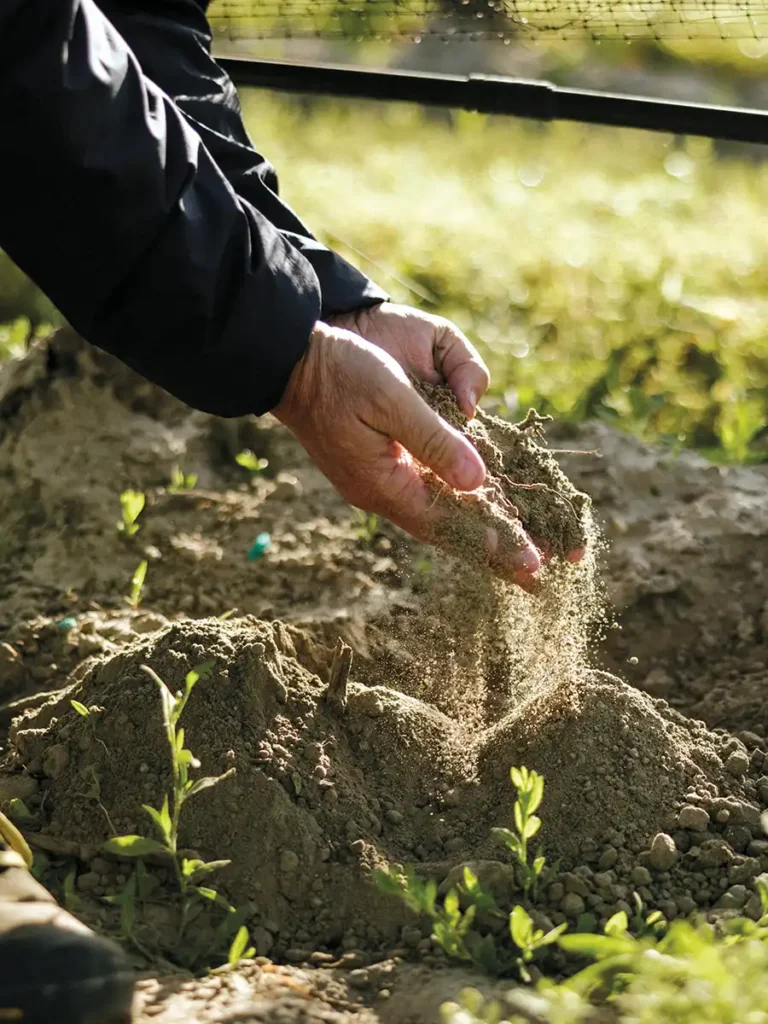
At Alma Rosa’s El Jabali Estate, along the southeastern side of the AVA, vines on north-facing slopes reaching 630 to 2,000 feet in elevation benefit from cooling offshore winds from two directions—the typical maritime influences from the west near Lompoc and from those coming off Gaviota Peak to the south, where the ocean is nine miles away. The site sits on the Monterey Formation, an organic-rich geological sedimentary formation of uplifted chert, clay loam and ancient marine soils formed during the Miocene Epoch. “The soil drains well and naturally keeps vine vigor in check, which helps Chardonnay stay balanced and focused rather than overly lush,” shares Morris. “The soils are also rich in calcium, which we see reflected in the wines as brightness and natural acidity in the fruit.”
In the northern corridor of the AVA, vineyards like Tyler’s Mae Estate, Clos Pepe, Babcock and Melville sit nine to 15 miles from the ocean at elevations that range from 200 feet up to 1,200. At Melville, for instance, vineyards are planted on mostly north- and south-facing slopes that climb from 250 to 700 feet, about 9.5 miles from the ocean. Soils here are mostly sandy loam with shallow layers of Monterey shale. But, as Melville points out, producing great Chardonnay in this region isn’t solely about site selection; clonal selection plays an equally important role.
“Some clones just do better in cooler climates,” he says. “We work with eight Chardonnay clones, each selected for their structure, acid ripening, cold resistance and distinct flavor profile. Overall, we feel that proper clonal selection is an essential part of producing a well-balanced wine in this cold climate.”
Taken together, these sites show that Sta. Rita Hills Chardonnay isn’t defined by any single terroir, but by the energy and precision of the coastal region as a whole.
Rethinking the Vineyard
Site-by-site variation, however, is starting to reshape how growers plant and rethink existing plantings. Throughout the AVA, we’re seeing more producers grafting lower-performing Pinot Noir blocks over to Chardonnay—not to replace the region’s signature grape, but to match each site to the variety that best expresses it. It’s an intentional approach that, as Dees explains, helps maintain quality.
“Grafting underperforming Pinot Noir sites to Chardonnay simultaneously gives Pinot Noir quality a boost while also giving Chardonnay more outlets to fully express its voice,” he says.
At Our Lady of Guadalupe, which overlaps the western edge of the Sta. Rita Hills, that shift is underway. “Chardonnay vines tend to grow more vigorously than Pinot, with higher yields. There are certain pockets of the estate where we’re transitioning Pinot to Chardonnay for this reason,” says Amy Warnock, Our Lady of Guadalupe’s director of vineyard operations. While the winery’s current Chardonnay bottling is sourced primarily from fruit grown on a lower-elevation plot just outside the AVA’s border, many of its newly grafted vines sit within the Sta. Rita Hills boundary, on slightly steeper, higher-elevation parcels that see greater wind exposure. For the team, those more intense conditions only reinforce Chardonnay’s potential here.
“Chardonnay handles the extreme conditions beautifully, able to hold on to its vibrancy while developing the richness and complex layers we’re after,” adds Hussey.
Challenges Come With the Territory
Of course, growing Chardonnay—or any grape for that matter—this close to the ocean is not without its complications. The same fog and strong winds that slow ripening and preserve acidity here can also lead to uneven development, while damp conditions create a window of opportunity for mildew.
“Powdery mildew is not exactly our friend in the far west Sta. Rita Hills,” says Dees. “The mild climate keeps the conditions right in the window for this fungus to thrive.”
Managing those risks falls on growers and farmers—a fact Melville is quick to point out. “Farmers really don’t get enough credit,” he says. “They’re the ones managing balance in a dynamic climate. Winemaking is a direct result of what happens in the vineyard.”
Chardonnay’s Next Chapter
Despite the challenges, decades of farming and experimentation have given growers and winemakers a much deeper understanding of Chardonnay in the Sta. Rita Hills, and confidence has grown alongside it. Across the appellation’s roughly 60 producers, many wineries—including those highlighted in this article as well as such names as Donnachadh, Sandhi, The Set, Peake Ranch and Pence Vineyards—are part of a growing movement embracing Chardonnay as a defining part of the region’s future, building on the foundation of its early pioneers.
“Twenty years ago, most people were all in on Pinot Noir in this region,” says Chiara Shannon, interim president of the Sta. Rita Hills Wine Alliance and owner of Groundstar Vineyard within the AVA. “Chardonnay had its champions, including producers like Brewer-Clifton and Longoria, but it wasn’t yet a widespread focus. Today, there is broad confidence in both our vineyard sites and the distinctive style of Chardonnay the Sta. Rita Hills produces. Winemakers are allowing the fruit and the region to speak more clearly, and Chardonnay has become one of the appellation’s most exciting and celebrated wines.”
The modern expression of Sta. Rita Hills Chardonnay—defined by freshness, natural acidity, fruit density and textural depth—has become central to the region’s identity. “There seems to be a shift toward more restraint and site expression. That said, Sta. Rita Hills Chardonnays have always shown these qualities,” says Morris. “It feels like more producers are leaning into that character now, rather than covering it with heavier oak or richer styles.”
Dees agrees there has been a stylistic shift toward more “balance between vibrancy and freshness,” but notes that it’s not a seismic shift. “[Those characters] are latent in the wines in this area and always have been. Tasting a brilliant Brewer-Clifton Chardonnay from the early 2000s shows that the wines have always been electric and true to site.”
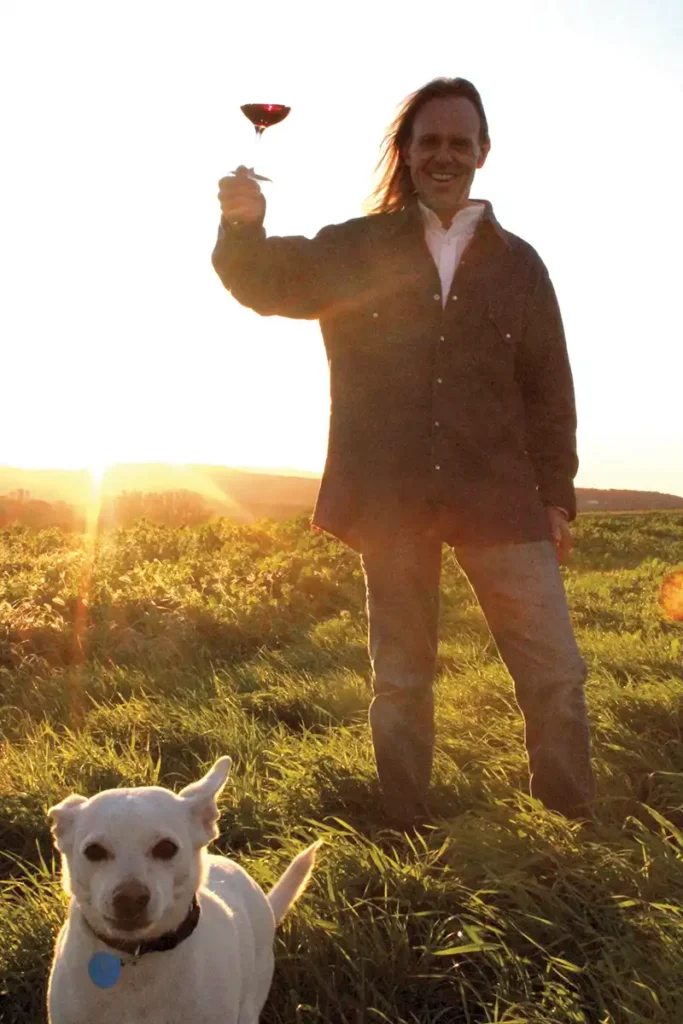
Another defining trait of Sta. Rita Hills Chardonnay is its zesty, salty minerality. “The Sta. Rita Hills definitely shows more salinity than most regions,” says Whitcraft. “That sea salt edge is a defining characteristic of the white wines here.”
Together, these qualities help explain why the wines are so enticing. “More often than not, when a self-proclaimed non-Chardonnay drinker tries a bottling from the Sta. Rita Hills, they are blown away,” says Melville. “It’s got this magical balance of acidity, weight and concentration. It’s restrained yet generous.”
Ask winemakers what excites them about working with Chardonnay in the Sta. Rita Hills, and the answers are more or less the same—and filled with lots of enthusiasm. “Honestly, everything—making Sta. Rita Hills Chardonnay has been the most challenging, inspiring and ultimately satisfying project I have worked on,” shares Dees. “I honestly believe the Sta. Rita Hills is producing some of the most exhilarating examples of Chardonnay on the planet.”
Adds Babcock, “What excites me most is having all the raw materials to make the wines I’ve always imagined. When I was at [UC] Davis, I would go to Burgundy tastings and discover some really incredible wines, then have these visions of making wine that great someday. Now, when Chardonnay fruit from Peake Ranch rolls in each year for my Dream Field Chardonnay, I know my dream wine is in that fruit. It has the right combination of fruit, acid, minerality and longevity I can build from, and it just hits on all cylinders.”
As Chardonnay continues to gain momentum in the vineyard and with consumers, its role in the Sta. Rita Hills is only growing stronger. No longer just a supporting player, Sta. Rita Hills Chardonnay is helping define the AVA’s next act, producing both still and sparkling wines of remarkable energy and clarity that further reinforce its reputation as a world-class growing region.