Regenerating the Range
Inside the Regenerative Ranching Movement Reshaping Santa Barbara County’s Local Foodways
Have you ever stopped to consider the story of the meat you purchase from the grocery store: where it was raised, how it lived and how nourishing it truly is?
Chances are, if you’re reading this magazine, these questions have crossed your mind more than once. Maybe they’ve even steered you toward a local rancher or market that prioritizes quality and ethical sourcing. But even with good intentions, most of us haven’t taken the time to truly understand what it means to raise animals in ways that nourish both people and the planet.
Across the country, ranching and livestock operations range from high-volume feedlots to smaller-scale family ranches and everything in between. One philosophy that has been gaining traction for its ability to benefit both people and the environment is regenerative ranching.
Unlike mass-production models that often deplete the land and lack the proper treatment of animals (cue the images of Concentrated Animal Feeding Operation (CAFO) feedlots with stressful environments), regenerative ranching takes a holistic approach, working in harmony with the land and animals. While there are many regenerative practices one can implement, the overarching goals remain the same: to restore ecosystems, enhance biodiversity, improve animal well-being and promote the long-term resilience of the land.
According to Jesse Smith, director of land stewardship at White Buffalo Land Trust, “Regenerative agriculture rests on four interconnected pillars: soil health, water resources, biodiversity and human and community health. They may not all carry equal weight and value in every landscape context, but each must be considered to build a truly resilient system.”
Within those four principles are regenerative practices such as the use of cover crops, compost and animal rotation. The right combination of practices, however, depends on the situation.
“A practice can be regenerative in the right context and degenerative in the wrong one,” explains Smith. “Our role at White Buffalo Land Trust is to help farmers and ranchers understand the underlying principles, and how to derive the best suite of practices that will create long-term benefit rather than unintended harm.”
Implementing the “right” practices clearly isn’t one size fits all. Shaped by factors such as landscape, climate and animal breeds, each operation’s needs can differ. That said, across Santa Barbara County, common threads emerge among several family-owned ranching operations, each united by a shared commitment to responsible animal and land stewardship.
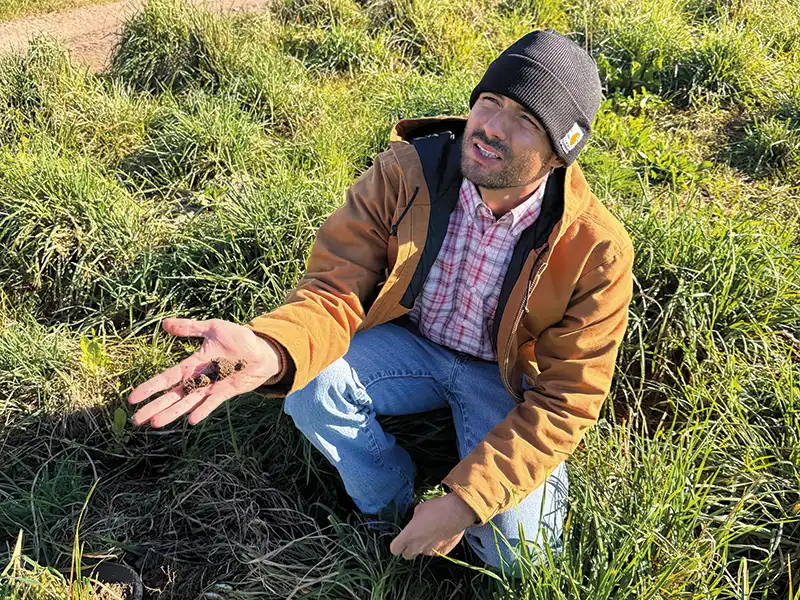
At Las Cumbres Ranch near Los Alamos, regenerative cattle ranching translates into holistic land management, which Ranch Manager Stefan Selbert describes as “the blueprint of how to run a business socially, environmentally and economically.” When his parents, Patricia and Jim Selbert, purchased the nearly 1,000-acre ranch in 2017, they committed to holistic stewardship from day one.
Their strategy starts with intentional grazing, which means moving animals frequently in dense herds, much like the wild herds that once roamed the Great Plains. “This mimics natural behavior, tapping into their instinct to roam and graze at a steady pace,” explains Patricia Selbert. “It also creates balance across the ranch by allowing the land to rest for extended periods in between grazings, helping native grasses to replenish and grow deeper roots, which in turn stores water, minimizes erosion and increases healthy microbes in the soil.
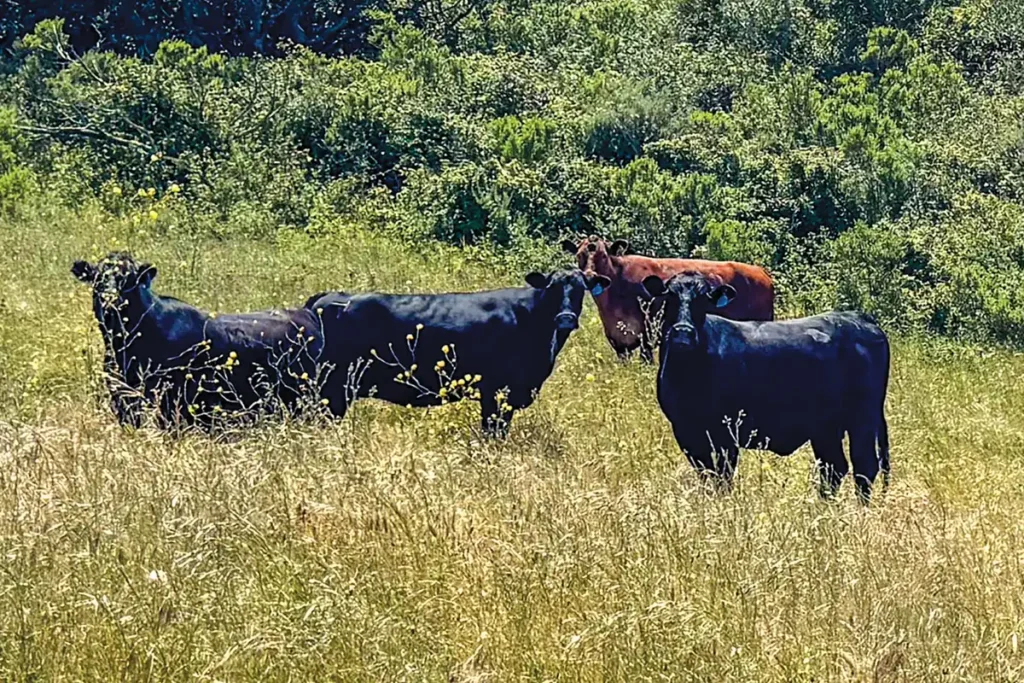
Like many local regenerative ranches, Las Cumbres grazes multiple species together. According to recent research, mixed-species grazing increases land productivity and animal health. At Las Cumbres, Bonsmara cattle graze alongside wild horses and burros. “The horses grab at the rougher areas of the grasses, opening things up for the cows [which] don’t have top front teeth,” says Stefan Selbert. “It’s actually been shown that cows gain more weight when grazing beside equines.”
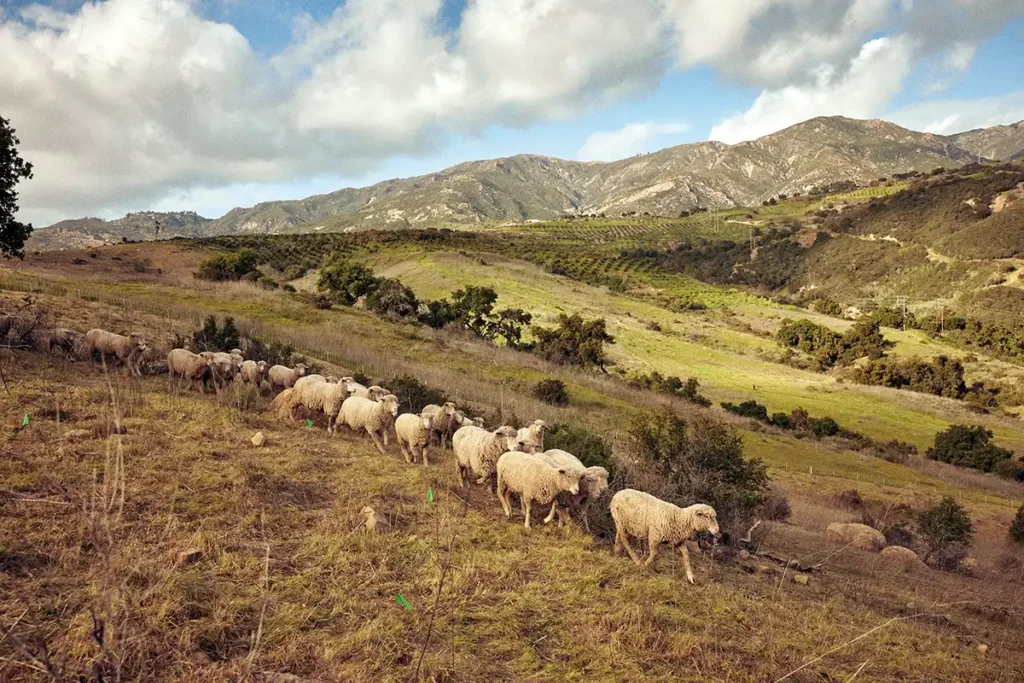
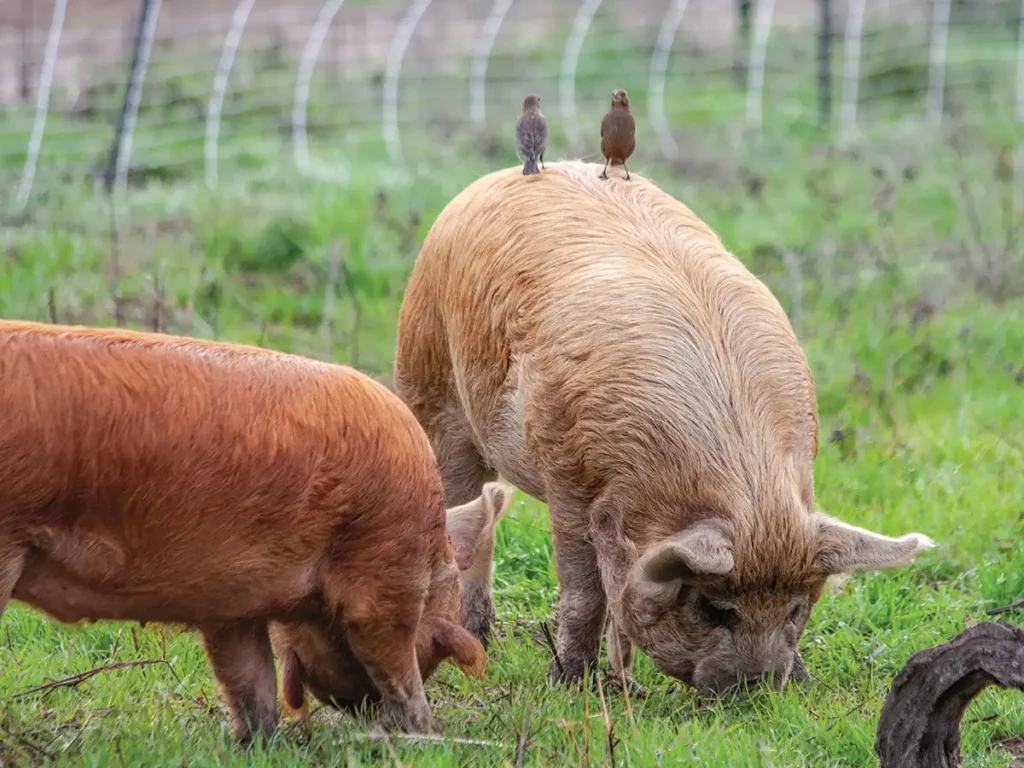
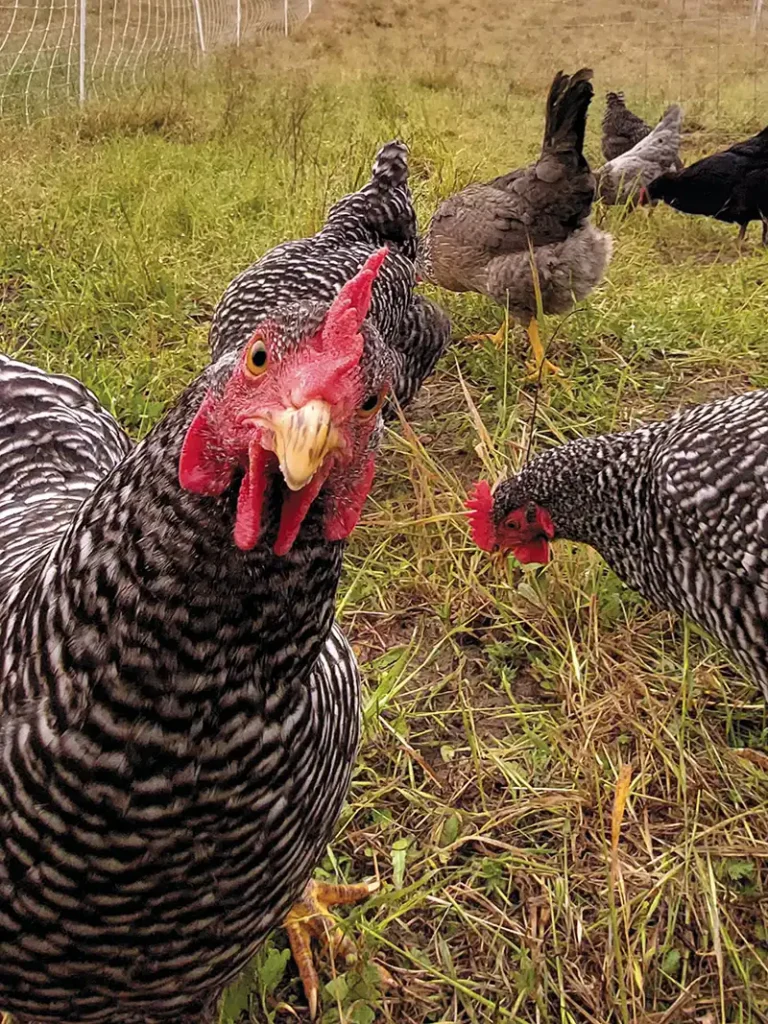
At Old Oak Pastures in the Santa Ynez Valley, mixed-species grazing offers the added benefit of natural protection. “A hawk likely won’t take a chicken if surrounded by larger animals like sheep,” says Halli Moore, who runs the 200-acre ranch with her partner, Michael Cantu. Moore further explains the power of species diversity: “You can actually regenerate your land much faster if you stack your animal impact. The feces of every animal species will have a different nutrient profile. For example, chicken manure is high in nitrogen and potassium; pig manure is high in phosphorus; and ruminant manure [from cattle, sheep and goats] is more balanced and slower releasing. The more you can mix those inputs, the faster you’ll bring the soil back to life, feeding the microbes and balancing its pH.”
Healthier soil results in healthier landscapes, supporting diverse plants and wildlife—which ultimately leads to healthier livestock. Grass-fed beef and lamb, for example, are widely recognized for being more nutrient dense, with higher omega-3 fatty acids than their conventionally raised counterparts.
“A lot of customers tell us our beef is what beef used to taste like when they were kids,” says Stefan Selbert. “When animals are raised in healthy, low-stress environments, without the need for antibiotics, steroids or growth hormones, it makes sense the meat is healthier and more flavorful.”
We feel incredibly blessed to be the land stewards of this precious place and to honor our cattle ranching heritage in a way that’s beneficial to us as a family and to our community and environment.
Another striking difference of regeneratively operated ranches is cleanliness, often without the typical flies or “barnyard” smells. “When our cattle are grazing on these grasses, moving regularly and diversifying their diet, they aren’t standing in their own dung for months on end, picking up worms or pests,” explains Stefan Selbert. Indeed, raising animals regeneratively typically requires fewer medical interventions.
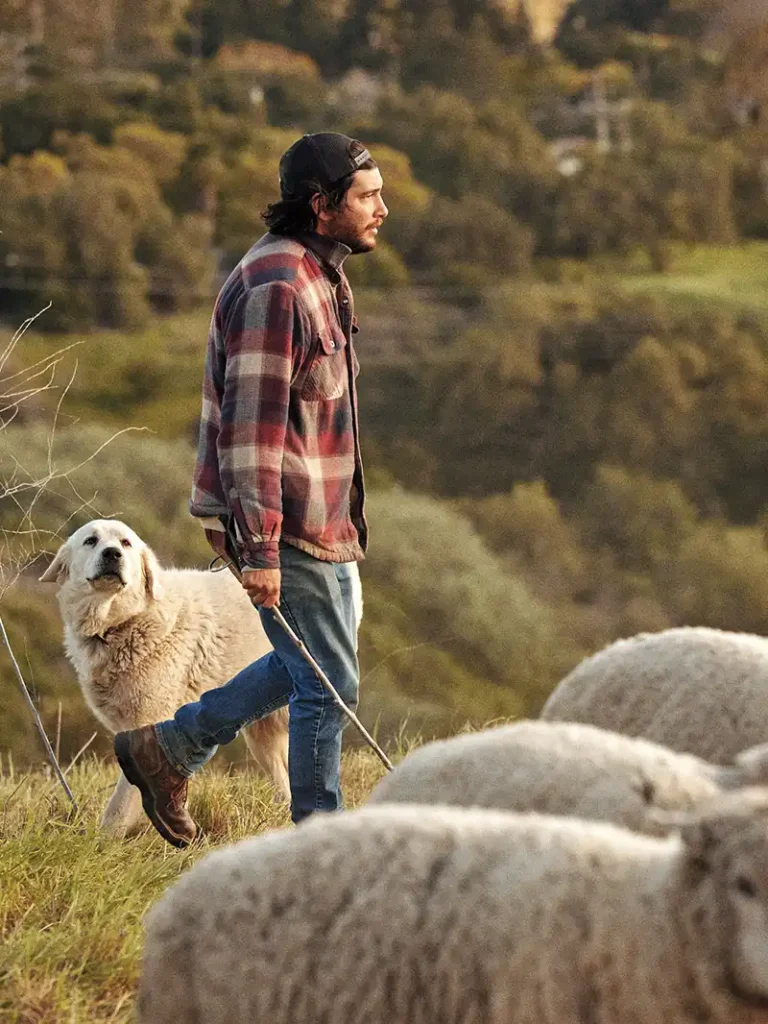
“By using short-duration grazing and allowing pastures adequate recovery time, we strengthen key forage species while reducing animals’ exposure to parasites,” he says. “That combination supports healthier soils and plants, and often lowers the need for medical interventions like dewormers and antibiotics.”
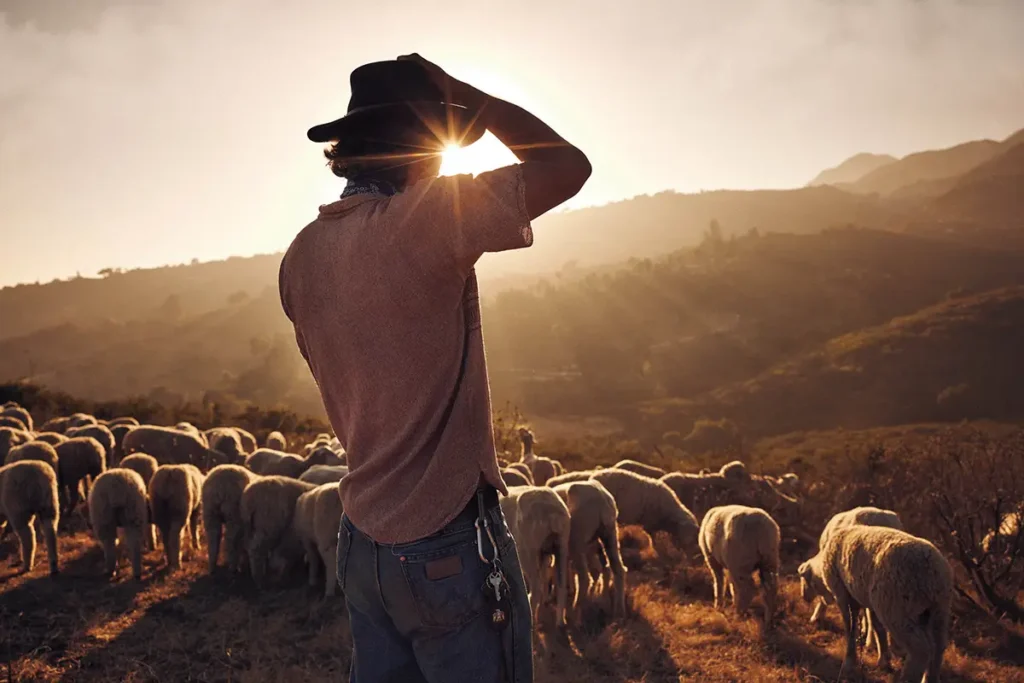
Not all regenerative grazing operations work solely on a fixed land base, however. Cuyama Lamb’s large flocks of sheep graze on different sites throughout the coastal foothills of Santa Barbara County.
“Our flocks cover about an acre a day, up to four acres a day, depending on the number of sheep and context,” says cofounder Jenya Schneider, whose sheep perform targeted grazing for fire mitigation, integrated crop management and ecological restoration. “Whether it’s reducing hazardous vegetation to lower the risk of wildfire or to suppress weeds and naturally fertilize orchards and vineyards, our planned grazing operations are designed to meet the needs of the specific landscape while supporting long-term vitality.”
While fire mitigation represents the biggest portion of Cuyama Lamb’s services, Schneider explains that producing meat and wool sustainably are also important facets of the business.
“Meat and wool production feel like meaningful ways of servicing and interacting with the communities we’re working in,” she says. “We feel honored to be able to provide ethically raised food to the communities whose homes we’re grazing behind—protecting them and nourishing them at the same time.”
Animal welfare is another core part of the regenerative ethos.
“Quality of life comes down to sunshine, food, movement and low-stress environments,” says Moore. “All of our animals at Old Oak Pastures, from our pigs to chickens and turkeys, are free range. Our animals are able to rummage around and get diverse feed and exercise. They’re all outdoors enjoying sunlight from birth to harvest, which adds to their quality of life. But we also handle them gently using a lead-follow approach, rather than by force, so we don’t ever have to scare them into moving somewhere. It’s a very-low-stress lifestyle and I think you can taste the difference.”
As many of us are acutely aware, those conditions are not the norm throughout the U.S.—especially when it comes to conventional livestock.
“Most steers in commercial markets are harvested at 1,200 to 1,500 pounds,” says Mary Heyden, co-owner/co-manager of the Ted Chamberlin Ranch in Los Olivos and co-founder of Chamberlin Beef. “It takes an enormous amount of caloric energy to grow animals that large, and sadly, feedlots where cattle are confined and fed grain-based diets are a rapid way to do that. It’s certainly not the healthiest for the land or the cow, but it is efficient.”
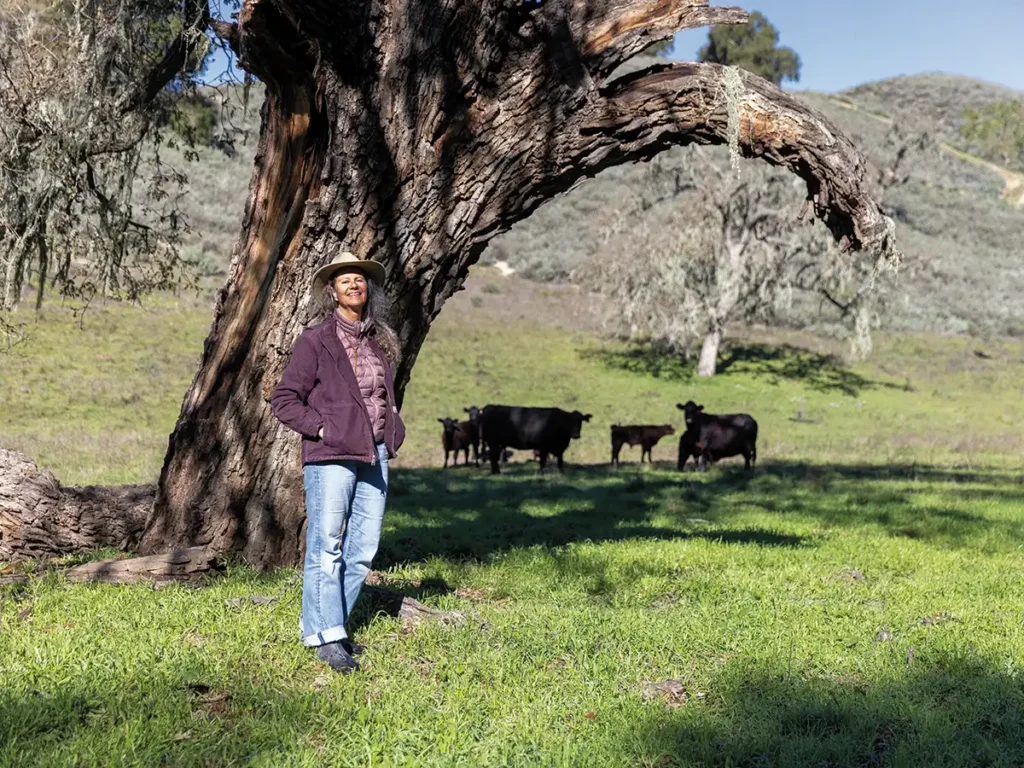
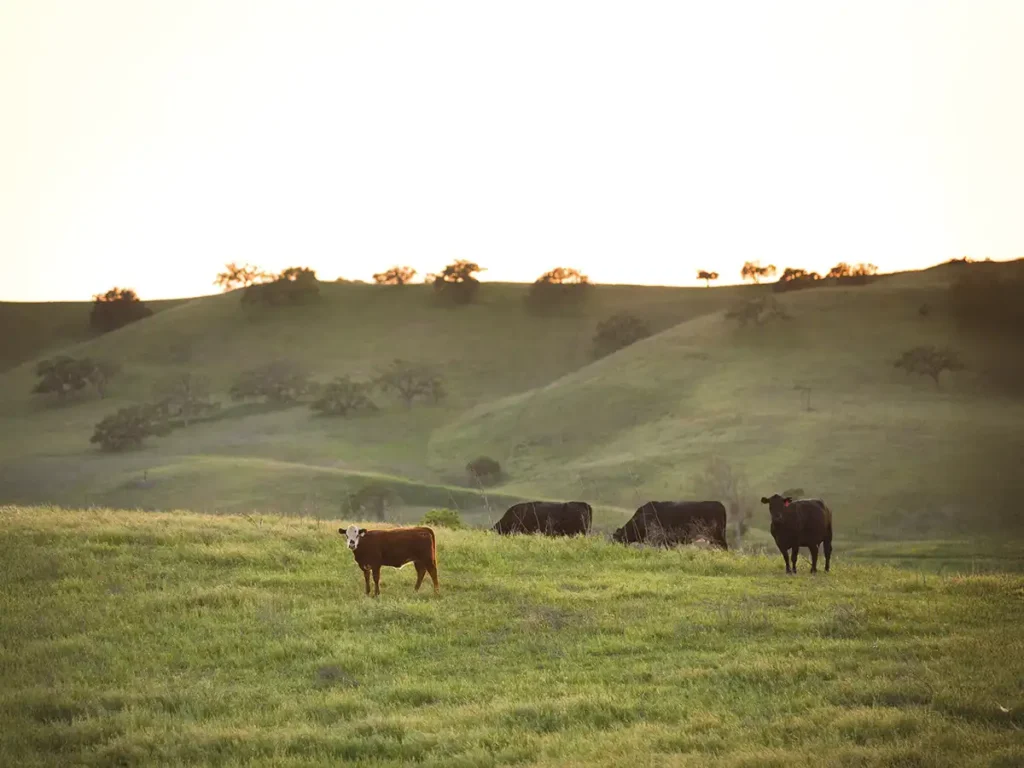
When Heyden and her cousins took over operations of their family’s 8,000-acre ranch in 2015, putting quality over quantity was never a question. Today, the third-generation ranchers raise Black Angus Yearlings using managed-grazing principles and humane practices.
“We feel incredibly blessed to be the land stewards of this precious place and to honor our cattle ranching heritage in a way that’s beneficial to us as a family and to our community and environment,” says Heyden. “I feel like we’re a value-add to the land versus taking away from it, and that makes us feel like we’re investing in what matters.”
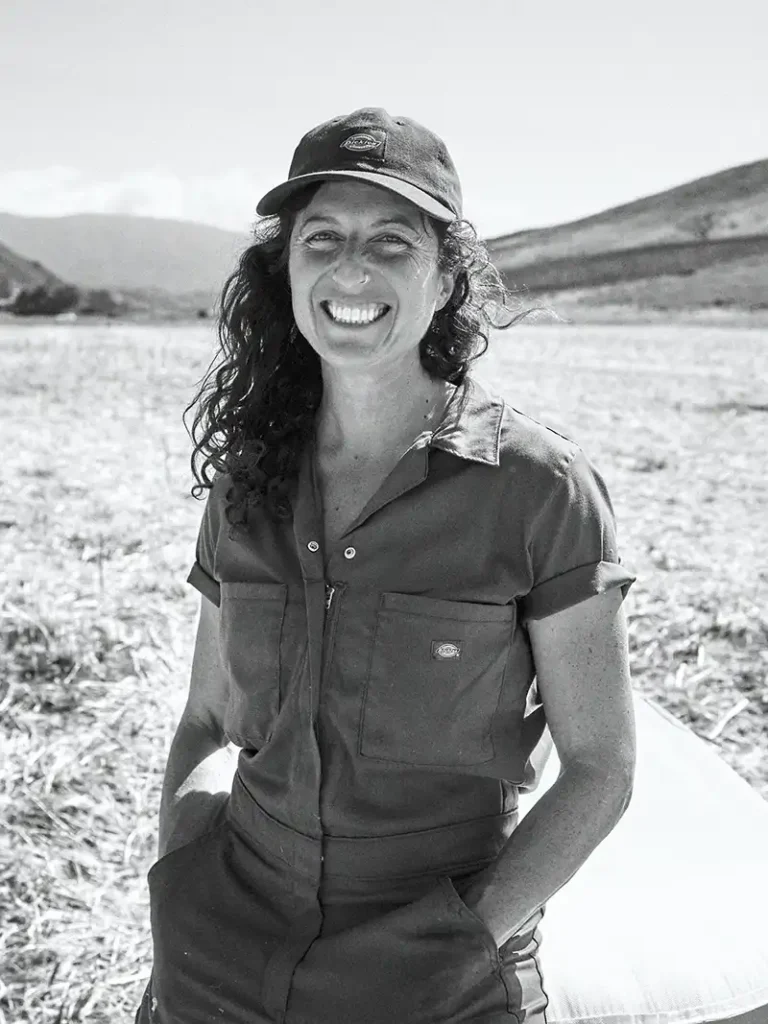
That long-term mind-set is fundamental to regenerative ranching—a practice that is constantly evolving.
“Regenerative agriculture isn’t just about sustaining what we have—it’s about actively improving it,” says Ana Smith, director of programs and engagement for White Buffalo Land Trust. “By rebuilding soils, restoring water cycles and increasing biodiversity, we’re supporting healthier landscapes and healthier animals and people. It’s a mindset shift: This work is a journey, not a destination.”
In the end, it’s clear that regenerative ranching isn’t just a method, it’s a relationship—with the land, with the animals, with the rancher and his or her community. It’s a type of stewardship that’s vital to the long-term health of not just the natural landscapes, but our regional food landscape, as well—and one that’s strengthened by the purchases we make as consumers.
“The choices people make in the grocery store have real consequences for local farmers and ranchers,” says Ana Smith. “Every dollar spent is a vote—one that can support healthier land, stronger communities and a more resilient food system.”
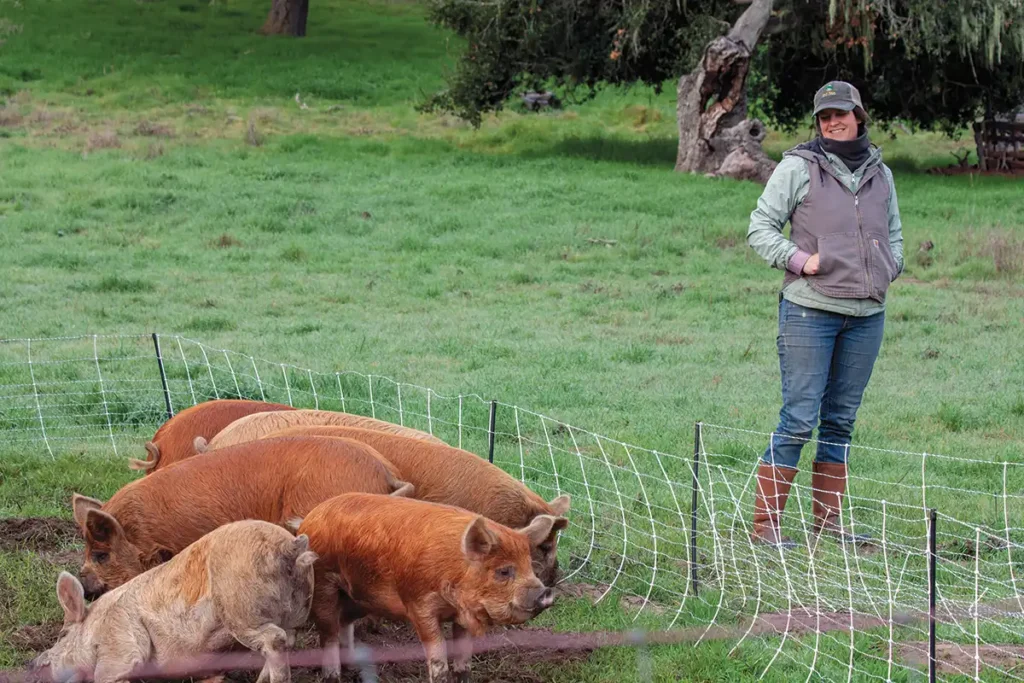
Adds Heyden, “The simplest way to show support for regenerative ranchers is to buy local, buy seasonal and buy from people you know and trust. There’s no better way to feel good about what’s on your plate.”
Look for These Regenerative Producers in Santa Barbara County
Âmevive
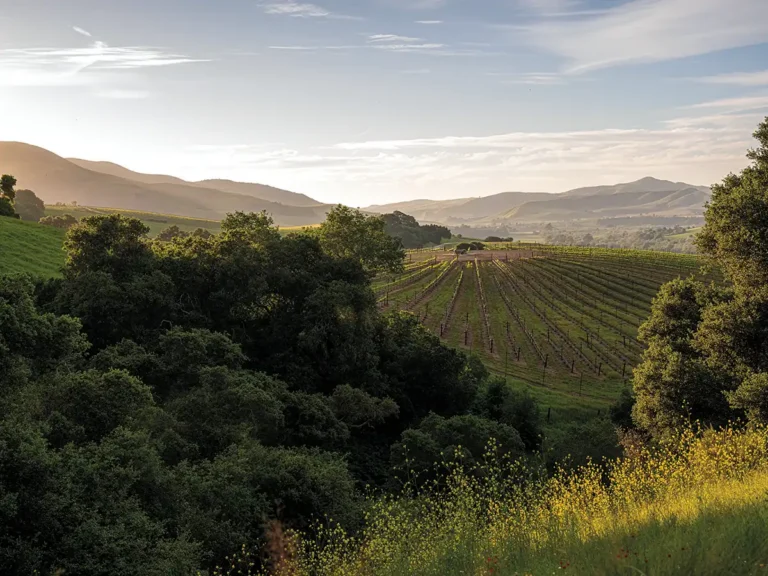
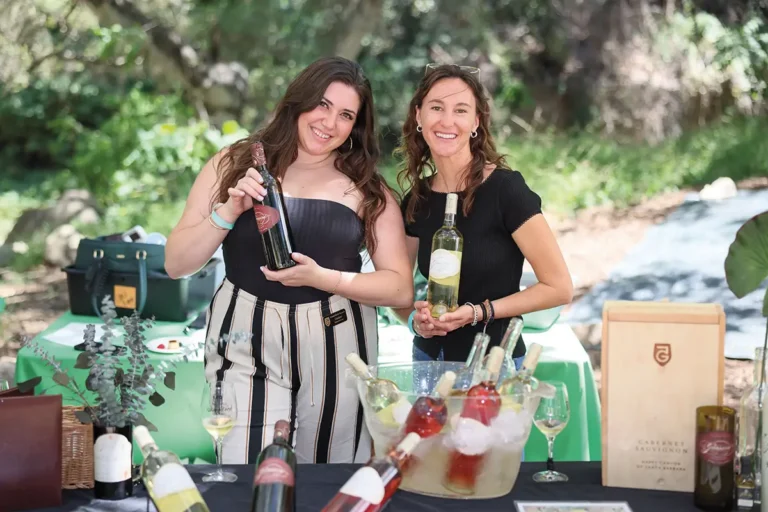
Farmer and winemaker Alice Anderson founded her small wine label, Âmevive, using grapes she grows at Ibarra-Young Vineyard and Mira Laguna Vineyards. A champion of regenerative agriculture, she and her partner, Topher De Felice, have since expanded into meat production, raising lambs amidst the vines with the same thoughtful, regenerative approach. Visit AmeviveWine.com to inquire about lamb purchases.
Chamberlin Beef
The vision of third-generation ranchers and cousins Mary Heyden and Russell Chamberlin, Chamberlin Beef is the locally available direct-to-consumer program of the regeneratively operated Ted Chamberlin Ranch, founded in 1929. Chamberlin Beef produces grass-fed, dry-aged rose veal from Black Angus Yearlings, raised entirely alongside their mothers under regenerative, humane care. Visit ChamberlinBeef.com to inquire about whole- and half-animal shares.
Cuyama Lamb
Founded by wife-and-husband Jenya Schneider and Jack Thrift Anderson in 2018, Cuyama Lamb specializes in targeted sheep grazing throughout Santa Barbara County, with a mission to support the regeneration of California’s grasslands. Cuyama Lamb also offers sustainable wool and regeneratively raised lamb meat for consumers. Lamb and wool can be purchased directly at CuyamaLamb.com. Read more about their cover story in issue #45 of Edible Santa Barbara, the summer/fall of 2020.
Las Cumbres Ranch
This family-owned ranch and wedding/event venue specializes in grass-fed cattle raised on nearly 1,000 acres between Los Alamos and Orcutt. With an emphasis on intentional grazing and ecological stewardship, Las Cumbres offers pasture-raised beef rooted in care for the land. Cow shares and beef boxes can be purchased online at LasCumbresRanch.com.
Motley Crew Ranch
First-generation ranchers Cassidy and Marko Alexandrou started Motley Crew Ranch with a mission to produce organic, sustainable and humanely raised meats, from rabbits and goats to pigs and chickens. Today, the duo have expanded their offerings with Motley Crew Marketplace, their brick-and-mortar space in Buellton dedicated to bringing honestly sourced food to the local community. Visit MotleyCrewRanch.com for more, or head to their Marketplace at 225 McMurray Road, Buellton.
Old Oak Pastures
Old Oak Pastures is a 200-acre ranch in the hills of the Santa Ynez Valley, co-founded by first-generation ranchers Halli Moore and Michael Cantu in partnership with Jerome and Brianna Chiaro. Prioritizing animal welfare and responsible land stewardship, they raise small batches of pigs, chickens and turkeys—all from heritage breeds—for meat and eggs. Visit OldOakPastures.com to shop their collection of pasture-raised chicken and pork products.
White Buffalo Land Trust
White Buffalo Land Trust was founded in 2018 to practice, promote and develop systems of regenerative agriculture for local, regional and global impact. They raise cattle and goats in partnership with Richards Regenerative, steward a five acre vineyard in partnership with Sandhi Wines and operates Figure Ate Foods, partnering with regenerative ranchers across the country to bring nutrient-dense, regeneratively produced foods to online marketplaces and natural grocers nationwide. Visit WhiteBuffaloLandTrust.org for more information, or shop their selection of regenerative food and wine products at FigureAteFoods.com. Read more about their vision on page 30 of this issue.

Hana-Lee Sedgwick
Hana-Lee Sedgwick is a Santa Barbara native who writes about wine, food and travel. When not keeping busy as a freelance writer and editor, she happily spends her downtime eating, drinking and wandering up and down the West Coast.