Make Way for Gamay
A Lesser-Known Grape from Beaujolais Gaining Local Fans
“An evil and disloyal plant” …
“injurious to the human creature.”
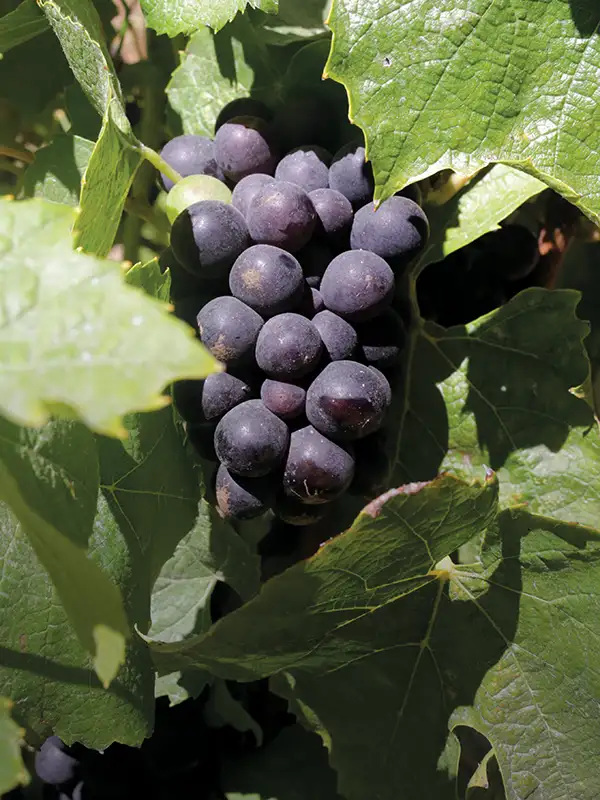
These were some of the uncompromising views that Philip the Bold, the Duke of Burgundy, held of the Gamay grape—a lovable, hearty variety he feared would eclipse the reputation of the region’s golden child, Pinot Noir. The duke’s disdain was so strong that in 1395 he banished the grape from the lands of Burgundy, forcing the once-loved grape to a life in exile.
Gamay, however—being thick-skinned—soldiered on, carving out a new home in neighboring Beaujolais, just south of Burgundy, where it grew up and became the regional poster child. In Beaujolais, Gamay was thrust into the global spotlight—weathering both great heights and falls from grace—becoming synonymous with the light and fruity style of Beaujolais Nouveau. In recent years, the image of Gamay has been restored, with light shed on some of the groundbreaking producers in Beaujolais whose incredible wines and uncompromising vision made them pioneers in the natural wine movement.
Somewhere amid all that history, Gamay made its way to Santa Barbara, taking root in the foggy valleys and sunny slopes—an echo of its long-lost home in Burgundy. Here, the varietal is presented with an interesting new frontier—one free of the dictates of history and ritual. However, in a region dominated by—and lauded for—its Pinot Noir, can Gamay find its place? I spoke with some pioneering young winemakers who believe it can—and who are helping carve out a future in the Santa Barbara sunshine for this beloved grape.
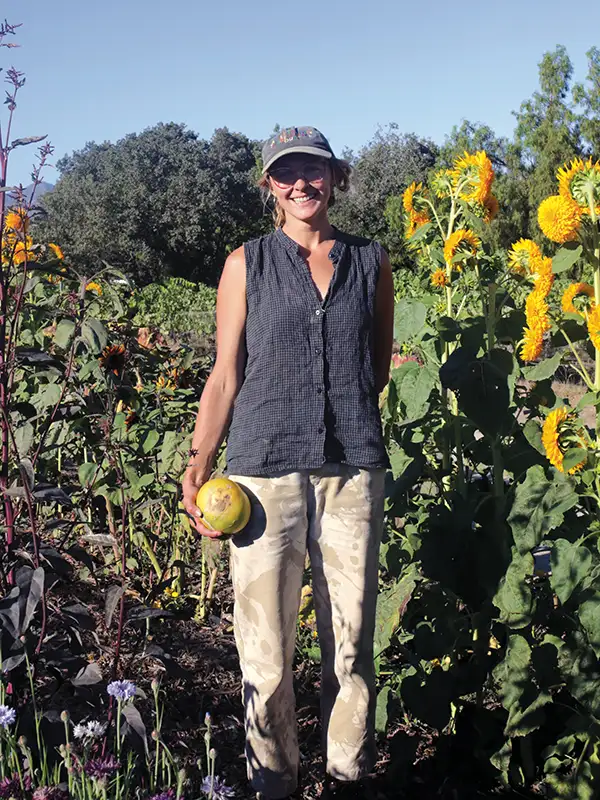
Alice Anderson in her garden. Photo: Jack Campbell 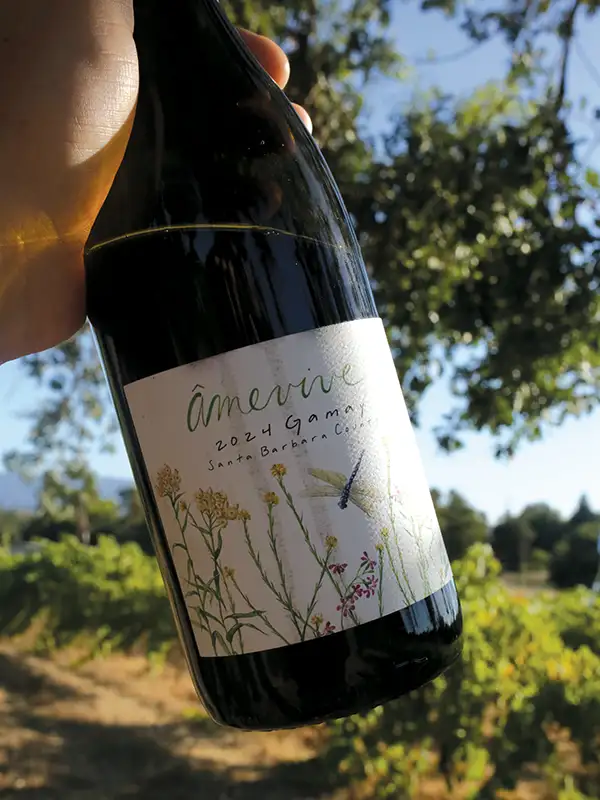
Âmevive’s 2024 gamay. Photo: Jack Campbell
I first met Alice Anderson in her garden—a small but vibrant plot adjacent to the more than 50-year-old Ibarra-Young Vineyard, which she cares for under her brand Âmevive. As pollinators move from flower to flower, the garden and vineyard, like her, are full of energy and life.
“Gamay was one of the first three varieties that I started working with,” she says. Anderson, who spent three years living and working in France’s northern Rhône wine region, continues, “It was the wine that all of us industry folk flocked to in the wine bars in Lyon. It always has held a really special part in my evolution of wanting to grow what I make, become a winemaker and have my own brand.” (See our Fall 2022 issue.)
Regenerative, organic farming is at the core of Âmevive. Gamay isn’t one of the grapes she farms at Ibarra-Young, but she is proud to work with the organically and biodynamically farmed Martian and Shokrian vineyards in Los Alamos, which “do a really incredible job at producing something that I would produce.” In the cellar, Anderson eschews carbonic maceration (a common method in Beaujolais), opting instead for 100 percent whole-cluster extraction (which leaves stems intact), reminiscent of a more old-school style of Gamay.
In a region dominated by—and lauded for its Pinot Noir, can Gamay find its place?
“The Gamay from Shokrian is really cool and herbal and green and pungent, and the Gamay from Martian is a little bit more like brown-stem, forest-y, kind of earthier, but together they make something that’s quite delightful.” The resulting wine is elegant, balancing structure and stony minerality with playful notes of raspberry, strawberry, black tea and violets.

Zach Petersen. Photo: Jack Campbell 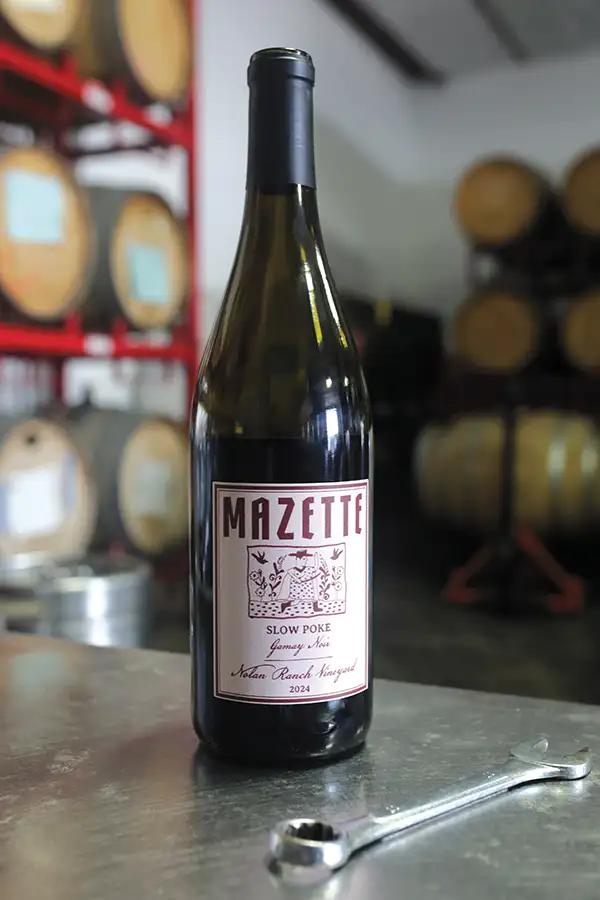
Mazatte’s 2024 Gamay Noir. Photo: Jack Campbell
Zach Petersen and I sit in the middle of the communal winemaking space, where he crafts the wines for his label Mazette. A surfboard maker turned brewer, Petersen made the jump to winemaking and spent the last three years as part of the team at Domaine de la Côte, one of the region’s premier Pinot producers.
As he pours me a glass of his 2024 Gamay from Nolan Ranch, he explains his history with the grape.
“Sauvignon Blanc, Grenache and Syrah are the main varietals I work with. Gamay came into the mix because I just am in love with Gamay.”
Petersen just finished Mazette’s inaugural vintage and is preparing for the ritual of the coming harvest. He organically farms six acres of small pocket vineyards himself; however, Gamay is not currently planted. He is looking for acreage, and when he finds the right site, Gamay will be one of the first plantings. For the time being, he has to source grapes, which can prove a challenge.
“There is a reality of purchasing grapes in Santa Barbara, especially for a varietal that we all love. And there’s not so much of it, you know? Until people that really want to stand by it plant more of it… the options out there for negotiations are not that many. But what we do have—the vineyards that are still planted to Gamay—are really, really good.”
The Gamay Petersen is making substantiates that claim. Like Âmevive, Mazette takes a whole-cluster approach, reflecting his time working in Crozes-Hermitage in the Northern Rhône. The stems impart earthiness, complemented by deep flavors of cherry, red berry and savory herbs.
While many producers of Gamay in Santa Barbara County are small—necessitating the purchase of grapes—some have set out to plant vineyards of their own. Brothers Christopher and Billy Hines, who recently started their label, The Set, have done just that.
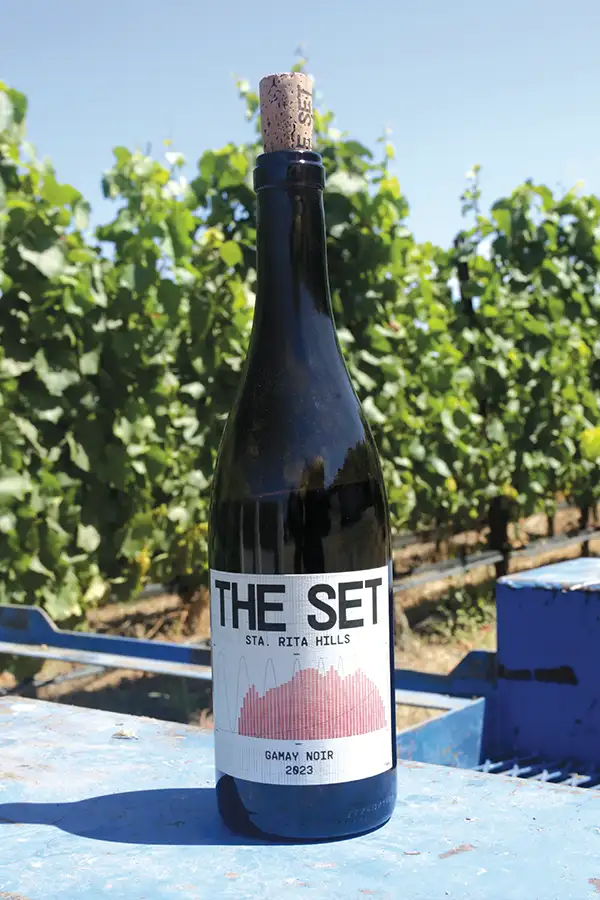
The Set’s 2023 Gamay Noir. Photo: Jack Campbell 
Christopher Hines in the vineyard. Photo: Jack Campbell
Standing with Christopher Hines in Hines Vineyard in the Sta. Rita Hills, the sandy soil soft beneath my feet, I understand how serious their commitment is. Hines tells me there are just under four acres of Gamay planted in this vineyard, all headtrained, with dry farming as a future goal. Though still in their youth, once mature, the vines will be supported only by their trunks, without any trellises—harkening back to the vineyards of old California—”with the intention of it eventually becoming a vineyard that is singular.”
Despite the vineyard’s youth, the resulting wines are impressive. The Set’s Gamay carries powerful spice, bright red fruit, offset by the structure and earthiness imparted by the stem contact during the wine’s semi-carbonic fermentation.
Despite having Gamay under vine, Hines remains uncertain about the grape’s future in Santa Barbara. “I hope more people plant it around here ’cause I would love for it to become a household name, you know, that people search out like they do Pinot. The quality’s there. I mean, will it ever reach the heights of the best Pinot, or whatever? Who cares? Pinot’s not going anywhere. Hopefully, Gamay is going somewhere.”
Anderson, Petersen and Hines all mentioned their desire to keep the price point for their Gamay accessible, honoring the great Beaujolais that inspired them. Petersen says, “The best producers of Pinot in France are just, like, completely out of budget for most people. But one of the legendary producers of Gamay in France is still, like, $37 a bottle. It’s awesome.” However, due to the current scarcity of Gamay, it can be difficult for producers to keep costs down.
Regardless of the challenges, it’s refreshing to see a grape championed for the sole love of its wines rather than the prestige or value they might hold. I encourage everyone to seek out a bottle of local Gamay. While its old home in Burgundy may be gone, it may find its place here in Santa Barbara—taking root and flourishing.
RESOURCES
Âmevive
Available for purchase at Satellite and Renegade Wines in Santa Barbara, and Cailloux Cheese Shop in Solvang. Also available directly from their website: AmeviveWine.com
Mazette
Available at Satellite in Santa Barbara. Also directly on their website: MazetteWines.com
The SET
Available at Meritage Wine in Santa Barbara, Los Olivos Wine Merchant and El Rancho Marketplace in the Santa Ynez Valley. Also directly from their website: TheSetWines.com